admin
admin
Sukulwenkosi Dube-Matutu, Matabeleland South Bureau Chief
IN 2019, Mr Leonard Mutavigwa opened a brick moulding factory with a brick making machine that had a capacity of 4 000 bricks. Today he has expanded his business as he has two more machines valued at US$90 000 with a capacity of producing 20 000 and 35 000 bricks in eight hours.
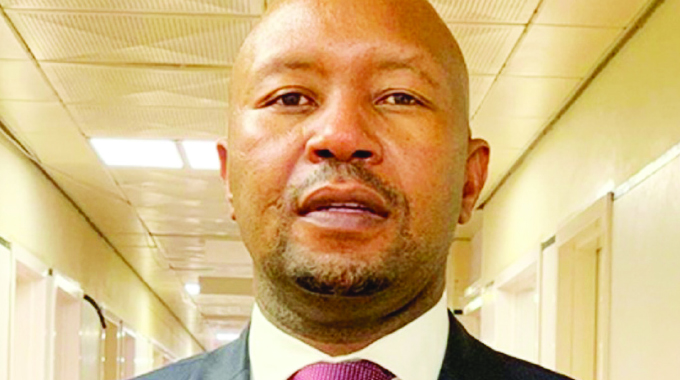
Mr Mutavigwa owns Poldos Brick Factory which is one of the major suppliers of building bricks in the mining town of Gwanda. He started off with four workers and now he has nine.
The factory produces a variety of face bricks and blocks.
Mr Mutavigwa who was in the transport industry sold some of his trucks to establish the brick making plant. He said he realised that there was a gap in the brick making industry as there were few suppliers in the mining town.
“I started my brick factory in 2019. A friend assisted me to realise that there was a gap in Gwanda and that it could be a viable business opportunity. I sold some of my trucks in order to establish the factory as I was in the transportation industry. When I started, I had a small machine which has a capacity of 4 000 standard bricks in eight hours.
“As I continued to operate, I started expanding my operations. In 2021, I bought another machine with a capacity of 20 000 standard bricks in eight hours. In December last year, I bought another machine with a capacity of producing 35 000 bricks in eight hours. We are yet to connect this new machine, but it’s an upgrade as it’s fully automated,” he said.
Mr Mutavigwa said the new machine will double their rate of operation. He said unlike his first two machines, the new machine does not require any manual controlling. Mr Mutavigwa said the machine can feed the material onto the pallets on its own and automatically pushes the pallets out with the bricks.
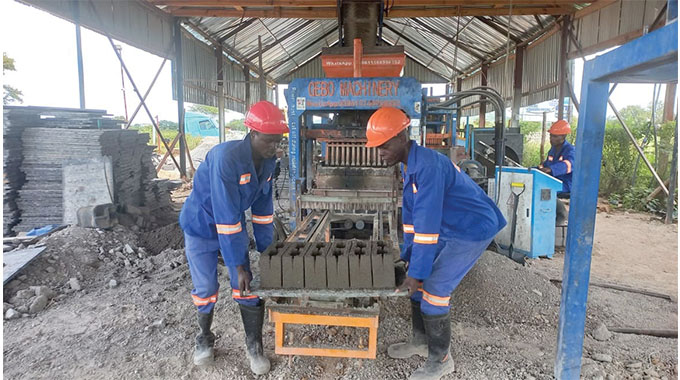
The factory supplies bricks to customers in and out of Gwanda. Mr Mutavigwa sells his bricks to individuals, companies and institutions.
He said while his plant has potential to produce over 50 000 bricks in a day, their operations were being affected by capital and availability of raw materials.
Mr Mutavigwa said in order to increase the number of bricks they make in a day, they needed more pallets. He said durable pallets are not available locally and they end up buying them in China at US$8,50 for one. He said locally, he could get wooden pallets but they do not last which becomes costly for him.
“Our production is affected by availability of pallets as we only have 500. They allow us to produce 6 000 bricks per shift.
We need about 5 000 pallets to fully utilise the two big machines which I have, which means we need about US$40 000 to buy enough pallets for our operations. Business is there, but sometimes we fail to meet the demand as the pallets limit the number of bricks that we can produce in a day. After we have used up all the pallets, the workers have to wait for the moulded bricks to take shape before we can reuse them. In the process, we will be losing out on time,”.
“I also need capital to further expand my operations. There is a lot of construction taking place in Gwanda since it’s a growing town. People are building houses and business premises on a daily basis which creates demand for bricks. As it is we are failing to produce enough bricks for our customers, some end up waiting for their orders,” he said.
Mr Mutavigwa said it is his desire to fully utilise all his machines. He said expanding his business will also help him create employment for more people. He said at the moment he was forced to limit his workforce because of the limited work they can do in a day.
Mr Mutavigwa said it was also important for technocrats to work on ensuring that manufacturing equipment can be available locally. He said he had to buy his equipment outside the country as it was not available locally. He said as a local manufacturer, he was losing a lot of money when shipping in equipment.
“If you look at the machines we are using here, you will see that we have engineers locally who have the know-how of assembling them and maybe what they may need is to be capacitated,” he said.
Mr Mutavigwa, who has a degree in electronic engineering from the National University of Science and Technology, has used the knowledge he acquired to run his business. After completing his studies in 2002, he worked as a lecturer at the Bulawayo Polytechnic College. He then worked as a technician at Delta Beverages.
Mr Mutavigwa joined the Pretoria Portland Cement Colleen Bawn plant in 2007 where he worked as an electrical engineer for seven years. In 2014, he started his transport business. He said it had always been his desire to use the knowledge he had gained to start his own business. — @DubeMatutu


 derick.khumalo