Vusumuzi Dube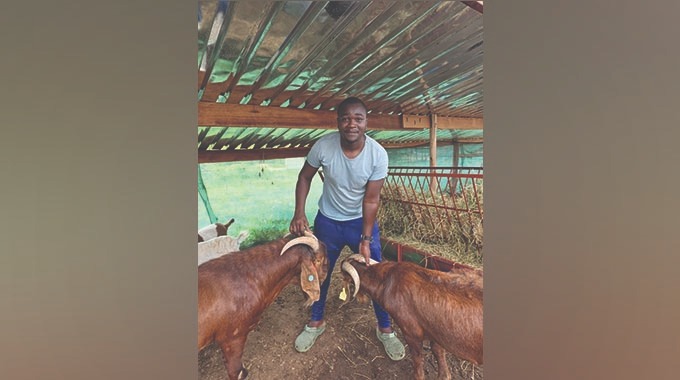
Sukulwenkosi Dube-Matutu, [email protected]
TWENTY SIX YEAR OLD Gwanda based youth, Mr Providence Shoko, has responded to Government’s call for young people to lead in production after establishing a goat breeding project with about 150 cross Kalahari and cross Boer goats.
He is breeding his cross Kalahari and cross Boer females with pure Kalahari bucks to ensure he produces an improved breed.
Mr Shoko’s target is to grow his herd to 1 000 breeding does, which he intends to sell. The young farmer is also running a horticultural enterprise on a five hectare plot. Mr Shoko, who studied automobile electrics, said he had always aspired to be productive, and farming had long been his passion. He has employed eight people at a rented farm in the Nsindi area.
Mr Shoko started his project in May last year with 79 goats.
He said his knowledge of goat breeding is self taught, and his passion has enabled him to develop expertise that has been crucial to the growth of his project.
“Farming has always been my passion and I have always wanted to venture into goat breeding. Although I studied automobile electrics, I always wanted to have my own business venture. An opportunity came up last year and I was able to get some land to rent and I started my business.
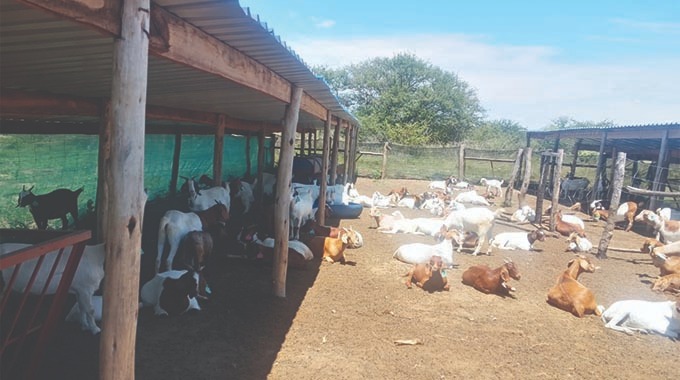
“I have a herd of 150 goats now. I have cross Kalahari and cross Boer females that I’m breeding with pure Kalahari bucks. At the moment, I’m growing my herd as I want to have a significant number before I start selling,” he said.
His target is to have 1 000 breeding does, and once the herd is sufficiently large, Mr Shoko wants to open a butchery and sell meat.
Mr Shoko said he had identified a gap in the market, noting that goats are in high demand. He added that goat breeding is ideal in Matabeleland South, which falls within Regions 4 and 5 where rainfall is relatively low.
Mr Shoko said that just as farmers are adopting the production of small grains, there is a need for farmers to focus more on producing small livestock, which are drought resistant.
The young farmer said he considered it necessary to align his farming ventures with prevailing climatic conditions.
“With the prevailing climate change, there is need for us as farmers to adapt and adopt relevant farming practices. There is no one who can take a lead in this new drive like us young people,” he said.
“We understand climate change more and we can easily adapt and, therefore, we must take the lead in transforming our agricultural sector. I decided to start farming now while young because I know there is a lot I can do now when compared to decades later.”
The business has created employment for local youths, who also benefit from gaining farming skills.
Mr Shoko said that as part of his business strategy, he is adopting an integrated farming model combining livestock and crop production. He produces green mealies, groundnuts, cabbages and watermelons, selling most of his produce in Gwanda town.
Mr Shoko said the two ventures support each other.
“Running a goat breeding and crop production project is highly beneficial as these two projects are interdependent. I use manure from the goats to boost the performance of my crops and this has really helped. I produce also for fodder, which my goats can feed on, such as maize stock and groundnuts leaves. I mix this feed with other components to enhance its value,” he said.
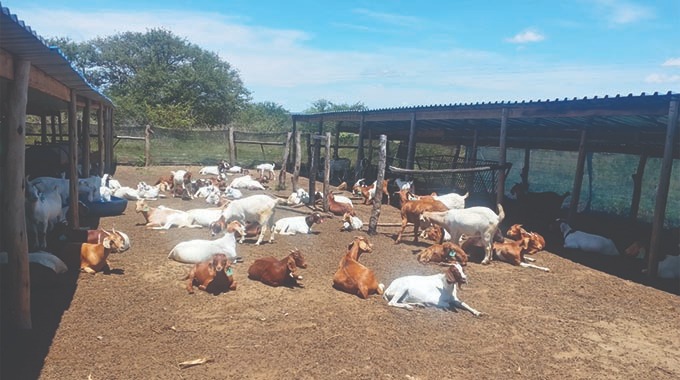
The young farmer said he keeps his bucks confined to their housing while feeding them supplements.
Mr Shoko was last year named Young Farmer of the Year at the Matabeleland South Agricultural Show.
He also received an award for Innovative Farmer of the Year at the Sundrive Coalition Matabeleland South Business Summit and Awards ceremony. The Ministry of Youth, Empowerment, Development and Vocational Training acting district development officer, Mr Nkosilamandla Siziba, said business ventures such as the one led by Mr Shoko play a crucial role in the attainment of Vision 2030.
“About 72 percent of our country’s population are youths, according to our country’s demographics. If they don’t participate in the mainstream economy then attaining Vision 2030 will be a challenge.
“We urged youths to be committed towards developing our country so that they contribute significantly to our GDP. The youth must start their own businesses so that they can be productive and create employment.
“They must identify gaps within the market and utilise facilities and policies that have been put in place by Government to empower them,” he said.–@DubeMatutu



 Online Reporter