Chronicle Editor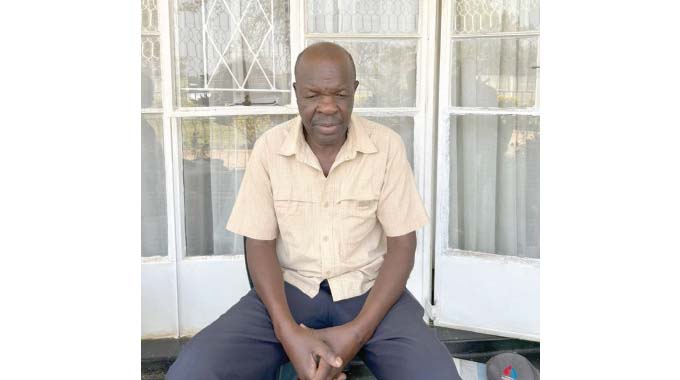
WE conclude our interview with former ZPRA battalion commander, Lieutenant-Colonel (Rtd) Jack Thuli Matiwaza pseudonym Cde Jackson Chokwadi or Cde Njabulo Ntolo. Lt-Col (Rtd) Matiwaza commanded the third battalion that in October 1979 was deployed on the southern side just across the Zambezi River facing Hwange District. Before his promotion to battalion commander he had operated in the Hwange area before he was recalled to the rear. He was then sent to the Soviet Union to do a battalion commanders’ course. In interviews with our Assistant Editor Mkhululi Sibanda (MS), Lt-Col (Rtd) Matiwaza has explained how the ZPRA battalions were formed at Mlungushi in Zambia where there was a strong force of more than 5 000 men trained in conventional warfare. By 1979 ZPRA forces had planned a co-ordinated offensive against Rhodesian forces under an operation code-named Zero Hour. Under Operation Zero Hour conventional battalions with heavy artillery support were to storm through the northern front at Kanyemba, Chirundu, Kazungula and Kariba to enable the troops to cross with armour and artillery. Simultaneous attacks were to be carried out on the airfields at Kariba, Victoria Falls and Hwange, which after being secured were to enable the transfer of MiGs jet fighters from Angola. Guerilla units already operating in the country were to sabotage transport links and continue harassing the enemy to undermine the Rhodesian counter-offensive. That is what battalions such as that commanded by Lt-Col (Rtd) Matiwaza were meant to do. Today in his narration Lt-Col (Rtd) Matiwaza talks about the deployment of his battalion. Below are excerpts from the interview. Read on . . .

MS: In our last conversation you were saying you were happy with the way you were armed, saying you had all sorts of weapons at your disposal. However, give us an insight into how you were deployed.
Lt-Col (Rtd) Matiwaza: Our deployment covered a wide area because the unit was big as it was a battalion with various attachments, that is the support units. Everything was properly organized, it was a typical conventional army. Communication lines were laid while the soldiers had dug defence pits and trees cut to get logs to fortify the trenches. Soldiers I mean everyone of them had his own small pick and shovel as part of the requirements of a conventional unit. The main headquarters to house the commander were set up as well as the company commanders’ HQs.
MS: What about logistics, things like food where were you getting it?
Lt-Col (Rtd) Matiwaza: This was a regular force with enough supplies in everything including a well-trained medical team with all the necessities. There were ration packs for the troops. We were also all properly kitted with camouflage with the majority of the soldiers dressed in the Soviet rice camouflage. Myself as the battalion commander would travel to Lusaka to attend meetings whenever called upon to do so. Like I said I had been allocated a commander’s vehicle. The area of deployment was near Mapatizi Mine in the Southern Province. The area provided us with good cover as it is mountainous, so we were able to mount our ant-air weapons.
MS: If you look back, do you think it was going to be easy for you guys to storm Rhodesia?
Lt-Col (Rtd): It was going to be a tricky operation. I am speaking as someone who was on the ground. While we were adequately armed and very confident, our biggest obstacle which had become routine in all the ZPRA operations was crossing the Zambezi River as usual. I also look back and wonder how we were going to handle the situation when the whole battalion was going to move onto the Rhodesian side. However, if we were to get air support or cover that was going to be manageable. It seems as though there was something up in the sleeve of commanders as there was talk of getting assistance from the Cubans and Russians to provide logistical and tactical support when storming into Rhodesia.
MS: So how was the situation in your area of deployment?
Lt-Col (Rtd) Matiwaza: We were waiting for a signal from the rear to go for an attack. However, a platoon of 30 reconnaissance specialists under the command of Cde Hlelo (the late Colonel Ray Lazarus Ncube) crossed into Rhodesia. Also part of the unit was the battalion security officer, Cde Sitimela. As the battalion commander I had received a signal from the ZPRA Chief of Reconnaissance, now General Philip Valerio (PV) Sibanda whom we called then, Cde Ananias Gwenzi. PV had ordered that all battalions deployed along the Zambezi River should infiltrate their reconnaissance units into Rhodesia. So Ray and his platoon crossed the Zambezi River. They then covered areas around Hwange and Victoria Falls. As a receconnaissance unit they avoided contacts with the enemy as that could have compromised their mission. They were there to gather information on the enemy activities. They did a good job as they were not detected by the enemy and after more than two weeks, they returned to where we were based. They crafted a report which they gave me. I assessed that report and then sent it to the ZPRA Headquarters in Lusaka. Hlelo and his platoon had meticulously studied the activities of the enemy. Then as we were still waiting for the signal to attack, the ceasefire was signed at Lancaster in Britain.
MS: As soldiers ready for battle, how did you receive the news of the ceasefire?
Lt-Col (Rtd) Matiwaza: We were all disappointed, the guerillas were very, very disappointed. We felt we were denied the opportunity to hit the Rhodesians. The amount of disappointment and frustration among the troops was written all over their faces. The disappointment came from the fact that we were confident of a military victory, we had all arms at our disposal, your B10s, Zegues, Gun57 and GradP. The only weapon my battalion was not armed with was the Surface to Air Missile (SAM7), the one that was used to down the Viscounts. However, at Mlungushi we had the SAM7s, the heat seeking missile weapon. Then word came that we were going home and move into the Assembly Points.
MS: So your battalion moved to which Assembly Point (AP)?
Lt-Col (Rtd) Matiwaza: We were taken by trucks to board a train at Livingstone. From Livingstone the train took us to Dete where we dropped off. We were then taken to Gwayi River Mine. All the conventional battalions moved to Gwayi River Mine AP. The only battalion that we left behind in Zambia was the fifth that was commanded by Cde Butholezwe. In fact, the First Battalion ekaMadliwa was the first to get to Gwayi. So in essence Gwayi River Mine was an AP purely for the regular forces. ZPRA guerilla formations were at APs such as Zezani in Beitbridge, Papa in Mashonaland West, Mike (St Pauls) in Lupane etc. At Lima in Bulilima there was a battalion kaSmile Madubeko which had integrated guerillas.
MS: When the conventional battalions had assembled at Gwayi who became the camp commander?
Lt-Col (Rtd) Matiwaza: The now late Brigadier-General Charles Grey (Mike Reynolds) was the commander deputized by Cde Glen, who was the son of the late nationalist and Matobo Member of Parliament, Cde Vote Moyo. When the time for integration came I moved with others to the then Zimbabwe Military Academy (ZMA) in Gweru now known as the Solomon Mujuru Barracks. I got the rank of a Major and during my time in the army, I participated in military operations in Mozambique and the Democratic Republic of Congo. Soon after independence I was posted to One Brigade which was the command of now Vice-President, General Constantino Chiwenga. Also there as a Major at One Brigade was the now late National Hero, Major-General Trust Mugoba. As for the DRC tour of duty, I was in charge of the troops that had secured N’djili International Airport in the capital, Kinshasa. My troops were the last to leave DRC when the war was over. I retired from the Army in 2006.


 Online Reporter