admin
admin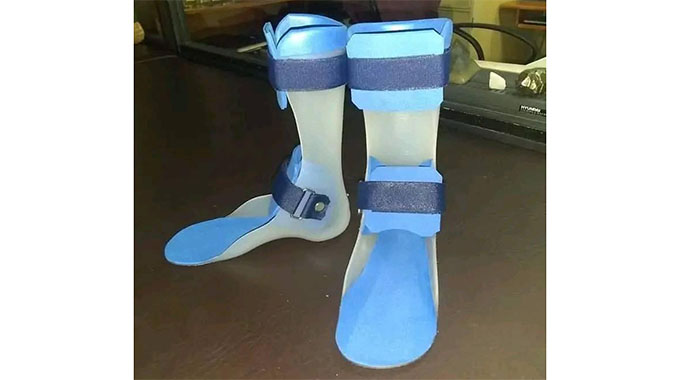
Patrick Chitumba
IN a positive development that is set to benefit people in the Midlands Province seeking orthopaedic hardware, the Gweru Provincial Hospital (GPH) is resuming orthopaedic technology services after a 20-year hiatus following the death of the hospital’s orthopaedic technician in the 2000s.
GPH will be working with orthopaedic technicians from the United Bulawayo Hospitals (UBH) who are coming in to offer consultation to patients and make the required hardware back in Bulawayo. The programme is expected to continue until there is a new technology used to make assistive devices at GPH, which would see patients cutting on travel and accommodation costs as they will receive the services in Gweru.
Orthopaedics (also called orthopaedic surgery) is a medical speciality that focuses on injuries and diseases of the body’s musculoskeletal system. This complex system, which includes the bones, joints, ligaments, tendons, muscles, and nerves, allows one to move, work, and be active.
A Chronicle news crew yesterday visited the Orthopaedic Technology Clinic at GPH and witnessed an orthopaedic technician and his assistant from UBH attending to a patient who needed a special shoe to enable her to walk properly.
The OT and his assistant will be at the clinic up to Friday.
The available services will include the moulding of artificial arms and legs for amputees, callipers, corner sits, and standing frames for children with cerebral palsy and other mobility disorders, shoe raises for people with leg length discrepancy, all types of corsets, assistive devices and neck collars for various conditions.
Mr Trinity Angoni, head of the rehabilitation department at GPH said the Orthopaedic Technology services were resuming at the hospital after a very long time.
“This programme is about orthopaedic technology, it was there before but stopped in early 2000. There was an orthopaedic technician that we had here, but he passed away during that time and he was never replaced. So there were no Orthopaedic Technology services offered at this hospital until now when we are reviving it,” he said.
Mr Angoni said they were working in partnership with UBH to have the programme up and running.
“This programme is to revive the Orthopaedic Technology services that used to be there. We coordinated with United Bulawayo Hospitals and they agreed to assist us. So we have an orthopaedic technician and his assistant who are here to do consultations and have the specific devices made for each individual case they would have consulted,” he said.
Mr Angoni said the programme would initially run for a week and continue fortnightly as the OT and his assistant would be visiting the hospital every two weeks.
“It’s an ongoing programme until such a time GPH is capacitated with the rightful equipment and accessories that are needed for us to run independently. The available services will be the making of artificial arms and legs for amputees, callipers, corner sits, and standing frames for children with cerebral palsy and other mobility disorders, shoe raises for people with leg length discrepancy, all types of corsets, assistive devices and neck collars for various conditions,” he said.
Mr Angoni said people from the province were travelling to Bulawayo or Harare for such services, which was time-consuming and expensive for them.
“This is a good programme because in Zimbabwe I think there are only three provinces that are offering such services which are Harare, Bulawayo and Manicaland provinces. If GPH gets capacitated, it means that we will have people from Masvingo benefitting as well. They are going to benefit and remove pressure from mostly Bulawayo,” he said.
Mr Angoni said there was a shortage of OT’s in the country at the moment which he said was a challenge.
“The people that were trained are getting old and we have no new recruits. The current batch was trained in Tanzania through a funded programme and when funding stopped, the training stopped many years ago. It would be good if the programme is reuscitated if one of the universities starts offering the course,” he said.
“OTs make devices that are meant to support people who can’t control their knees or neck or those with back injuries. They make hospital or clinic hardware for the patients. The clinical hardware is good in that it makes a person achieve a better function than the state they will be in. For example, putting a hardware like a shoe raise on the patient’s shoe for him/ her to walk better,” he said.
Acting GPH superintendent Dr Johannes Mukwembi said, “It’s one area which is often overlooked in the health industry. These devices are not regularly available at public facilities. This clinic serves to offer, replace or adjust assistive devices for the benefit of people living with disabilities


 Online Reporter