Online Reporter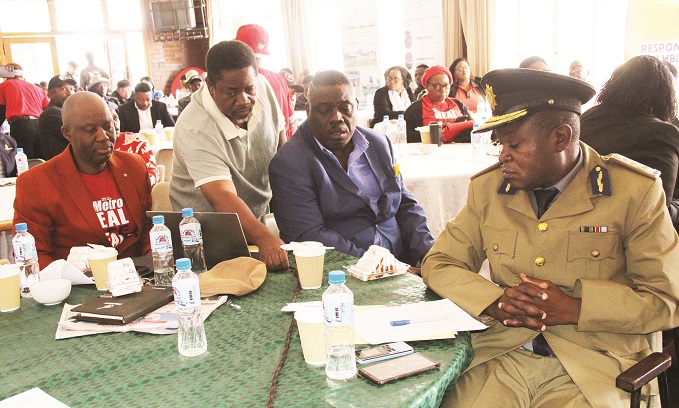
Ivan Zhakata
Sunday Mail Reporter
Zimpapers publication H-Metro held a forum to discuss the pros and cons of betting yesterday, where the Government pledged to strengthen regulation of the fast-growing gaming sector.
There was also a warning that an unchecked growth of the sector must not come at the expense of public safety, ethical standards and national values.
Speaking at the event, dubbed “H-Metro National Forum on Responsible Betting”, held in Harare, Permanent Secretary for Home Affairs and Cultural Heritage Ambassador Raphael Faranisi said the sector had become an integral part of Zimbabwe’s socio-economic structure and requires a proactive policy approach.
A legislative overhaul is underway to strengthen licensing protocols, boost compliance, enhance responsible betting initiatives and deploy digital tools for real-time monitoring.

The legislative agenda seeks to enhance licensing protocols and compliance mechanisms, strengthen collaboration between the gaming industry and stakeholders, expand support for responsible gaming campaigns and rehabilitation services, and incorporate digital innovations for transparent monitoring of betting platforms.
“It is with a profound sense of duty and national consciousness that I address this august gathering convened under the auspices of Zimpapers as the social watchdog, in collaboration with key stakeholders, to deliberate on one of the most dynamic and evolving sectors in our socio-economic matrix: the gaming industry,” he said, in a speech read on his behalf by the ministry’s director, Ms Prisca Madziviridze.
He said gaming presented economic opportunities, but also carried risks if not carefully managed.
Ambassador Faranisi reaffirmed the Government’s commitment to improving the sector’s legal and regulatory environment, in line with the National Development Strategy 1 (NDS1).
He called for a renewed and compact partnership anchored in mutual accountability and a shared vision for a thriving yet principled gaming industry.
Chairperson of the Lotteries and Gaming Board (LGB) Dr Eugenia Chidhakwa said the board was committed to providing a service that was beyond reproach to meet and adequately satisfy customer needs and expectations by ensuring quality, safety, fairness and effectiveness of lottery and gaming activities, thereby reducing gambling harm.
She said the industry was regulated by a legal framework anchored in three key laws, namely, the Lotteries and Gaming Act, the Betting and Totalizator Control Act, and the Money Laundering and Proceeds of Crime Act.
The board has amended the Lotteries and Gaming Act to cover the fast-growing domain of online gaming.
“There are ongoing efforts to update and enhance the regulatory framework that will ensure the industry operates in a fair and responsible manner,” she said.
LGB chief executive officer Dr Misheck Chingozha said the days of demonising gambling were over, as the industry had emerged as a powerful economic driver in many African economies.
“As a regulator, our narrative is clear: Know when to stop. Walk away when you lose and do so graciously,” he said.
Zimbabwe Republic Police national spokesperson Commissioner Paul Nyathi said gambling addiction was a growing national challenge that was fuelling crime, family breakdowns and social instability.
He called for a united front to tackle the scourge.
“You see, the way crime activities are now taking place, those people want money,” he said. “You see the fights among the parents, the fights among the peers. This issue of addiction to gambling is a real problem from this point of view.”
H-Metro editor Robson Sharuko called on Zimbabweans to view sports and betting not merely as leisure activities, but as a serious industry supporting livelihoods, creativity and economic development.
If betting is done responsibly, it can be part of a broader, organised sector that creates employment, supports families and fuels media growth, he added.
“This is a proper industry, employing thousands of people, from vendors at stadiums to journalists, marketers and creatives,” he said.
Sharuko cautioned against irresponsible gambling, particularly by those using essential funds such as school fees or household income.



 Online Reporter