admin
admin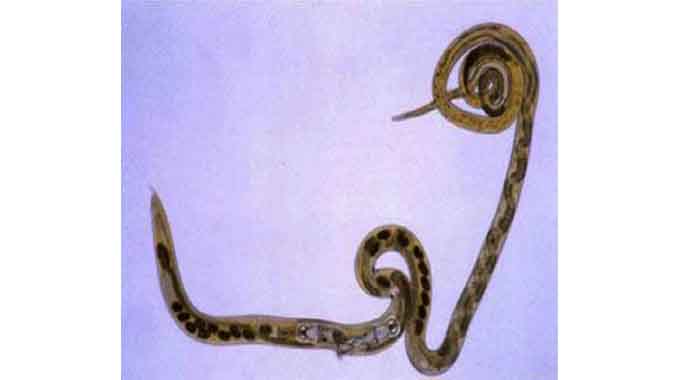
Sheuneni Kurasha
Farmer’s Diary
Internal parasites, particularly roundworms, represent a major challenge for goat and sheep farmers.
Often referred to colloquially as “worms”, these parasites include both roundworms and flukes and are among the biggest threats to the productivity and health of goats and sheep.
It is not uncommon for livestock to carry some internal parasites without experiencing any noticeable effects.
However, when an imbalance occurs between the parasite and the host animal, it can lead to serious health problems, loss of condition, and in severe cases, even death.
This article focuses on roundworms, a common type of internal parasite in goats and sheep, covering their identification, lifecycle, management strategies, and treatment options.
Identifying internal parasites:
The roundworm challenge
The term “internal parasites” refers to organisms that live inside the body of an animal, feeding off its nutrients and causing varying degrees of harm.
In goats and sheep, internal parasites are a major production issue. While livestock naturally carry some parasites, problems occur when the load becomes too heavy for the animal’s immune system to handle.
Among the many types of internal parasites, roundworms are particularly problematic, especially in warmer and more humid climates, where their lifecycle can progress rapidly.
Identifying an internal parasite infestation in goats or sheep requires close observation.
The most common signs include loss of body condition, a decline in milk production, and visible anaemia using the FAMACHA system.
The FAMACHA system works by checking the colour of the animal’s mucous membranes, usually around the lower eyelid, to determine the degree of anaemia.
Diarrhoea, lethargy, and a rough coat can also indicate the presence of internal parasites, especially in more advanced stages of infestation.
Since internal parasites are diverse, it is crucial to determine which specific type is causing the issue in your flock.
Treatment with dewormers, also known as anthelmintics, needs to be targeted to the specific parasite species, as no single dewormer can eliminate all types of worms.
Among the various parasites, roundworms are notorious for their resilience and potential for causing severe damage.
An overview on roundworms
Roundworms are a type of nematode with long, cylindrical bodies.
They are unsegmented and have relatively simple lifecycles, which can often lead to rapid reproduction under the right environmental conditions.
A common example is the wire worm, a blood-sucking roundworm that causes significant damage to livestock by feeding on blood in the intestines, leading to anaemia.
Other types of roundworms may damage the intestines in different ways, but all tend to weaken the host animal if left untreated.
Life cycle of roundworms
Roundworms have a simple and effective lifecycle.
Adult female worms lay eggs in the host’s intestines, which are then passed out through the animal’s faeces. In the right environmental conditions, these eggs can survive for several months.
When temperatures and moisture levels are favourable, the eggs hatch, and the larvae go through three developmental stages.
During these stages, the larvae live freely in the soil.
In their third stage, the larvae become particularly dangerous.
They crawl up low vegetation, typically to a height of about 5 centimetres. From here, they wait for grazing sheep or goats to ingest them along with the pasture.
Once inside the animal, the larvae undergo their final developmental stage and mature into adult worms, starting the cycle again.
The life cycle highlights the importance of environmental management in controlling roundworm infestations.
The parasites thrive in moist areas where water tends to collect or drip, such as around watering points, making these spots particularly high-risk zones for worm transmission.
Managing roundworm infestations
Given the resilience and reproductive capacity of roundworms, managing infestations requires a multi-faceted approach. One of the first steps is recognising the areas on the farm that are likely to harbour worm larvae.
As mentioned, moist spots where water collects, especially around watering points or taps, are prime locations for worm larvae to thrive.
Managing these areas by killing grass or improving drainage can help reduce the risk of infestation.
Another key component of managing roundworm infestations is avoiding over-reliance on chemical treatments. One of the most pressing concerns for farmers today is the development of resistance to dewormers.
When dewormers are used indiscriminately across an entire flock, it can lead to resistant strains of worms that are much harder to eliminate in the future.
To prevent this, a more targeted approach of treatment is recommended.
Farmers can use the FAMACHA system to assess which animals in the flock are anaemic and in need of treatment.
Only those animals that are clearly suffering from parasitic loads should be drenched, or treated with dewormers, to avoid creating resistance in the worm population.
Treating roundworm infections
When treating roundworm infections, dewormers (anthelmintics) are the most common solution. However, not all dewormers are equally effective, so choosing the right one is important.
Some dewormers target specific types of worms more effectively, while others may be less effective if resistance has developed.
Farmers should choose dewormers with one-star ratings for the best results.
It is essential to read the label carefully and follow the correct dosage procedures to ensure the treatment is effective.
Overdosing or underdosing can both have negative consequences, from toxicity in the animal to incomplete eradication of the worms.
Another critical factor in treatment is timing.
Deworming should be done strategically, targeting periods when worm loads are expected to be high, such as after the rainy season when worm eggs have likely hatched, and larvae are abundant on pastures.
Closely monitoring the animal’s health and conducting regular faecal egg counts can help determine when deworming is necessary.
Conclusion
Roundworms, as a type of internal parasite, pose a significant threat to the health and productivity of goats and sheep. Their simple lifecycle, ability to reproduce rapidly, and the damage they inflict on their host animals, make them a formidable challenge for farmers.
However, by identifying infestations early, managing the environment to reduce transmission risks, and using targeted deworming strategies, roundworm populations can be effectively controlled.
Farmers must remain vigilant, as the development of resistance to dewormers is an ongoing concern.
Regular monitoring of animal health, strategic use of treatments, and effective environmental management are crucial to keeping roundworm infestations manageable.
With the right approach, goats and sheep can continue to thrive despite the persistent threat of internal parasites such as roundworms.
Sheuneni Kurasha is the managing director of Chivara Farm, a diversified farming operation which specialises in stud breeding for small livestock (Boer, Kalahari Red, Savanna and, dairy goats (Saanen and Toggenburg), Damara and Meatmaster sheep) as well as Boran cattle. For feedback, kindly get in touch on email: [email protected]; X: @chivarafarm or WhatsApp: +263 77 2874 523.



 Online Reporter