admin
admin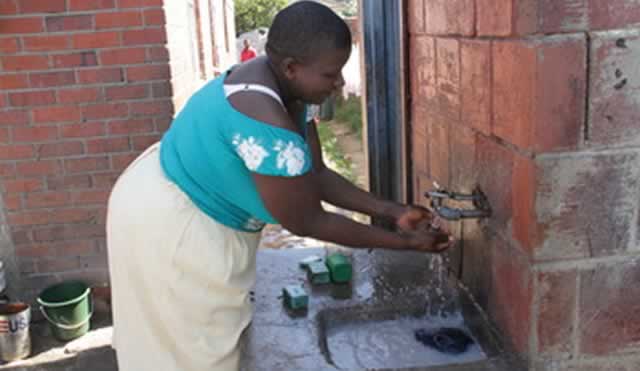
Blessings Chidakwa Municipal Correspondent
HARARE City Council, which is owed nearly $1 billion by ratepayers, is failing to pay for chemicals needed to treat water for its residents and satellite towns.
The Morton Jaffray Waterworks is processing around 175 megalitres a day, against a capacity of more than 750 megalitres a day.
Demand could be as high as 1 200 megalitres a day.
Even if cashflows improve, the council is still targeting to run the waterworks at just 50 percent capacity, or around 385Ml a day, which would still leave many areas with no water or intermittent supplies.
Northern and eastern suburbs need water pumped uphill across most of the city into reservoirs for household distribution and were effectively abandoned for regular supplies years ago.
The large expanse of the highly-populated western and south-western suburbs are fed by a pipeline from Morton Jaffray to Warren Control and then with water is pumped downhill from there; these suburbs are now also on very limited supplies.
Actual water that can flow out of taps is less than what is treated and pumped because of leaks in the distribution system.
The water shortage areas have spread from the northern and eastern suburbs, where supplies have been non-existent or minimal for years, to most residential areas, including the south-western and western high-density suburbs where a majority of the city’s people live.
Residents in most suburbs are relying on the few boreholes available, or on wells, many of which are not protected, raising fears of an outbreak of diseases such as cholera and typhoid.
Private boreholes are rare outside low-density suburbs and even in those areas, the majority of people have to buy water.
Council says it cannot afford to buy enough chemicals to run the treatment works at full throttle because so many residents are not paying their bills and suppliers, already owed hundreds of millions of dollars, are unwilling to extend further credit to the council.
Council needs a good chunk of the money it is owed to pay suppliers for chemicals already delivered and to increase supplies.
Harare spokesperson Mr Michael Chideme said processing of water in the 24 hours to 6am yesterday stood at 176,53 megalitres.
He said the plan was to increase capacity to 385 megalitres per day, which is about half of Morton Jaffray’s capacity. But that required a minimum of 92 tonnes a day of aluminium sulphate, equivalent to four truckloads.
Aluminium sulphate, commonly called alum, is one of the four primary treatment chemicals and is used to coagulate the grunge in the raw water so clear water can be drawn off for the next stages in purification.
“This translates to $6 532 523 per week for aluminium sulphate alone. Currently, we are receiving only one load per day and we got nothing on Sunday. Granular alum is the one sustaining us for now but it will only last a few days. We are getting the aluminium sulphate from Zimphos,” he said.
Chairperson of the Environment Management Committee, Clr Kudzai Kadzombe, echoed similar sentiments.
“We are treating limited amounts of water so that we stretch the available chemicals to cover more days,” she said.
She urged ratepayers to pay their debts. “The $900 million that we are owed is crippling our operations. We owe our creditors $500 million and they have been reluctant to do business with us.
“Our water reticulation infrastructure is receiving knocks. We experienced serious leaks on the major 1 500mm diameter pipe from Warren Control to Letombo Reservoirs which supplies the eastern suburbs (Msasa, Greendale, Mabvuku, Tafara and Glen Lorne).
“Some of our water pipes have outlived their lifespan. We are unable to do a wholesale replacement because of limited funding,” she said.
Harare Residents Trust director Mr Precious Shumba said most suburbs in Harare have been without water for three weeks.
Mr Shumba said the affected areas included Mbare Clinic, next to Edith Opperman, although council has been supplying water to the maternity clinic using bowsers.
“The toilets at Mbare Clinic have been shut down from patients, meaning they have had to be using the outside of the clinic to relieve themselves, and if you walk around the clinic, it is a mess. There is also a stench that will suffocate you,” he said.
Mr Shumba said Glen Norah, Budiriro, Glen View are hardest hit outside of the eastern suburbs of Msasa Park, Greendale, Mabvuku and Tafara and much of the far northern suburbs which have not had consistent water supplies for more than a decade now.
“The excuse that they do not have foreign currency to buy water treatment chemicals does not hold water, because they know that they must always stock water treatment chemicals for the next three months.
Mr Shumba urged Government entities and businesses to pay their rates.
Community Water Alliance director Mr Hardlife Mudzingwa said satellite towns were also seriously affected with Chitungwiza getting two megalitres a day against a daily demand of 75 megalitres.
“The situation is bad even though we received some rains,” he said.



 Online Reporter