


 Online Reporter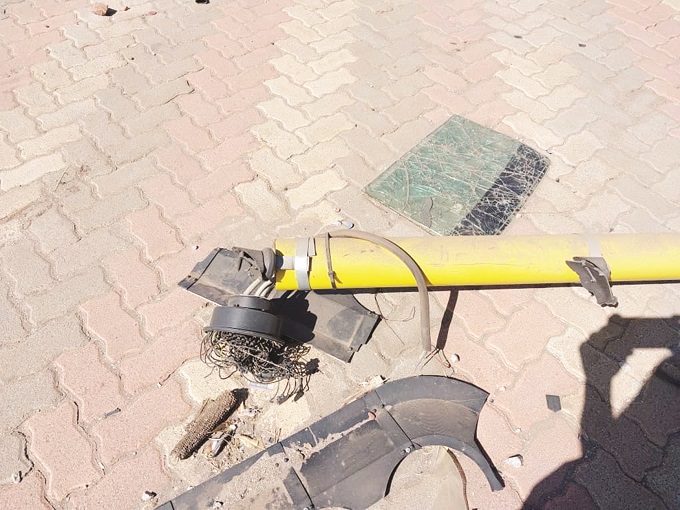
Elliot Ziwira
AT many intersections across the capital, Harare, traffic signals – those silent sentinels of order – are dying tragic, undignified deaths.
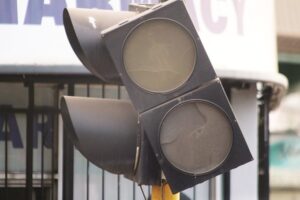
Flattened, beheaded or left dangling, they are no longer guardians of traffic flow and safety.
They are victims of a madness where wild honking is the new law and what ordinarily should be a thoroughfare has become a jungle.
Instead of enforcing harmony, they now litter junctions across Harare like relics of failed peace.
From Nemakonde Road to Herbert Chitepo Avenue, from High Glen Road to Samora Machel Avenue and from Seke Road to Julius Nyerere Way, poles lie shattered, heads twisted off or drooping like wilting sunflowers, and lanterns reduced to broken glass and exposed wires.
What was once structured is now savaged.
But this is no freak accident.
It is a pattern, a cycle and crisis where Harare’s traffic lights are casualties of reckless motorists, absent traffic police, poor planning and official lethargy.
Death of signal
Drive along Nemakonde Road from Marlborough, Westgate and Bluff Hill into Harare’s central business district (CBD) via King George Road and you will experience a perilous ritual.
The stretch from Harare Drive through to King George Road resembles a battlefield.
Crumpled poles lie in surrender.
Lanterns look skyward, pleading to indifferent heavens. At the Harare Drive-Nemakonde Road intersection, where four lanes converge in frenzied uncertainty, the traffic light system is under siege.
On a recent morning, the wreckage looked fresh: twisted steel, glass and a bouquet of wires drooping from a cracked signal head.
A single pole, dislodged from its concrete footing, lay across the tarmac.
On the opposite side, two yellow steel poles lay sprawling, stripped of their essentials, completing the massacre.
Exposed wires, stones, bricks, plastics and debris were strewn about, creating a picture of a war zone.
A reckless driving culture, marked by speeding kombis, mishikashika, drunk drivers and unlicensed motorists and those who generally disregard road etiquette, has exposed traffic lights to new gods.
The aforesaid intersection has been blacked out most of the time since the traffic lights were installed and Nemakonde Road rehabilitated, causing chaos and collisions.
The scene is not isolated.
“The crashes are no longer surprising. It always happens at night. These poles are somehow cursed,” said a nearby vendor, Dunmore Matambanadzo.
He gestures at the destruction.
“They put in new lights earlier this year. Weeks later, they were gone. Since then, it is just chaos, particularly at peak hours.”
His tone is tired, not from telling the story, but from living it.
“Rarely does a day pass without accidents occurring, sometimes pileups, but none fatal yet.”
Matambanadzo believes that even if replaced, the lights would be hit again within days.
The poles, he argues, are too close to the road, vulnerable to haulage trucks turning right into Harare Drive.
The carnage continues at Nemakonde and King George, where three lights have been flattened. At King George and Cork Road, one light is entirely gone.
At Josiah Tongogara and Milton, and Herbert Chitepo and Leopold Takawira, the signals are absent, malfunctioning or simply ignored. At these junctions, the rule is “guess and go” and let the will of God prevail.
This western-northern artery into the CBD serves thousands of commuters daily.
Yet traffic signals are under attack.
The cost?
Human lives, twisted metal and unending frustration. As tempers flare, drivers barrel through blind turns.
Pedestrians — vendors, schoolchildren and the elderly — dart between lanes of chaos.
“It is not just frustrating; it is terrifying. You treat each broken light as a gamble, and too often, luck runs out,” reckons David Tshuma, a commuter from Marlborough.
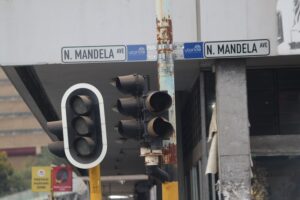
Across town, at Samora Machel Avenue and Simon Vengai Muzenda Street, one pole bows with its head wrecked off.
Another lies on the tarmac, its three-way signal face down, as if knocked out by a car with a grudge.
Logic of madness
On paper, Harare has 69 traffic light-controlled intersections in the CBD.
Ahead of the 44th SADC Heads of State and Government Summit last year, 31 were upgraded. Yet others were decommissioned when roads were dualised.
According to May figures, only 48 lights were working.
Recent data shows that 41 percent are dark.
But along corridors like Seke and Willowvale, the failure rate may be even higher.
While some point to vandalism, faulty controllers or Zesa power cuts, these pale in comparison to what is most visible: cars ploughing into poles like battering rams.
These are often hit-and-run incidents — a kombi fleeing the police, a fatigued driver or a speeding mushikashika veering too wide. With no barriers, no CCTV cameras and few deterrents, intersections become jungles where only the daring thrive and traffic lights are fair game.
“It is not surprising anymore,” notes Tafadzwa Zenda, a motorist.
“You slow down not for a red light, but to check if there is still a light at all.”
Quandary/human cost
City of Harare spokesperson Stanley Gama says several factors are at play.
He singles out old equipment, Zesa power cuts, vandalism and, most significantly, reckless driving.
The damage is staggering.
Installing traffic lights at an intersection costs thousands of dollars.
According to council estimates, fixing a single traffic light can cost between US$300 andUS$8 000 depending on its purpose and the damage incurred.
“The traffic lights are insured. It is the insurer’s responsibility to replace them.
“But they take time since damage must be assessed and sometimes culprits identified,” revealed Gama.
“If delays persist, residents endure months of chaos. We sometimes fix the damaged signals and claim the cost from our insurers.”
But the cycle repeats itself.
Lights are repaired, motorists strike again, repairs stall.
The human toll, often invisible, includes street vendors, schoolchildren, the elderly and those with disabilities.
“Every day is a gamble. One night, two cars crashed and smashed into the lights,” said Max, a vendor who sells cellphone accessories in town.
At the intersection of Robert Mugabe and Simon Vengai Muzenda, only metal stumps remain.
“Drivers do not stop; even when we are halfway across. There is no order. Everyone drives by instinct or ego,” laments motorist Munyaradzi Ndoro.
Policing the chaos
National police spokesperson Commissioner Paul Nyathi agrees that the crisis is grave.
Between January and May 2025, 2 155 accidents occurred at traffic light-controlled intersections.
Sadly, the accidents claimed 18 lives and injured 326. In the same period last year, there were 3 590 crashes, 46 deaths and 521 injuries.
Commissioner Nyathi attributes many of these accidents to non-compliance, including the creation of illegal lanes and driving into oncoming traffic.
“These figures call for a total mindset change among motorists. Some even attempt to run over traffic officers controlling traffic,” said Commissioner Nyathi.
Notably, the police did not previously track accidents at non-functioning signals, which was a blind spot in policy and planning.
However, the installation of surveillance cameras on streets as part of an electronic traffic management system (ETMS) is envisaged to improve the situation, especially considering most of the accidents happen at night.
During the day, officers are deployed to hotspots like Julius Nyerere and Kenneth Kaunda during peak hours, but many danger zones remain unmanned.
The danger zones, during peak hours or storms, become a melee of honking, hesitations and close calls. Schoolchildren scurry across like trespassers.
At war with common sense
Urban planner Dr Percy Toriro says the real issue is normalised recklessness.
Harare once had a computerised traffic control centre at Cleveland House, he said, where engineers could monitor intersections, adjust flow and detect faults in real-time.
“That system is no longer there and this explains the problem,” Dr Toriro said.
However, Gama disputes that such a system existed but confirms that the Harare City Council is working towards building a modern one.
Dr Toriro notes that Harare’s vehicle population has ballooned, yet infrastructure has not kept up.
“We need upgrades: wider roads, smart signals and grade-separated junctions in the city. Congestion is costly. It costs fuel, time and economic productivity, negatively impacting on the ease of doing business,” he said.
He also weighs in on complaints about signal poles being too close to the road.
“Some cities have signals closer to the road than ours, others set them further back.
It is not about positioning, but upgrading infrastructure and improving management,” notes Dr Toriro.
Harare’s fallen traffic lights are no mystery.
They are what happens when drivers ignore rules, infrastructure is left exposed and urban expansion is not matched by municipal intelligence.
“Most of the time it’s reckless driving,” admits kombi driver Barnabas Chadamoyo, who plies the Budiriro-City route.
“Speeding kombis, drivers fleeing police or poor visibility at night. Most of the time the lights are not even working. You creep through, guessing. That is how crashes happen.”
Outrage
On social media, outrage and satire abound.
Videos of fallen poles, broken lights and reckless red-light runs dominate X and Facebook and memes depicting traffic lights as defeated gladiators go viral.
@bla_bidza posted: “Holding motorists accountable for replacing damaged road signs, traffic lights and contributing to road repairs is the most practical solution.
If they fail to comply, their vehicles should be impounded and auctioned to fund the necessary restorations.”
@Jamwanda2 chimed in: “I agree fully; public facilities have become tragic commons: consumption is non-rivalled; destruction is with impunity; the inconvenience is generalised. All that must change through penalties.”
The consensus: destroy a traffic light, pay for it or face jail.
Legal expert and Zimbabwe Media Commission Commissioner Miriam Tose Majome notes the law is clear, but enforcement is not.
“Holding hit-and-run drivers accountable remains a significant legal and practical challenge,” she explains.
The Road Traffic Act allows for prosecution, fines, jail time and licence revocation.
Legal personas, municipalities can claim damages for destruction or violation of their property.
“Many errant drivers evade justice due to poor enforcement and moral decay,” alleges Majome.
The Central Vehicle Registry (CVR) can help trace offenders, but its database is outdated owing to the high cost of formal vehicle transfers.
“Many people resort to informal ownership through affidavits and agreements of sale,” she added.
This complicates both criminal and civil proceedings. Still, civil remedies exist if the driver is traceable, including claims for injury, death, loss of income and emotional trauma.
Compulsory third-party insurance may offer protection, but only if the vehicle is legally compliant.
Way forward
Commissioner Nyathi proposes a smart traffic management system, jointly run by the ZRP and the City of Harare. He suggests bus-only lanes, park-and-ride models, redesigned interchanges to reduce congestion and the reintroduction of the mass transport system.
Zesa has mooted smart prepaid meters for traffic lights, but Harare Mayor Councillor Jacob Mafume objects.
“It sounds good on paper,” Councillor Mafume told a recent ordinary council meeting.
“What if the meter runs out of credit on a traffic light, a car then gets involved in an accident?”
Meanwhile, Gama confirms Harare’s long-term plan to instal an intelligent traffic coordination system, with surveillance, real-time monitoring and enforcement.
But until then, citizens remain sceptical as they continue to navigate blind intersections like gladiators in an urban amphitheatre.
Without serious enforcement, all plans remain only talk. Harare’s traffic signals are not cursed; they are under attack!
Unless the contract between the authority and the citizen is renewed and motorists are held fully accountable, most traffic lights will remain in darkness.



 Online Reporter