

 admin
admin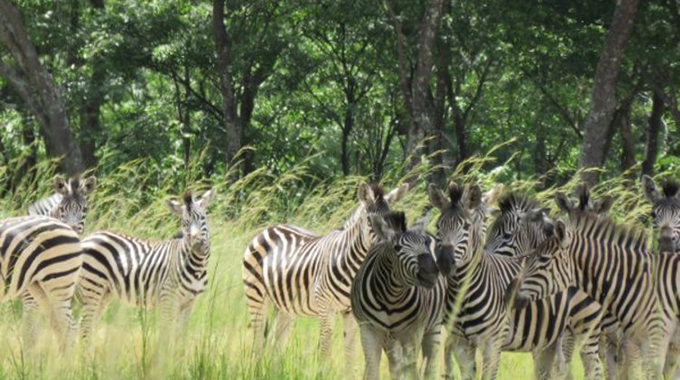
Isdore Guvamombe,Assistant Editor
Before the hassle brought by the birth of Harare into a capital city, Mukuvisi River’s water flowed innocently and gently over gleaming stones polished smooth by ages of running water.
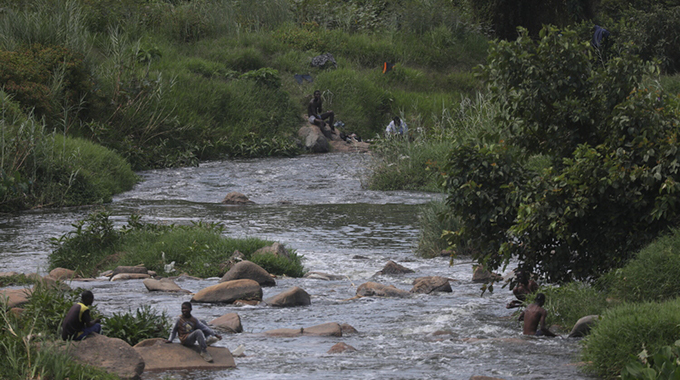
On its banks banana groves, luxuriant water reeds, water cabbages, lilies and thickets of riverine vegetation accompanied the chatting waters.
It was a river of life. Clean and virgin.
In the flourishing riverine vegetation where bright-coloured birds, their plumage a mixture of scarlet, gold, green and blue.
The birds proclaimed each new day by emblazoning the dark green canopy where they flirted from branch to branch or simply streaked among the tall trees.
Mukuvisi, like many, starts stupidly and seemingly confused from a valley that is equally superfluous south east of Harare, then it stretches westwards, snaking past the city on its final vomit into Manyame, also known as Hunyani River.
Today, Mukuvisi River stands deflowered, abused and undignified, with an intricate network of footpaths from Harare’s various suburbs converging on its banks like arms of an octopus.
Like a Catholic father confessor, Mukuvisi River has listened to many quarrels between washing and bathing women, good and bad gossip, news and scandals.
It has witnessed budding romances become marriages and weddings. It has seen vice from rape, robbery to murder, suicide, homicide and little everything else. But it remains angry and mum. It keeps secrets.
Imagine if Mukuvisi River was to write its book — “The Story of My Life”— it certainly would be a best seller.
Today, Mukuvisi could best be described as a river of life, vice and death.
It is in a sorry state, but has stood the test and not taste of time.
A flourishing wildlife sanctuary, a bush sex hub by the railway siding, a place for apostolic sect baptism, traditional rituals, washing of kombis, buses and cars, market gardening, washing of clothes, bathing and fetching water for domestic and industrial use, are all but activities within its 17,5km stretch.
Then there is the chocking sewage, the foul-smelling industrial waste which makes one feel Mukuvisi is a dying river. But somehow, the river rejuvenates itself with fresh water every rainy season.
As the river enters Harare, the 263 hectares of indigenous Musasa and Miombo woodland conveniently named Mukuvisi Woodlands speaks to what it could have been centuries ago.
Flies hover above dotted wild animal droppings, a stark declaration that they are still part of the ecological cycle along the river.
Confident in the camouflage of their stripes, zebras pose, heads aligned, stripes merging and flowing in motion, displaying their magnificent God-given colours.
Giraffes race along the fence that cuts the park from Glenara Road in Eastlea — all legs and neck — yet looking elegant in their gangly awkwardness. Their heads tower majestically above the ordinary fence.
Nimble-footed impala graze, trot and jump. The elands gracefully move slowly and tentatively as they reluctantly graze closer to the road. Huge snakes abound. Then there is the ugly wildebeest and the moribund ostrich population.
From the woodlands, life changes as the river passes through the southern part of the city centre. Here, everything and anything goes.
Child prostitution along the railway station where sex is sold cheaply, drugs, brewing of elicit beer, thuggery, robberies and all vice you can think of abound in broad daylight. It is a danger zone. At night, this zone is a no-go area for newcomers, but there is a whole population that spends time in the city centre during the day and returns to the riverside to sleep.
They call this place their home. Some sleep in the open on reed mats.
Others under trees and others in hovels. There are also small vegetable gardens on this stretch.
Most of the green mealies and groundnuts sold in Harare’s CBD are actually boiled along the river. Some enterprising people have built small bridges across the river for shorter routes and they have put tollgates.
Both motorists and pedestrians are made to pay.
One such bridge is at Mukandabhutsu, where motorists and pedestrians pay to cross between Msasa Park and Msasa. Another well-established bridge is between Graniteside and Mbare.
People use it to cross between Mbare and Sunningdale. Before the bridges, people delicately crossed using sewer pipes. More often than not, they slipped.
From that stretch, whose banks have Eastlea, Braeside and Granite Side to the south and the city centre to the north, the river flows past Magaba and Mbare and here, drug peddling, industrial waste and brewing of elicit kachasu beer are the main events. Somehow, the people here know how to purify the water for consumption.
As the river goes past Houghton Park and Waterfalls, it is mainly bathing, washing cloths and apostolic sects doing their rituals.
That stretch is also home to latter-day mermaids — the slay queens — who hold their rituals using rice, expensive whisky and wine, plus traditional snuff. Hordes of women, bathing and washing also increase and so do car cleaners.
Thereafter, the river crosses Simon Mazorodze Road snakes past Glen Norah and Glen View south, on its final stretch to Manyame.
Here the water is super dirty. Enterprising people dig wells along the river, relying on sand purification. But the water is mainly used for washing. They say it needs special soap due to toxicity.
When the story of rivers is told, Mukuvisi will occupy a special place.
Its story, unfortunately, will be told from our own perspective, for, do they not say, until a lion learns to tell its own story, the story will be told from a hunter’s perspective?



 Online Reporter