The Meteorological Services Department’s national climate outlook for the 2026/2027 season projects El Niño conditions and an increased likelihood of below-normal rainfall.
The outlook also points to an erratic start to the season and warmer-than-normal conditions during its first three months.
These signals require careful attention to risks affecting crops, livestock, water supplies and household livelihoods.
The department also cautions that a drier season does not eliminate the risk of severe storms and flash floods.
Our preparedness must, therefore, remain multi-hazard, informed by updated forecasts and responsive to conditions on the ground.
The experience of the 2023/2024 El Niño drought reminds us why this matters.
Its effects extended beyond reduced harvests to water shortages, pressure on household diets and increased risks to children’s nutrition, health, education and protection.
A rainfall shock can become a crisis across several sectors at once.
We must consequently look beyond the weather event to the people, services and productive assets exposed to it.
Behind a rainfall projection may be a farmer deciding when to plant, a household struggling to protect its livestock or a health facility preparing to maintain services when water becomes scarce.
Those are the decisions our analysis must help to inform.
Anticipatory action means using credible forecasts and risk information to prevent or reduce the impacts of a predicted hazard before those impacts fully unfold.
It brings together three essential elements: agreed triggers for action; agreed interventions; and financing arranged in advance.
Preparedness creates the capacity to act; anticipatory action puts that capacity to work at the appropriate moment.
This does not remove the need for emergency response or long-term investment in resilience.
It connects them.
Nor does it require us to pretend that forecasts are infallible.
It requires transparent, proportionate decisions, based on the best available evidence, with arrangements to adjust as the situation evolves.
The question is not only whether we saw the risk coming.
It is whether we used the time available to reduce its consequences.
Resilience building
In response to increasing climate variability and recurrent droughts, the Government has also prioritised resilience building and disaster preparedness through national policy frameworks including the National Development Strategy 1 and 2 (NDS1 and NDS2), the National Climate Policy, the National Disaster Risk Management Strategy and the National Adaptation Plan process.
Zimbabwe has further strengthened its engagement with regional and continental risk management initiatives, including the Southern African Development Community (SADC) Climate Services Centre and the African Risk Capacity (ARC).
Building on lessons from the 2023/2024 El Niño drought, the Government is increasingly recognising the importance of anticipatory action and forecast-based preparedness as cost-effective approaches for reducing disaster impacts.
However, despite progress in generating climate and early warning information, significant gaps remain in translating forecasts into coordinated early action, establishing pre-agreed triggers and protocols, integrating climate risk into sector planning and budgeting, and ensuring interoperability among institutions responsible for risk monitoring, preparedness and response.
We are not starting from an institutional vacuum.
The Department of Civil Protection, the Food and Nutrition Council, the Meteorological Services Department and ministries responsible for agriculture, water, health, social protection and Local Government already contribute to forecasting, vulnerability assessment, preparedness and response.
These institutions have established mechanisms for seasonal forecasting, vulnerability assessments, food and nutrition security monitoring, contingency planning and emergency response coordination.
We should bring those capabilities together while respecting their respective mandates.
As we pursue solutions, we must remain guided by our President, His Excellency, Cde Dr ED Mnangagwa’s vision and principle of “leaving no one and no place behind”.
Vulnerable groups, particularly children, women, persons with disabilities and communities affected by recurring shocks and disasters, must remain at the centre of our interventions, regardless of geographical or socio-economic status.
Against this background, we need to address six practical priorities which are:
1. Establish a shared, impact-based understanding of risk
The analysis should distinguish between different livelihood systems and between rural and urban vulnerabilities.
It should also identify the assumptions and information gaps that require continued monitoring.
A national picture is essential, but implementation must respond to local conditions.
2. Agree on triggers, decision-making authority and timelines
The protocol must specify what evidence will trigger action, who will verify that evidence, who is authorised to make the decision and how quickly implementation should follow.
3. Agree on feasible, coordinated and costed sector actions
Our ambition should be that families emerge from a difficult season not only having survived but having retained the foundations for recovery: their health, their productive assets and their children’s opportunity to learn and develop.
I must emphasise that nutrition must be protected from the outset, not treated only as a consequence to be addressed later.
4. Make financing part of the protocol, not an unresolved question after it
Speed and accountability should be designed together.
Procurement, financial controls, reporting and verification arrangements need to be clarified in advance so that timely action does not depend on improvised procedures.
5. Ensure that national agreements become locally understood and deliverable actions
The principle of leaving no one and no place behind must be reflected in transparent targeting and accessible delivery.
Particular attention is required for children, women, older persons, persons with disabilities and households facing repeated shocks.
Our arrangements must not assume that everyone can access the same technology, travel the same distance or respond in the same way.
6. Establish accountability for delivery and learning
The protocol should also provide for testing through a simulation or practical readiness exercise, followed by review as the season progresses.
Where an action cannot be delivered within the available time or capacity, that limitation should be addressed before activation.
Lessons from implementation must inform subsequent revisions.
Partnerships
As the Government, we also recognise the important role of the private sector and development partners.
Government institutions cannot undertake every part of this task in isolation.
As the Government, we invite development partners, civil society, the academia and the private sector to identify the specific capabilities they can contribute, whether in analysis, communications, logistics, service delivery, financing or independent learning.
Those contributions should be aligned with the agreed national arrangements and recorded clearly so that coverage is understood and duplication is reduced.
In the end, I expect us to have a clear impact-based risk analysis report, incorporating seasonal scenarios and priority areas, and a pre-agreed multi-sector anticipatory action protocol that sets out triggers, actions, responsibilities and financing arrangements.
I would like these products to be accompanied by a practical implementation matrix and a clear road map for validation, any required approvals, dissemination to sub-national structures, readiness testing and review.
Let me reaffirm the commitment of the Office of the President and Cabinet to supporting leadership and coordination on early warning for early action.
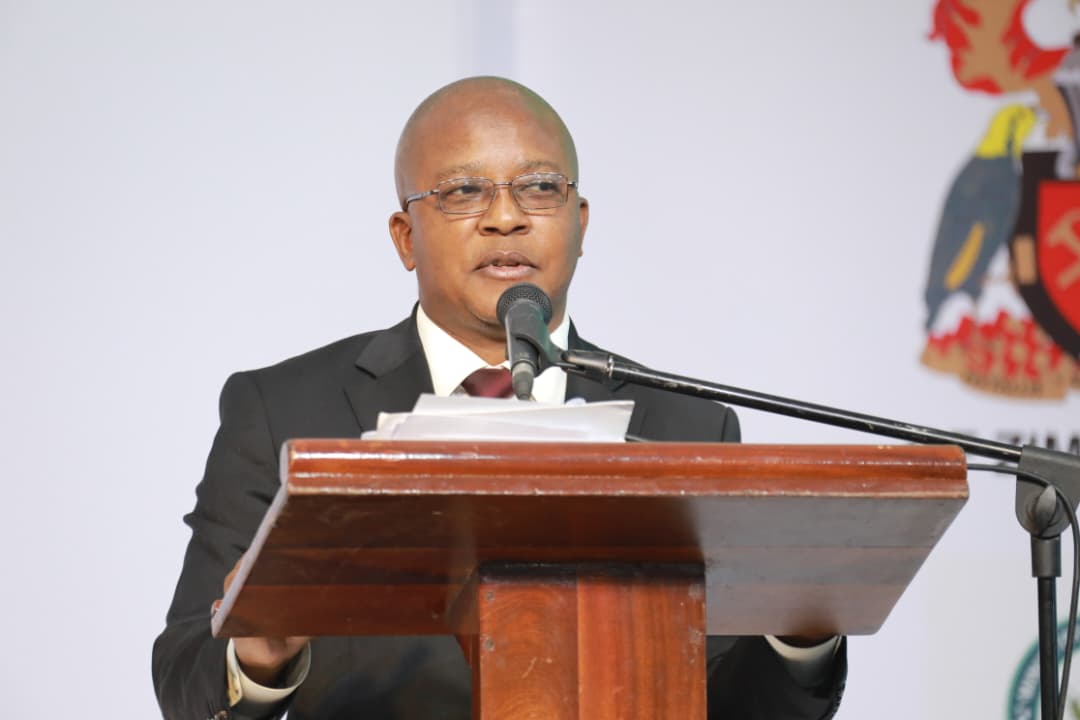
Mr Zvinechimwe Churu is the Deputy Chief Secretary to the President and Cabinet. He was addressing the Multi-Stakeholder Workshop to Develop an Anticipatory Action Protocol for Zimbabwe in Harare last week.