Online Reporter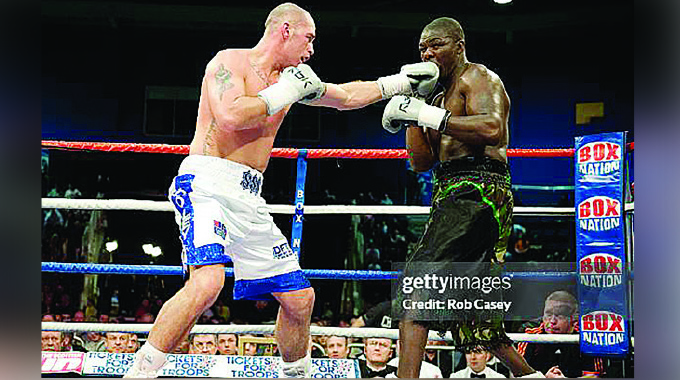
Lovemore Dube, Zimpapers Sports Hub
WHO’S the Zimbabwean boxer with the most defeats?
The answer’s both tragic and telling; Hastings Rasani.
Once a rising star under Stalin Mau Mau’s boxing stable in Harare, Rasani looked like he had it all; height, discipline, and the kind of sharp movement that draws fans and frightens opponents. When he stepped into the ring in 1998, it felt like the beginning of something big.
But the story didn’t end in glory. Rasani fought 95 professional bouts between 1998 and 2012. He lost 68 of them.
According to Boxrec, the authoritative archive of professional boxing records, Rasani ended his career with 22 wins, 68 losses, and five draws.
On paper, he was a journeyman. In reality, he was a human punch bag, especially during his time in the UK.
He kept climbing into the ring, again and again, even after losing 18 consecutive fights.
He shouldn’t have. Not in the heavyweight division.
At 1,88 metres, Rasani had the frame for super middleweight. There, he could’ve used his reach and speed to better effect. Instead, he went where the money was. Promoters, some more interested in profits than his well-being, kept booking him. The toll was brutal. After so many blows to the head, it’s hard not to worry about long-term damage, possibly even Parkinson’s.
In his prime, Rasani could dance, duck, jab, and land punches that stunned even the toughest fighters. His early victims were no pushovers, Arigoma Chiponda, the late Gibson Mapfumo, and Sipho Moyo were seasoned and respected.
Mapfumo and Mlilo had reigned in the middleweight ranks, while Moyo controlled the super middleweight scene under promoters Jeff Dube and Omega Sibanda. Chiponda, known for his punishing hooks, was dominant in cruiserweight and light heavyweight. Beating these men wasn’t just luck. Rasani had genuine skill.
Back then, the old guard, fighters like Sanderson Nyebai, Simon Ngulube, Nightshow Mafukidze, Black Tiger, and Jabulani Gombiro, were fading.
Rasani’s rise seemed perfectly timed. He had the look, the work ethic, the results. Zimbabwean boxing was ready for a new hero.
At the same time, Arifonso Zvenyika was lighting up the flyweight division, winning the Commonwealth title and earning recognition from major bodies like the WBA, WBC, IBF, and WBO. Rasani, boxing in a heavier weight class, was getting even more attention at home as Mau Mau’s poster boy.
Then it unravelled.
After his 14th pro fight in 2001, a victory over Chiponda to claim the national light heavyweight title, Rasani challenged the UK’s Tony Oakey for the Commonwealth belt.
He lost. Back home, he tried to defend his local crown against Sipho Moyo. Another loss.
By 2002, he had moved to the UK full-time. That’s where his career truly collapsed. Of his 68 total defeats, 64 came on British soil. He scraped together 11 wins and five draws, but the rest were beatings.
He also carried prior losses to Ambrose Mlilo (twice), Neil Simpson, and Moyo into his new life abroad.
The fact that he was allowed to keep fighting for so long, raking up nearly 70 losses, wasn’t resilience. It was neglect.
And it exposed a deeper problem in the sport: a system that lets struggling fighters get chewed up, fight after fight, while someone else cashes the checks.
Rasani’s story isn’t just about boxing. It’s about what happens when talent meets poor guidance, and when a fighter keeps stepping into the ring long after the cheers have stopped.



 Bongani Ndlovu