Rutendo Nyeve, [email protected]
HWANGE Colliery Company Limited (HCCL) is accelerating its turnaround through joint venture (JV) partnerships, with the coal miner constructing new power stations and investing in battery-powered mining trucks as it moves towards becoming a diversified energy and chemicals producer.
The company is also reviving its coke and chemicals value chains, with its coke oven battery having been recommissioned in July after being dormant for almost 12 years.
Speaking at the Ministry of Energy and Power Development strategic review workshop in Victoria Falls recently, HCCL general manager for mining and joint ventures Engineer Akim Mutiti said the company’s transformation was being driven by new investment, value addition and beneficiation.
Traditionally, Hwange was mainly a coal producer, but the company is now expanding into power generation, coke production and chemicals while using JV partnerships to drive the development of new mines and associated infrastructure.
“Traditionally, Hwange has been mainly a coal-producing company. We also supply ZESA with the coke oven gas. Over the years, because of several challenges, we stopped that almost 12 years ago,” he said.
“Also, our coke oven batteries were decommissioned almost 12 years ago, but in July we recommissioned our coke oven battery. We are now producing coke.”
Eng Mutiti said the company was also working to resuscitate its by-products plant, which processes gas generated from the coke oven battery.
“This is the plant that processes the gas that comes out of the coke oven battery. Part of that gas will be sent to the power station,” he said.
Part of the by-products will also be processed into tar, benzol and other chemicals, restoring revenue streams that had been dormant for more than a decade.
“Like what we were doing previously, part of the by-products will also be converted into tar, benzol and other chemicals. This is what we are doing,” said Eng Mutiti.
He said JV partnerships were also enabling the company to expand its mining and energy operations.
“We are using joint venture partnerships to invest in new mines and new coke oven batteries. We are building another mine and we have already started constructing a power station,” said Eng Mutiti.
He said in the next two years the company will construct coke oven batteries and another power station that uses gas from the coke oven batteries.
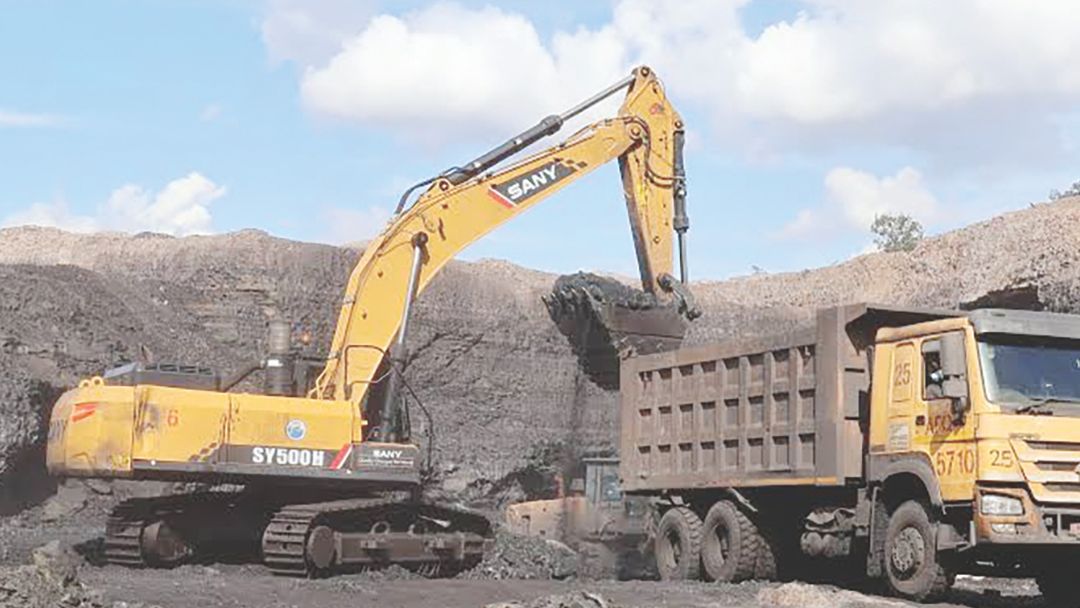
The company is also moving to reduce its reliance on diesel-powered mining equipment.
Eng Mutiti said HCCL had already ordered battery-powered mining trucks from China, with commissioning expected next year.
“When it comes to the use of battery cars, this is a project that we have already embarked on. Sometime next year, we will be commissioning our battery-powered mining trucks,” he said.
According to the company’s presentation at the workshop, HCCL projects electricity consumption of 53 000MWh in 2027, alongside monthly diesel consumption of 65 000 litres and petrol consumption of 20 000 litres.
The introduction of battery-powered mining trucks is expected to reduce the company’s dependence on liquid fuels and help lower operating costs.
HCCL also indicated a preference for electricity billing under a Set Off with Coal Delivered model, which would allow the company to use its coal output to offset electricity costs.
The company further called for predictable fuel prices from the Ministry of Energy and Power Development to improve operational and cost planning.
The developments mark a significant shift for HCCL, which has endured years of operational challenges, financial distress and ageing or decommissioned infrastructure.
Through its JV partnerships, the company is now investing in new mines, coke oven batteries, power generation, by-product processing and electric mining equipment.
The strategy is also aligned with the broader push for value addition and beneficiation in Zimbabwe’s mining sector, with HCCL seeking to derive greater value from coal beyond raw production.
Eng Mutiti said the coming two years would be critical as the company implements its expansion plans.
The Ministry of Energy and Power Development strategic review workshop brought together key stakeholders to align sectoral projections and address energy access and supply security.