Online Reporter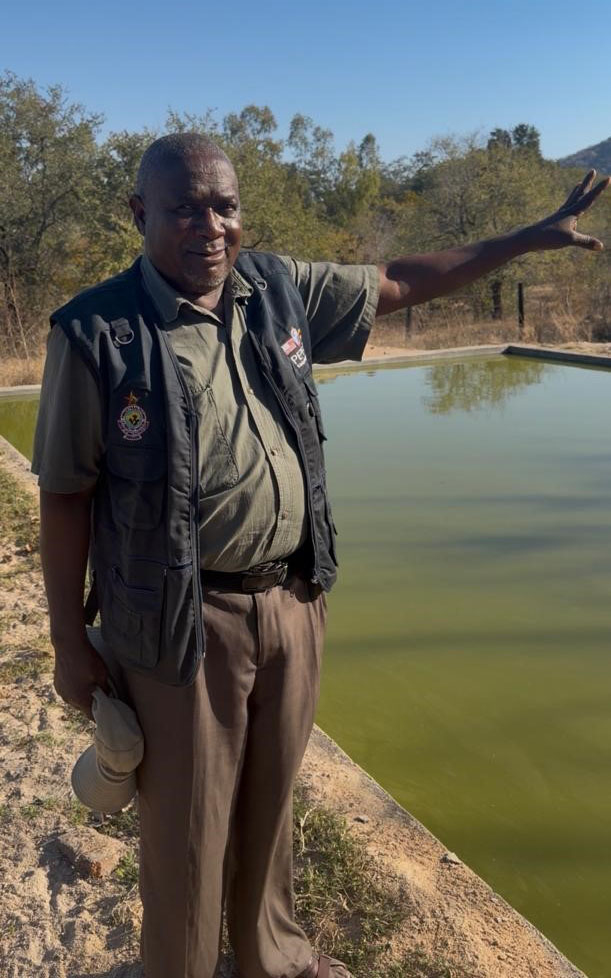
Lloyd Makonya
Correspondent
IN an era where traditional leaders are increasingly expected to champion development alongside their customary responsibilities, Headman Rodwell Murwira of Murwira Village under Chief Marange is demonstrating that leadership is not merely about presiding over community affairs. It is about inspiring people through action.
At his homestead, Headman Murwira has established a thriving permaculture project centred on six well-managed fish ponds, each stocked with an average of 2 500 fish.
At harvest, the project is capable of supplying enough fish to satisfy demand from more than 1 000 community members in his community, while generating income to sustain and expand the enterprise.
The project has become a practical demonstration that rural communities can create wealth, improve food security and strengthen household nutrition by making productive use of locally available resources.
“As a traditional leader, I believe leadership begins with setting an example,” said Headman Murwira during a tour of the project.
“I cannot encourage my people to work hard or utilise the resources around them if I am not prepared to do so myself.
‘‘If we make good use of the land, water and sunshine that God has blessed us with, our communities can produce food, create employment and improve livelihoods.”
His philosophy resonates with President Emmerson Mnangagwa’s development mantra: ‘‘Nyika inovakwa nevene vayo’’.
Rather than waiting for outside assistance, Headman Murwira has demonstrated how communities can harness local resources to create sustainable livelihoods while contributing to national development.
His initiative also mirrors the aspirations of the National Development Strategy (NDS2), which prioritises food security, nutrition, rural industrialisation, renewable energy, climate resilience and community empowerment as key drivers of Zimbabwe’s economic transformation.
Beyond economics lies another important story.
Fish is recognised globally as one of the most affordable and nutritious sources of high-quality protein, providing essential nutrients that support healthy growth and development, particularly among children.
The importance of improving access to nutritious food is underscored by national nutrition data.
The 2019 Zimbabwe Multiple Indicator Cluster Survey found that Manicaland had one of the country’s highest levels of childhood stunting, with nearly one in every three children under the age of five affected. While the causes of stunting are complex, nutrition experts agree that increasing access to diverse, protein-rich foods forms an important part of the solution.
For Headman Murwira, fish farming is therefore about much more than business.
“When families have access to affordable fish, they improve the quality of their meals.
“Healthy children become productive adults.
‘‘If our communities are well nourished, they are better able to learn, work and contribute to the development of our country,” he said.
Headman Murwira plans to increase production to supply nearby institutions such as Marange High School and Holy Ghost High School, while expanding distribution to surrounding villages and local markets.
“My ambition is for schools and neighbouring communities to buy fresh fish produced right here in Marange,” said Headman Murwira.
The success of the project has been made possible through strategic investment in sustainable infrastructure.
Four solar-powered boreholes provide a reliable water supply throughout the year, allowing fish production to continue even during dry periods.
The use of renewable energy not only reduces operating costs but also demonstrates how climate-smart technologies can support agricultural production in rural communities.
At an age when many would have chosen retirement, Headman Murwira continues to oversee daily operations with remarkable energy and determination.
His message to the people he leads is simple but profound, development begins with individual initiative, hard work and the wise use of available resources.
For Headman Rodwell Murwira, the greatest harvest is not measured by the thousands of fish that leave his ponds each season, but by the healthier families, empowered villagers and renewed hope growing alongside them.