admin
admin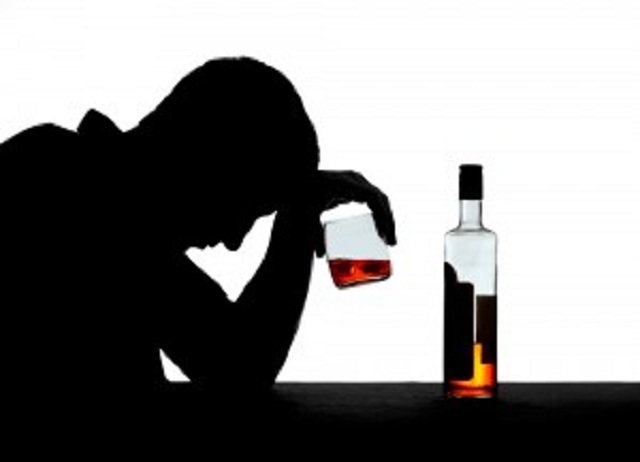
Trust Marandure
The alcohol industry is big business. In some countries millions of dollars are spent on advertising alcohol to the public. Consumers’ expenditure tops several millions of dollars in countries with strong economies with governments raking in millions of dollars in revenue through alcohol tax.
According to the World Health Organisation, the harmful use of alcohol is a serious health burden. Alcohol affects virtually all individuals on an international scale.
WHO says health problems from dangerous alcohol use arise in the form of acute and chronic conditions, and adverse social consequences are common when they are associated with alcohol consumption.
Every year, the harmful use of alcohol kills 2,5 million people in the world, including 320,000 young people between 15 and 29 years of age. It is the third leading risk factor for poor health globally.
What is alcohol?
The word alcohol probably has its origin in Arabic, meaning a fin dust or essence. There are four main types of alcohol.
These are:
1) Methyl Alcohol CH3 OH,
2) Ethyl Alcohol C2 OH
3), Propyl Alcohol C3 H7 OH,
4) Butyl Alcohol C4 H9 OH
Ethyl alcohol is the one that is the spirit in intoxicating drinks, and its concentration ranges from 4 to 59 per cent. Alcohol has very valuable antiseptic properties, and when used outside the body is a very useful chemical. Alcohol beverages are produced either by fermentation or by distillation. Quite contrary to the opinion of many, alcohol is not the gift from God. God, by His act, does not make alcohol. The laws of nature ripen grapes. If they are not eaten, they rot and decompose. The manufacture of alcohol is wholly man’s device. Dr Henry Munros, lecturer in Medical Jurisprudence, says:
“Alcohol is nowhere to be found in any product of nature, was never created by God, but is essentially an artificial thing prepared by man through the destructive process of fermentation”.
If we believe the advertisements, then of course we would accept that alcohol refreshes the parts that other drinks fail to reach, and looks good, tastes good and does the body good. All this may lead us to assume that alcohol is a stimulant. This is totally incorrect, as it is actually a narcotic, a depressive drug of habituation. Of all the effects produced by alcohol, those upon the nervous system are the far most important because the master functions of coordinative movement, perception, judgement and emotional control are affected.
Alcohol’s effect on the body
Alcohol differs from other beverages in that it does not remain in the stomach for any length of time.
Some is absorbed, through the walls of the stomach, into the blood stream-and as soon as that happens the drinker feels the effects. Alcohol which has not been absorbed passes into the small intestine, this, in turn, is circulated throughout the body and into the blood stream. Thus, when alcohol enters the body, it is soon carried to the brain.
The brain controls all bodily functions right from the moment of birth. More intricate than any complicated computer centre, man’s brain is the most amazing of nature’s many works. In this three-and-a- half pounds of grey matter are concentrated 10 to 12 billion nerve cells which serve as the control centre of the whole body. Because alcohol is a narcotic drug it has the same effect upon the central nervous system as morphine and anaesthetics.
The first areas of the brain to be affected are the frontal lobes, or upper brain- the site of man’s higher faculties, judgement, self-control, reason and reaction time. Thus, because of this, alcohol is a very dangerous drink for drivers. Alcohol accounts for at least one in 10 of all deaths on the road. Most crimes are considered to be committed under the influence of alcohol.
Because alcohol acts on the brain as anaesthetic, there is interference with normal brain activity, even though the drunker may not be aware of it. Under this condition, the best features of man are lost first, and his worst features brought out.
Liver, heart and other organs
Alcohol, when taken orally, does not remain in the stomach, but is distributed to all parts of the body, and because it is a poison the body soon begins to eliminate it. Up to 10 percent is excreted through the urine, breath, saliva and sweat. The rest must be disposed of inside the body and is oxidised or burned.
The liver has the major job, disposal, and to make this possible alcohol must be chemically broken down into suitable substances which the body can then eliminate in the normal way. Three pints of beer would need about six hours for disposal. When a person continues to drink, the liver becomes damaged and the cellular tissue of the liver replaced by fibrous type tissue, the results is a condition known as cirrhosis.
Doctors report that they are seeing cirrhosis increasingly in a younger age group. In two studies conducted in Birmingham the proportion of alcoholic cirrhosis rose from three percent to 51 percent of total cirrhosis cases in just 10 years. A statement from the report of the Royal Collage of Psychiatrists is very enlightening on the subject of cirrhosis.
Emphasis must also be placed on the fact that, if the patient stops drinking, the liver disease will often cease to progress.
The physiological effects of alcohol
Alcohol can close down the brain. It can affect millions of nerve cells and change communication patterns throughout the brain, in this way disturbing specific brain functions. Alcohol can affect vision, distort hearing, muddle speech, impair judgement, dull the body’s senses, disturb motor skills, and reduce coordination. And deep inside the brain alcohol can affect the areas that control aggression, hunger and thirst, pleasure and pain, body temperature, and sexual activity.
The central core of the brain can be affected by alcohol, thus triggering the vomit centre and disturbing the centre of alertness, the reticular activating system. When no alcohol is present, the reticular system receives signals from brain and body and responds by sending out wake-up signals to keep the organism alert. Alcohol may decrease the incoming signals and depress the reticular system itself. If the system is depressed too much, it may fail to maintain alertness. Stupor or coma may result. And the brain closes.
More alcohol, less judgement
When alcohol enters the brain, it initially gives a pleasant glow. To try to maintain or increase that feeling, some people drink again and again. But the comfortable glow doesn’t last long. Through a complex journey alcohol circulates throughout the body and brain, and if drunk in sufficient quantities, it can shut the brain down completely. This process begins as alcohol is introduced into the body, and continues as drinking goes on. And the more a person drinks, the less able he is to judge accurately what alcohol is really doing to him.
About the writer: Trust Marandure is a naturopathy practitioner. He can be contacted at 0772482382 Or email tgmarandure @yahoo.com



 Bunjiwe Mkwananzi