Sidumisile Mabena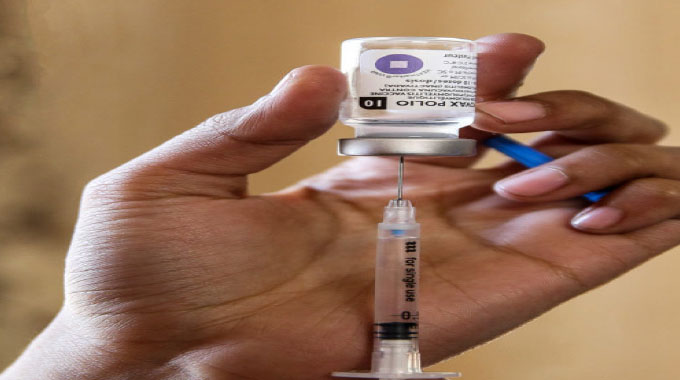
Ronald Mpofu, [email protected]
IN Plumtree town and across Bulilima and Mangwe districts, something important has been happening quietly over the past few days. Health workers have been moving from place to place, making sure young children are protected from polio. By the end of the campaign, more than 95 percent of the targeted children had been vaccinated, and medical staff at Plumtree Hospital say they have reached their goal after a strong outreach effort in the border areas.
The programme was carried out over four days, and it did not happen only at hospitals or clinics. Health teams went out into communities, visiting homes, setting up temporary stations, and travelling long distances to make sure no child was left behind.
This campaign was necessary because of concerns in the region. Cases of polio have been reported in nearby countries such as Botswana. Because Mangwe and Bulilima are close to the border, health authorities decided to act quickly and carry out this large vaccination exercise to protect children.
In Mangwe district, vaccinations for children under five years old are usually done every month. However, this campaign was bigger than usual. The target for the first phase was 8 145 children, but the district managed to vaccinate 9 034. This shows that many families responded well to the programme.
Some areas recorded especially high numbers. In Sanzukwi, 867 children were vaccinated, well above the target of 555. Ingwizi growth point also did well, with 848 children vaccinated against a target of 901.
In Plumtree town, the numbers were even higher than expected. Health officials managed to vaccinate 1,141 children, far beyond the target of 264.
“This is a two-phase vaccination campaign for targeted high-risk districts. The first phase ran from 20 to 23 April 2026, and the second phase will run in the first week of June,” said Plumtree District Medical Officer Dr Joe Nganunu.
He said that this campaign is part of a wider effort in the region, as other neighbouring countries are also carrying out similar programmes to stop the spread of polio.
The vaccination programme focuses on children under the age of five, as they are the most at risk. Dr Nganunu said the discovery of polio cases in nearby countries, including Botswana, made it necessary to act quickly and protect children before the disease could spread further.
Health teams travelled far to reach people. Some even went as far as Mambale village, which is about 170 kilometres from Plumtree town, showing the level of effort put into the campaign.
The programme was supported by the Ministry of Health and Child Care (MoHCC), which is working to stop the spread of polio through targeted vaccination drives. It is also part of a wider regional plan involving countries such as Botswana, Malawi, Mozambique, and Zambia.
The first phase of the campaign took place from April 20 to April 23, 2026. The second phase is planned for June 2 to June 5, and will cover Bulilima, Mangwe, Matobo, and Gwanda districts in Matabeleland South.
During this campaign, all children under five were vaccinated, even if they had already received previous doses. This was done to make sure every child is fully protected.
To reach as many people as possible, health workers used different methods. They went door-to-door, set up fixed vaccination points, and also used mobile units to travel to remote areas.
Although the campaign only lasted a few days, its impact will last much longer. For many families, it has brought peace of mind, knowing their children are protected. For the community, it is a strong step towards keeping polio out of the region.



 Online Reporter