admin
admin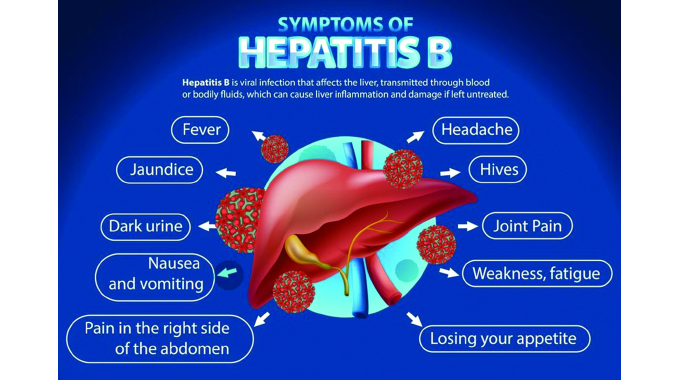
Rumbidzayi Zinyuke, Health Buzz
Every year, on July 28, the world celebrates World Hepatitis Day.
The day is an opportunity to step up national and international efforts to eliminate the disease.
But the little known day passed almost silently.
As silent as the condition itself.
Except for the few authorities who may have mentioned the commemorations on Sunday, not much was said or done.
Despite viral hepatitis being among the most dangerous diseases affecting millions of people the world over, not many people seem to know what it is and how it can affect them.
Viral hepatitis is an inflammation of the liver that causes severe liver disease and cancer.
The liver, which is the organ most affected by hepatitis, performs 500 vital functions every single day to keep people alive.
So when it is affected, the whole existence becomes threatened!
This year’s World Hepatitis Day was commemorated under the theme: “It’s time for action”, highlighting the need for countries to accelerate action on better prevention, diagnosis, and treatment to save lives and improve health outcomes.
Viral hepatitis infection is silent, with symptoms only appearing once the disease is advanced. There are five main strains of the hepatitis virus — A, B, C, D, and E.
Together, hepatitis B and C are the most common infections affecting more than 254 million people worldwide.
According to statistics, nearly 1,2 million of new Hepatitis B (HBV) infections every year are reported in Sub Saharan Africa while an estimated 1,1 million deaths per year are associated with liver cirrhosis and cancer.
Most of these are going undetected.
For Zimbabwe, there is limited data on the general prevalence and number of deaths caused by viral hepatitis, but the World Health Organisation scorecard (2019) estimated the sero-prevalence of HBV at 10,1 percent and approximately 1,6 million chronic infections.
Modelling studies estimated the prevalence of HBV to be 9 percent with 2 500 deaths occurring annually.
Hepatitis B can cause a chronic infection and puts people at high risk of death from liver cirrhosis and liver cancer. It can spread through contact with infected body fluids like blood, saliva, vaginal fluids and semen. It can also be passed from a mother to her baby.
In highly endemic areas, like Africa, mother to child transmission of Hepatitis B is the most common along with horizontal transmission (exposure to infected blood), especially from an infected mother to an uninfected child during the first five years of life.
The development of chronic infection is common in infants infected from their mothers or before the age of five years.
Hepatitis B can also spread by needle-stick injury, tattooing, piercing and exposure to infected blood and body fluids, such as saliva and menstrual, body fluids.
Transmission of the virus may also occur through the reuse of contaminated needles and syringes or sharp objects either in health care settings, in the community or among persons who inject drugs. Sexual transmission is more prevalent in unvaccinated persons with multiple partners.
Among adults, to reduce the risk of getting or spreading hepatitis B, it is advisable to practice safe sex by using condoms and reducing the number of sexual partners. People should also avoid sharing needles or any equipment used for injecting drugs, piercing, or tattooing.
However, for children, Hepatitis B can be prevented with a safe and effective vaccine, which is usually given soon after birth.
The vaccine offers nearly 100 percent protection against the virus.
While Hepatitis B is one of the public health concerns in Zimbabwe, the country has not been offering the birth vaccine dose.
And this will change in 2025 as the Ministry of Health and Child Care is working on introducing the universal vaccine as part of measures to prevent mother to child transmission of the viral infection.
The country is taking advantage of a window opened by the Global Alliance for Vaccine Initiative (GAVI), for countries seeking to introduce this vaccine to apply for doses.
“Zimbabwe is yet to start implementing universal birth dose vaccination with monovalent Hepatitis B vaccine, given within the first 12 hours of birth.
“The introduction of Hepatitis B Birth Dose vaccine is a priority for the country as this is a critical prevention intervention that will result in attainment of the validation targets set out by WHO. It is heartening to note that the Global Alliance for Vaccine Initiative has opened a window for countries to apply for financing to procure the birth dose of Hepatitis B vaccine,” Health and Child Care Minister Dr Douglas Mombeshora recently told a validation committee meeting on the Triple Elimination of mother to child transmission of HIV, Syphilis and Hepatitis B.
The introduction of Hepatitis B on the PMTCT programme last year put the infection on the spotlight and how it could hinder the attainment of specific targets by Zimbabwe.
The country is now offering Hepatitis B surface antigen tests to improve testing for Hepatitis B virus in antenatal clinics.
Further to these efforts, the country, with support from the WHO and Centres for Disease Control and Prevention (CDC) is developing comprehensive and evidence-based guidelines for elimination of vertical transmission of Hepatitis B and the management of Hepatitis B and C in the general population.
This is expected to help move the country towards the achievement of its targets in responding to the hepatitis problem.
The WHO has launched global health sector strategies on HIV, viral hepatitis, and sexually transmitted infections respectively, for the period 2022–2030.
These strategies guide countries in implementing strategically focused responses to achieve the goals of ending AIDS, viral hepatitis (especially chronic hepatitis B and C) and sexually transmitted infections by 2030.
With these in place, as well as the national efforts being channelled towards eliminating these diseases, Zimbabwe and other countries are on course to achieving the set goals with regards hepatitis infection.
But what is needed is investment towards such programmes.
In addition, there is need for increased awareness campaigns to educate the public about hepatitis prevention, symptoms, and available treatment options.
There should be increased access to testing and treatment, ensuring affordable and accessible hepatitis care for all.
The challenge of stigma is also a drawback for any campaign. If misconceptions about Hepatitis are addressed among the population during the awareness campaigns, and empathy for individuals living with hepatitis is promoted, then the nation would have dealt with a major problem.
Even though World Hepatitis Day has passed, it is important to continue raising awareness of this silent epidemic, to prevent countless deaths and improve the lives of millions affected by hepatitis.
Feedback: [email protected]



 Online Reporter