admin
admin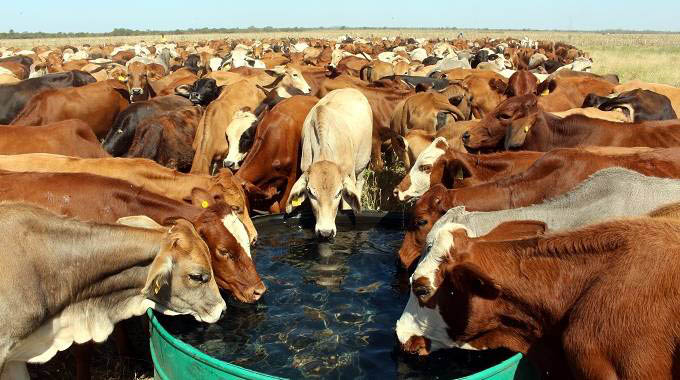
Herald Reporter
Climate-proofing the livestock sub-sector has seen a cocktail of Government programmes to ensure sustainable herd growth amid the challenges posed by climate change.
Under the Livestock Recovery and Growth Plan (2020 to 2025), authorities are targeting to grow the national cattle herd to eight million by 2025.
A two-day report validation workshop on national climate action in livestock systems ended last Thursday in Kadoma.
Chief director of research and specialist services Dr Dumisani Kutywayo said growing the national herd is a necessity to meet national nutritional demand despite climate change setbacks that have been witnessed countrywide.
“Sustainable farming practices have been prioritised including regenerative farming practices in livestock systems. This may include promoting rotational grazing, improved feed management, and efficient use of resources like water and energy,” said Dr Kutywayo.
Methane reduction, Dr Kutywayo said was also key through the use of methane capture technologies, dietary adjustments to reduce methane production in ruminant animals, and improving manure management systems.
“We are also encouraging the sequestration of carbon dioxide and maintaining ecosystem resilience through establishing agroforestry systems that integrate multi-purpose trees with livestock,” said Dr Kutywayo.
Livestock research director Mr Andrew Chamisa said his department will ensure the country meets its needs sustainably.
“Through the use of alternative feeds and feed additives, we reduce greenhouse gas emissions associated with livestock production. This may include exploring options like algae-based feeds, insect protein and feed additives that aid in methane reduction,” said Mr Chamisa.
There was need for support for research and innovation to foster the development of new technologies, tools and practices that lead to more sustainable livestock systems.
“This involves funding research on reducing emissions, improving animal genetics, and enhancing feed efficiency, plus education and outreach for farmers, livestock producers and relevant stakeholders to raise awareness about climate-smart practices and help them adopt sustainable farming methods, and then sharing success stories and best practices to encourage widespread adoption,” he said.
Policy incentives and regulations, he said, were required to support the adoption of sustainable practices in livestock systems.
“This includes carbon pricing mechanisms, subsidies for climate-friendly practices, and stricter regulations regarding methane emissions,” he said.
Experts urged the Government to lead farmers in the adoption of climate-smart livestock production.
Dr Clarice Mudzengi, who is a livestock, wildlife and fisheries lecturer at Great Zimbabwe University said farmers need to employ climate-smart practices in livestock systems.
“Expanding national herd is good and achievable within the stated time-line. What is now required is to ensure farmers maximise production per unit area,” she said.
In dairy farming, Dr Mudzengi said, farmers could increase milk yields per animal.
“The same applies in beef. We need to increase quality and balance with mass for a farmer to enjoy much profits,” said Dr Mudzengi.
Livestock and Meat Advisory Council executive administrator Dr Chrispen Sukume said farmers must move away from primitive ways of production.
“In the past farmers would just keep older animals but now we urge them to take livestock production as business by keeping only productive livestock and eliminating those that have passed their stage of production,” said Dr Sukume.
The workshop, organised by the Food and Agriculture Organisation (FAO) in partnership with the Department of Livestock Research was running under the theme: “Scaling-up climate actions to enhance nationally determined contributions on climate and livestock.”
The participants deliberated and endorsed the draft report that was compiled during the stakeholder consultative conference held in November on the steps to be taken to achieve an ambitious target of reducing greenhouse gas emissions by 40 percent by 2030.
The workshop attracted breeders, feed producers, academics, farmers and climate experts.
The 2023-24 summer season has started late due to the El Niño phenomenon effects leading to the drying up of water sources and pastures.
This has seen Zimbabwe lose over 8 000 cattle to poverty deaths over the past three weeks.


 Online Reporter