Online Reporter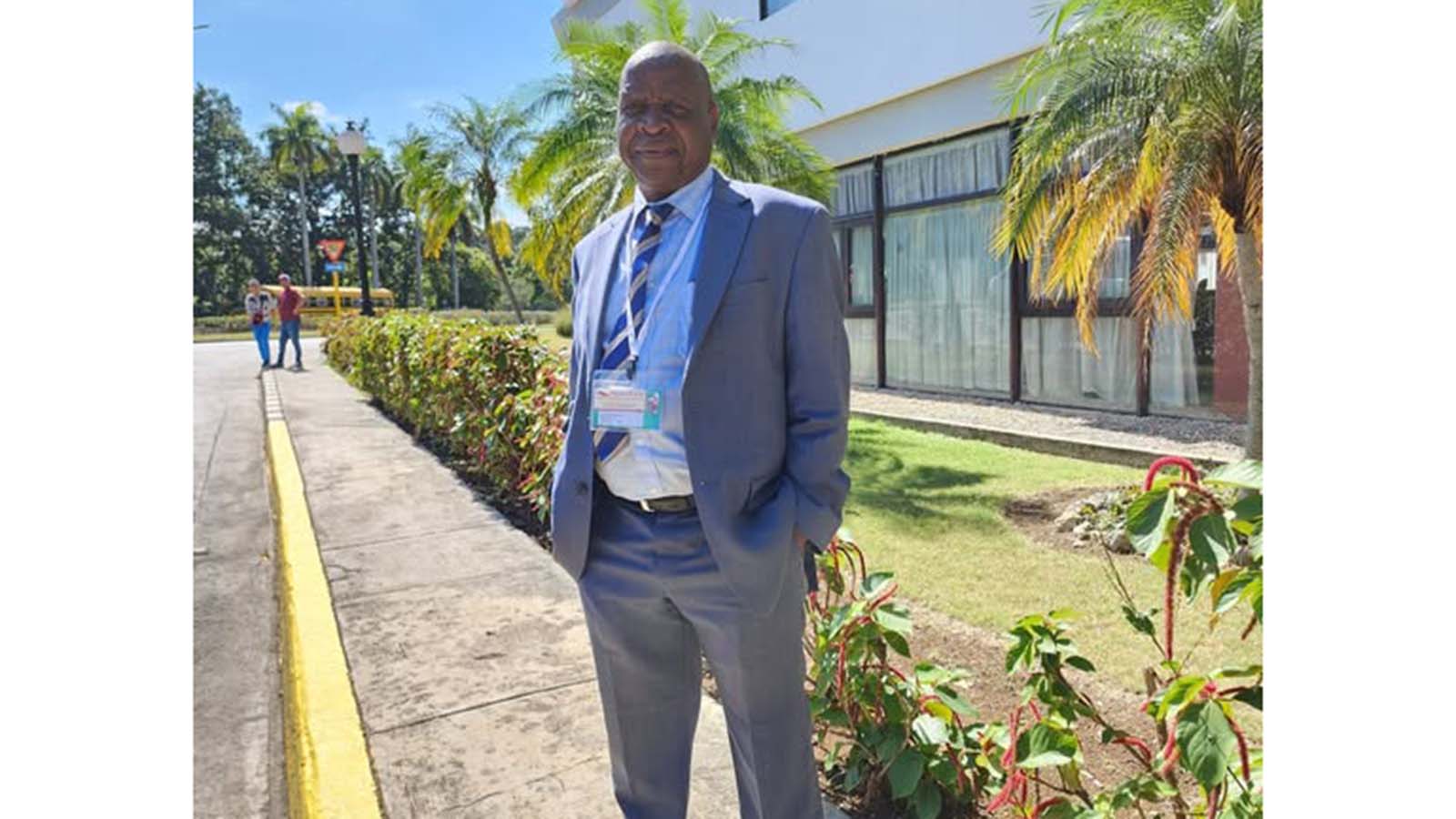
Gibson Mhaka
Zimpapers Politics Hub
ZIMBABWE’S education sector is undergoing a major transformation anchored on a heritage-based curriculum designed to produce innovative, skilled and globally competitive learners aligned with national development aspirations and the demands of the modern world, a senior Government official has said.
Speaking at the just-ended Fourth Edition of the National Education Summit Zimbabwe (NESZ) 2026, Chief Director for Curriculum Development and Technical Services in the Ministry of Primary and Secondary Education (MoPSE), Mr Cyprian Kent Masocha, said curriculum reform was no longer optional but a necessity driven by evolving learner needs, technology and national priorities.
The four-day summit, held under the theme, “From Policy to Practice: Driving Innovation and Investment in Zimbabwe’s Education System,” attracted about 3 000 delegates from Government ministries, the education sector, development partners, financiers, private sector players and international organisations.
Mr Masocha said curriculum transformation seeks to align education with Zimbabwe’s Vision 2030 and broader national and global development frameworks.
“To be on the same page, I define curriculum transformation as a process of changing and improving an education system’s curriculum in a country so that it fits well to national policies and aspirations, new goals, learner needs and real-world requirements as learners are prepared for the complexities of the current modern world and the future,” he said.
He said stakeholder collaboration remained central to curriculum transformation.
“One is stakeholder collaboration where we require effective and intensive collaboration and consultations with teachers, educators, the learners themselves, policymakers and the community to ensure the transformed curriculum is relevant and responsive to the needs of the citizens,” said Mr Masocha.
The curriculum, he said, must also embrace inclusivity, diversity and adaptability in response to emerging technological and global challenges.
“We wanted to create an inclusive environment that respects and integrates the perspectives of all groups.
“It should acknowledge and address diverse learning styles and inclusive education needs.”
Mr Masocha said the Government had reviewed the competency-based curriculum introduced in 2015 and developed the heritage-based curriculum in 2023, building on previous strengths while placing stronger emphasis on Zimbabwe’s national identity and development agenda.
“As a ministry and as a Government we did review or transform that curriculum.
“We used a transformative approach which I call reimagining education or rethinking education.”
He said the new framework seeks to make education more relevant, equitable and responsive to the country’s needs.
“Our curriculum was reviewed to ensure that it is not only relevant but also equitable and aligned with the needs of the country and the modern world.”
Mr Masocha said the heritage-based curriculum was informed by the Government’s view of education as a strategic national development instrument.
“Government considers education as a sovereign national development instrument. I will repeat that — the Government considers education as a sovereign national development instrument and this calls for education policies that always serve the national interest and long-term development aspirations of Zimbabwe,” he said.
He said the curriculum was aligned to Vision 2030, the National Development Strategy, the African union Agenda 2063 and global Sustainable Development Goals.
Mr Masocha described heritage-based learning as an educational approach that uses Zimbabwe’s cultural, historical and natural resources as foundations for teaching and innovation.
“Heritage-based learning is an approach to education that exploits tangible heritage to produce goods and services,” he said.
“Examples of our heritage are the languages that we use, the beliefs, the land, the flora, the fauna, the historical and social legacies and the cultural values and human resources.”
He said the approach promotes creativity, innovation and African values.
“It fosters innovation and creativity by encouraging learners to apply heritage knowledge to solve real-life problems,” he said.
Mr Masocha also highlighted a major pedagogical shift under the new curriculum, where teachers are expected to become facilitators and collaborators rather than traditional transmitters of knowledge.
“We now consider the teacher to be a facilitator, a collaborator, a co-learner and co-explorer rather than a knowledge transmitter,” he said.
The ministry has also broadened learning domains beyond traditional cognitive, psychomotor and affective models to include digital, technical and socio-emotional competencies.
“When we trained, most of us only knew about three domains — cognitive, psychomotor and affective.
“But we have now broadened them to four: cognitive, technical, digital and socio-emotional domains,” said Mr Masocha.
Among the major reforms introduced under the heritage-based curriculum is the replacement of Continuous Assessment Learning Activities (CALA) with school-based projects aimed at enhancing innovation and practical learning.
“We replaced CALA with school-based projects because we thought project learning will give us positive and sustainable results,” he said.
Under the new model, each learner from ECD to Form Six will undertake one school-based project per learning area annually.
“The school-based project is worth 20 percent and the tests and examinations constitute 80 percent,” he said.
Mr Masocha said the reforms also incorporate emerging and contemporary issues into classroom learning, including climate change, artificial intelligence, robotics, entrepreneurship, disaster risk management, environmental management and child rights.
“These issues should be learned in context and it is up to the teacher to ensure that he integrates these contemporary issues into the teaching and learning processes,” he said.
He said the ministry had also introduced a two-route system at secondary level, giving learners different pathways aligned with their competencies and career ambitions.
The curriculum transformation, Mr Masocha said, is supported by a broader framework covering teacher capacitation, digital and physical infrastructure, financing, research, innovation and policy support.
“We must make sure that we mobilise and ensure equal distribution of what we get. Research, innovation and development are very important to inform decision-making, policy formulation and education quality,” he said.
Mr Masocha urged stakeholders to remain resolute in implementing the reforms.
“In life, difficulties and challenges are certain, but defeat is not,” he said.