Zimpapers Politics Hub
WHEN Zimbabwe commemorates Heroes Day next month, the occasion will carry a significance that extends beyond the annual remembrance of those who paid the ultimate price for Independence.
It will become the first national Heroes Day following the enactment of Constitutional Amendment No. 3 (CAB3), a development that many within the liberation movement regard as the constitutional consolidation of the aspirations for which thousands of freedom fighters sacrificed their lives.
The liberation struggle was never confined to the military defeat of colonial rule. It was fundamentally a struggle to restore sovereignty, return land to its rightful owners, empower indigenous Zimbabweans, safeguard national resources and ensure that future generations would govern themselves without external interference. These aspirations have continued to shape Zimbabwe’s post-independence trajectory through the Land Reform Programme, the indigenisation agenda and now the institutional reforms introduced under the Second Republic.
CAB3, therefore, emerges not as an isolated constitutional amendment, but as another milestone in Zimbabwe’s long revolutionary journey. It seeks to strengthen governance institutions while providing constitutional certainty for programmes designed to entrench economic sovereignty and national development under Vision 2030.
The Liberation War was fought for sovereignty beyond political independence
The heroes of the First and Second Chimurenga envisioned a Zimbabwe where political independence would eventually translate into economic independence. The colonial system had dispossessed Africans of their land, denied them meaningful participation in the economy and concentrated national wealth in the hands of a minority.
The liberation struggle, therefore, carried multiple aspirations. It sought political freedom, economic justice, ownership of land, restoration of national dignity and the creation of institutions capable of protecting sovereignty for generations to come.
These objectives were repeatedly articulated by liberation icons whose struggle culminated in independence in 1980. Yet independence itself represented only one stage of a much longer revolution.
The Third Chimurenga addressed historical land injustices through the Fast Track Land Reform Programme. The Fourth Chimurenga, under the Second Republic, focuses on economic transformation, industrialisation, infrastructure development, innovation, constitutional strengthening and broad-based empowerment. It is within this broader historical context that CAB3 assumes greater national significance.
CAB3 strengthens the constitutional foundation of economic sovereignty. One of the central arguments advanced by proponents of CAB3 is that constitutional stability provides the necessary foundation upon which long-term economic programmes can succeed.
The Second Republic has introduced an unprecedented number of empowerment initiatives targeting historically disadvantaged Zimbabweans, particularly liberation war veterans, women, youths, rural communities and small-scale entrepreneurs.
These programmes require institutional continuity, policy consistency and constitutional certainty to achieve maximum impact. The recent Fourth National Assembly of the War Veterans League demonstrated this philosophy in practice.
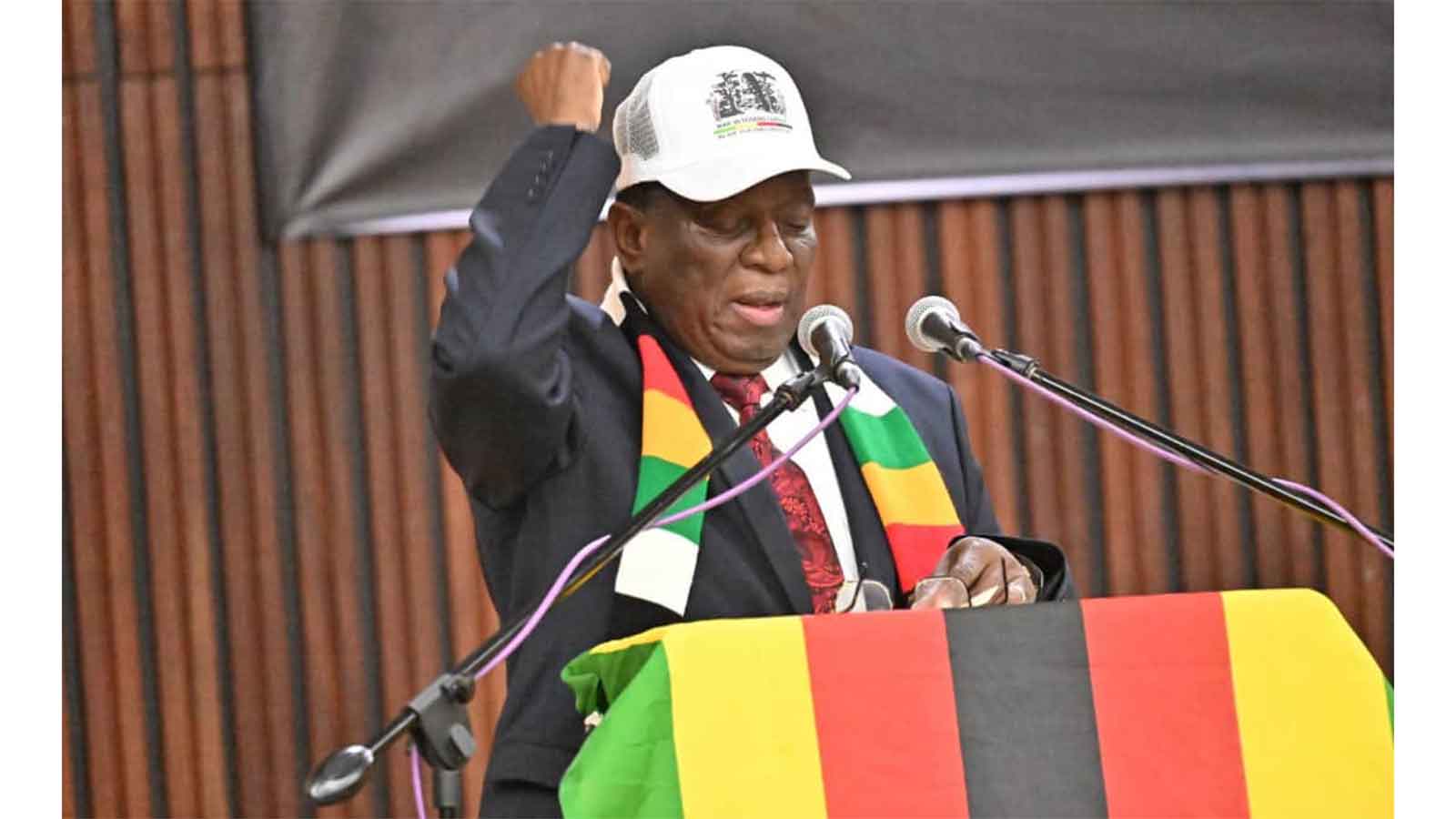
President Mnangagwa reaffirmed Government’s commitment to those who liberated Zimbabwe, declaring:
“By securing land title for our veterans and the rest of our communities, we are cementing the foundation of our sovereignty. Under the Second Republic, we are a listening party and Government; we will never neglect the liberators of this great country.”
That commitment reflects a broader constitutional philosophy embodied within CAB3 — one that seeks to preserve and protect national development programmes through stronger governance structures capable of sustaining Vision 2030.
Empowerment becomes the new battlefield of the Fourth Chimurenga
Unlike previous liberation phases fought with arms, the Fourth Chimurenga is fought through economic participation, industrial production, technological innovation and constitutional reform.
The empowerment initiatives announced for war veterans illustrate this transition.
The operationalisation of the US$1,5 million War Veterans Wealth Fund transforms liberation fighters from beneficiaries into entrepreneurs capable of participating meaningfully in Zimbabwe’s productive economy.
Similarly, the allocation of US$2 million towards borehole drilling rigs places veterans at the centre of the Presidential Rural Development Programme, allowing them not only to benefit from Government projects but also to become contractors and wealth creators.
The issuance of land title deeds further converts historical land ownership into bankable assets capable of unlocking investment, agricultural productivity and intergenerational wealth.
These initiatives resonate directly with President Mnangagwa’s observation:
“Land is the birthright of all Zimbabweans and the sacred inheritance for which many fought and sacrificed.”
CAB3 reinforces these empowerment programmes by providing the constitutional certainty necessary for their long-term sustainability.
One of the defining characteristics of the Second Republic has been deliberate efforts to expand indigenous participation across strategic sectors of the economy.
Government’s policy of reserving 20 percent participation opportunities for targeted indigenous groups across various economic sectors reflects an evolving empowerment model aimed at broadening ownership while accelerating inclusive development.
Such measures seek to ensure that those historically excluded from mainstream economic participation, including war veterans, youths, women and rural communities, occupy meaningful spaces within Zimbabwe’s productive sectors.
CAB3 complements these empowerment measures by strengthening institutional governance capable of sustaining long-term economic planning beyond electoral cycles.
Rather than viewing constitutional reform separately from economic transformation, supporters argue that both processes reinforce one another. Stable constitutional institutions provide investor confidence while simultaneously protecting national empowerment policies from abrupt disruption.
War veterans remain custodians of the liberation legacy
The War Veterans League Assembly demonstrated that liberation fighters continue to occupy a central position within Zimbabwe’s national development agenda.
Secretary for War Veterans Affairs Cde Douglas Mahiya commended President Mnangagwa’s leadership in advancing veterans’ welfare through land tenure reforms, title deeds and economic empowerment initiatives.
He also praised Zimbabwe’s successful election to a non-permanent seat on the United Nations Security Council as evidence that the country’s engagement and re-engagement policy continues to bear diplomatic fruit.
Importantly, the Assembly reaffirmed unwavering support for national unity while rejecting divisive politics perceived as threatening Zimbabwe’s development trajectory.
That position reflects the liberation movement’s longstanding belief that national cohesion remains essential for achieving economic sovereignty.
Heroes Day takes on renewed constitutional meaning
The significance of Heroes Day has traditionally centred on remembering sacrifice. This year’s commemorations, however, will also invite reflection on whether Zimbabwe continues advancing the objectives for which liberation fighters went to war.
Supporters of CAB3 contend that constitutional reform represents one answer to that question.
The amendment seeks to strengthen governance institutions, consolidate development programmes and provide continuity for national empowerment initiatives designed to uplift ordinary Zimbabweans. For many veterans, these reforms signify that the liberation struggle did not conclude in 1980 but continues through constitutional, economic and institutional transformation.
The journey from political liberation to economic liberation therefore remains ongoing.
Vision 2030 and CAB3 complete the revolutionary continuum
Zimbabwe’s revolutionary history is often described as unfolding through successive Chimurenga phases. The First Chimurenga resisted colonial occupation, the Second Chimurenga secured political independence, and the Third Chimurenga reclaimed land. The Fourth Chimurenga seeks economic sovereignty through industrialisation, infrastructure development, innovation and constitutional strengthening.
CAB3 occupies a central place within this revolutionary continuum because it provides the institutional architecture supporting the broader national vision.
Its enactment signals Government’s determination to align constitutional governance with long-term development planning under Vision 2030.
As Zimbabwe prepares to honour its fallen and living heroes next month, CAB3 will inevitably feature prominently in discussions surrounding the enduring meaning of liberation. For citizens, the amendment represents more than constitutional reform.
It is viewed as a continuation of the liberation covenant — a reaffirmation that the sacrifices of Mbuya Nehanda, Sekuru Kaguvi and thousands of liberation fighters continue to shape Zimbabwe’s future through strengthened sovereignty, expanded empowerment, protected national resources and sustained economic transformation under the stewardship of President Mnangagwa.
Within that interpretation, Heroes Day 2026 becomes not merely a remembrance of past victories, but a celebration of a constitutional milestone that many regard as fulfilling the enduring aspirations of Zimbabwe’s fallen and living heroes through the continuing march of the Fourth Chimurenga.