

 admin
admin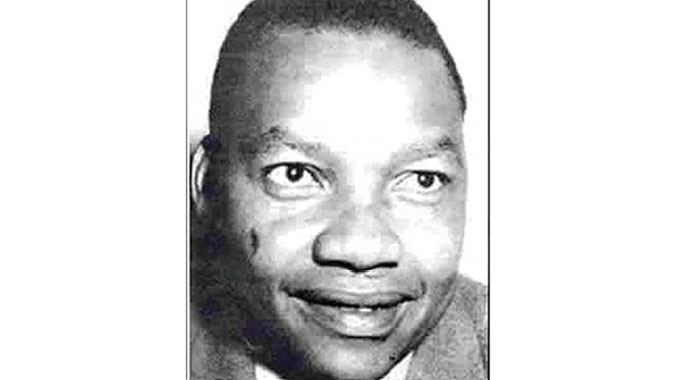
Herald Reporter
The imminent erection of national hero Dr Tichafa Samuel Parirenyatwa’s statue at a strategic place at Parirenyatwa Group of Hospitals is set to cement the nationalist’s immortality.
As the country celebrates Heroes Day in a few weeks, the meaning of the statue becomes even monumental.
It is important that the Second Republic led by President Mnangagwa saw it fit to erect the statue for the national hero at Parirenyatwa, the biggest hospital in the country named after him.
The statue of Dr Parirenyatwa, the first African to qualify as a medical doctor in this country, should help inspire upcoming medical professionals, not only at Parirenyatwa, but throughout the country.
The statute is set to be erected at one of the gates at the hospital, and it should serve as a constant reminder to aspiring medical doctors and those already in practice of Dr Parirenyatwa’s dedication to both the profession and his country.
Speaking during a media briefing held after a Cabinet meeting recently, Information, Publicity and Broadcasting Services Minister Monica Mutsvangwa said: “In honour of the late nationalist and first black medical doctor and physician and first Vice President of the Zimbabwe African People’s Union (ZAPU), the late Dr Tichafa Samuel Parirenyatwa, a statue will be erected at an appropriate entrance to the Parirenyatwa Group of Hospitals.
“Heany Junction, the place where his body was dumped having been killed at Shangani, will also be renamed after him and a granite pedestal erected to signify and memorialise the site.”
Other statues to be erected are those of former President Mugabe at Robert Gabriel Mugabe International Airport and former Vice President Dr Joshua Nkomo at the intersection of Joshua Mqabuko Nyongolo Nkomo Expressway and Glenara roads.
Dr Parirenyatwa was assassinated in 1962 by the security agents of the white minority government, about 15 kilometres from Shangani while on his way to Bulawayo on party mission.
The state agents tried to conceal his brutal assassination by fabricating a car accident at the Heany Junction level crossing.
Dr Parirenyatwa was a man of many attributes; a medical doctor, social worker, politician and revolutionary patriot.
He met his tragic death barely 40 years old. Yet in that short span of life he had accomplished a medical degree that had made him the first African doctor in the country, risen to the level of Deputy President of Zapu and was a dedicated medical practitioner.
Dr Parirenyatwa was born on July 17 1927 in Makoni, near Rusape, to Sophia and David Deme Parirenyatwa.
His father had been a cook in the household of a Rhodesian Governor.
He had subsequently advanced himself through night school to become a lay preacher and a teacher of repute. In 1930 the family moved from Rusape to settle in Murehwa.
Dr Parirenyatwa’s maternal and paternal grandparents were both linked to early black resistance against colonialism.
David Deme’s grandfather was Chief Chingaira, a hero of the First Chimurenga who died at the hands of the colonialists.
Dr Parirenyatwa’s mother, Sophia Rugare Parirenyatwa, hailed from the Tangwena tribe, who during the reign of the late Chief Rekayi Tangwena, confronted the imperialists head-on to repel the seizure of their land and resisted white imperialist designs in the Gaerezi Ranch.
Indeed, for Dr Parirenyatwa resentment to foreign white oppression was in his blood.
For his primary education, he went to Murehwa Primary School. He later moved to Howard Institute before enrolling at Adams College in Natal, South Africa.
For young Tichafa, it seemed the sky was the limit. Determined to pursue the career of his dream, he proceeded to Fort Hare University, where he acquired a BSc degree in Biology. It was at Fort Hare University where his political career started.
At this institution he became one of the chief organisers of the African National Congress Youth League in the Thyeumie Branch of the political movement.
Besides being a popular student during his college days, Dr Parirenyatwa exhibited dynamic leadership qualities.
— Background information from A Guide to The Heroes Acre
He next secured a place at Witwatersrand Medical school in South Africa. He was among the first few black medical students to enrol at the Medical School.
In 1957 he qualified as a medical doctor and became the first black medical doctor in the then Rhodesia.
Combining work and politics, Dr Parirenyatwa actively participated in the defiance campaign against the abhorrent Apartheid Laws. It was during these campaigns that Dr Parirenyatwa proved to be a militant and fearless fighter against injustice to the extent that he nearly got expelled from South Africa.
On his return to Southern Rhodesia, Dr Parirenyatwa worked at the then Salisbury North Hospital (later Andrew Fleming, now Parirenyatwa Group of Hospitals).
He was the first black doctor in Zimbabwe working among hostile racist whites who stopped at nothing to find mistakes in his work. However, his dedication to duty, medical prowess and professional approach to work: earned him the envy of his white counterparts, who later ended up befriending and respecting him.
Being the only black doctor made him the pride of the black population in Rhodesia.
Dr Parirenyatwa’s name became a household name. He had broken the myth that practising western medicine was a preserve of the whites.
However, the prospects of a high social status brought by his professional attainment did not make Dr Parirenyatwa lose sight of what he saw as his societal obligation, that is, fighting for social justice, equality and black majority rule.
Dr Parirenyatwa was later transferred to Antelope Mine Hospital in Kezi, Matabeleland South, where he once again met a hostile white community which could not hide its hatred at the appointment of an African medical officer to serve at the hospital.
The manner in which he expertly performed surgery and treated both blacks and whites professionally, made him an asset to the community.
Soon the whites were even inviting him to their homes. Contrary to their earlier attitude when Dr Parirenyatwa first arrived in Kezi, members of the white community took the lead in opposing his departure when he was called back to Harare.
As the wind of African nationalism swept across Africa and indeed Southern Rhodesia, Dr Parirenyatwa felt he was not doing enough in speeding up the liberation of Zimbabwe. He decided to give more time to the nationalist cause. He, therefore, resigned from the Federal Government Service and opened his surgeries in Highfield and at Amato along today’s Julius Nyerere Way in Harare.
Freed from a scheduled work timetable in Government practice, Dr Parirenyatwa would get more time to attend to political activities while in private practice. He was soon elected to the position of deputy President of ZAPU at the launch of the party in December 1961. . When the National Democratic Party was banned, it was decided that the new ZAPU needed a more sophisticated approach to fight settler governments.
Dr Parirenyatwa devoted more and more of his time to working for the party and working out strategies that were effective in confronting the settler minority. He travelled around the country addressing rallies and opening new party branches.
Through his work both in the medical and political spheres, Dr Parirenyatwa inspired many young people not only to actively participate in the nationalist struggle but also to become medical doctors.
Many viewed him as a militant who was anxious to move away from the politics of accommodation to that of military confrontation with the white establishment for the black majority rule to be a reality.
He saw the situation culminating into the armed struggle not only as necessary but inevitable.
On April 14, 1962, Dr Parirenyatwa, as deputy President of ZAPU, at a lunch meeting of the Rhodesia National Affairs Association even predicted that while he advocated confronting the white settlers, their planned take-over of the country was going to be through a constitutional process but not spearheaded through the white parliament.
To expedite the process towards black rule, Dr Parirenyatwa worked hard to turn and make ZAPU into an efficient political force, with a broad- based national membership for Zimbabwe and well organised structures from branch level to the national level.
He recognised the importance of grass route mobilisation. He even established a research unit for the party to have a deeper appreciation and understanding of issues at stake.
Dr Parirenyatwa stressed discipline within the party and professionalism in the administration of party affairs. His dynamism, persuasiveness, popular appeal and humility were a treasure to the party which made him a formidable force, seen as a threat by the white government.
Because of his selflessness, dedication and sacrifices he made to free Zimbabwe, the Government saw it fit to name one of the leading hospitals – Parirenyatwa Group of Hospitals – in his honour.
The ruling party went further to declare him a national hero in 1984. — Background information from A Guide to The Heroes Acre



 Online Reporter