admin
admin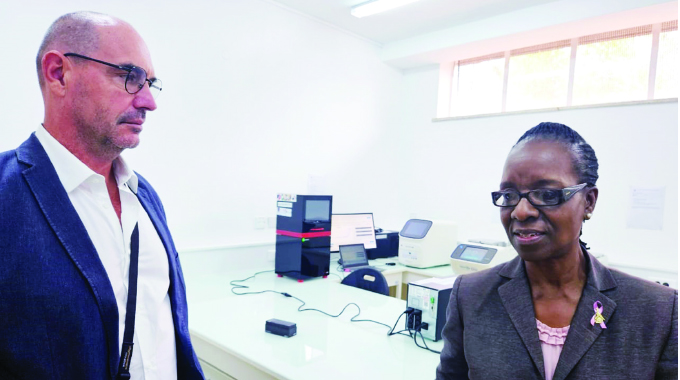
Sifelani Tsiko, Innovations Editor
The development of a high-level laboratory infrastructure in Zimbabwe can help provide scientists with cutting-edge molecular diagnostic capabilities to rapidly and accurately detect current and future outbreaks of infectious diseases, Public Health Advisor to the President and Cabinet Dr Agnes Mahomva says.
Speaking after touring the University of Zimbabwe Biotechnology Centre laboratory, Dr Mahomva said the establishment of the modern laboratory would help the country win the battle against outbreaks and health emergencies.
“This is what we have been looking for, to promote that collaboration. As you can see, we have come from Covid-19, the emergence of Mpox; we heard about Marburg in Rwanda; so for some of these diseases it is critical to have high level laboratories such as this one,” Dr Mahomva said.
“We appreciate the need to collaborate and ensure that the issues of human health, animal health, environment are all dealt with in one lab centre, like this one, with high technology. It is fantastic. It is also critical to appreciate and acknowledge the excellent work taking place here of training and capacitating the country teams.”
CIRAD, a French agricultural research and cooperation organisation in partnership with UZ Faculty of Veterinary Science, is holding a biomolecular platform open day to showcase the role of the UZ Biotechnology Centre laboratory in the diagnosis, monitoring, surveillance and control of animal diseases.
“The objective is to showcase the activities, achievements and capacities of the platform to institutional partners and scientific and technical potential partners so as to identify areas of collaboration and how more stakeholders involved in plant and animal health can benefit from the platform in their research endeavours,” said Dr Pierre Grard, the CIRAD deputy regional director.
“This event organised under the university umbrella will also highlight the role the platform can play in the One Health Strategy of the country.”
The UZ laboratory was established with support from CIRAD under the PACMAN project funded by French development agency AFD to provide comprehensive services for diagnosis and characterisation of all emerging pathogens.
Zimbabwe and most other African countries are vulnerable to the increased risk and high burden of outbreaks of infectious diseases.
Several outbreaks continue to remain undiagnosed due to lack of high-level laboratories in Africa. These often cause significant levels of panic and tangible loss to health and the economy, health experts say.
Head of the UZ Biotechnology Centre Dr Ellen Mwandiringana said the laboratory was now able to carry out diagnostic and research on diseases such as Mpox, Covid, Marburg, Crimean-Congo haemorrhagic fever, foot-and-mouth disease and Newcastle, among others.
“This high level laboratory is important for strengthening in-country and regional surveillance systems for preparedness, response and control of infectious diseases,” she said.
“Molecular diagnostics and a well trained workforce have become essential resources for early detection and response to outbreaks.”
The incidence of emerging infectious diseases in humans has increased in the recent past and these also threaten to increase in the near future.
Some of the deadliest diseases to stalk humans have come from pathogens that jumped from animals to people.
Zimbabwe has in recent weeks confirmed its first two cases of Mpox. In August this year, the World Health Organisation declared Mpox a global public health emergency as a new variant of the viral infection spread from Democratic Republic of Congo to neighbouring African countries.
Health experts say Mpox is a viral infection that causes flu-like symptoms and pus-filled lesions and while usually mild, it can kill.



 Online Reporter