

 admin
admin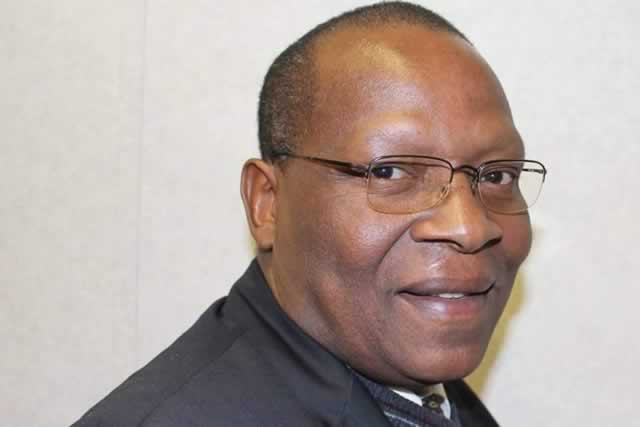
Tapfuma Machakaire
THE option of being cremated is totally unacceptable in the African culture yet that is what the late Lawton Hikwa is said to have preferred and there were no quarrels about it.
This means he made it very clear to his relatives that his flesh shall be burnt to ashes.
That was the nature of the man, an academic and man of the cloth who often begged to differ with many.
The ever smiling Hikwa enjoyed discussions and debates and he would never become emotional even when those not agreeing with him could at times have felt offended by his utterances.
I first met Hikwa in the 1990s when he was working for Rural Libraries and Resource Development Centre in Bulawayo where my niece, Eva Gavaza, who was a student at the Bulawayo Polytechnic, was on attachment.
Once you got introduced to the man, he would become so close that some people would think you had been buddies for many years. Each time I met Hikwa, even years after Eva had completed her internship, he would ask: “Tapfu how is my daughter Eva . . . and what is she doing now?”
As far as I can recall, only my late mother used to call me Tapfu, the short cut for my first name Tapfuma and God knows how on earth Hikwa got to coin that on me for he never met my mother. And he would pronounce Tapfu with so much affection that always made me enjoy being in his company.
After my first encounter with Hikwa, I immediately began to respect his intellect and openness in discussing issues, be it politics or social matters.
In the late nineties when I was chief reporter for Newsnet at ZBC Montrose, we introduced a live guest discussion on the main 8PM news bulletin where the anchor would interview the guest on the top story. If the top story was from Bulawayo, the anchor, in those days Obriel Mpofu, would cross over to the City of Kings where I would conduct the live interview.
I must confess, I faced serious challenges with that arrangement, not because of my inability to handle the interviews, but because for some reason many people I would have wanted on the programme were reluctant to go for it. The first person to accept the live discussion was Hikwa, then a lecturer at the National University of Science and Technology (Nust).
My bosses at Pockets Hill were quick to realise that I had picked the right man who could discuss virtually any topic and Hikwa started appearing regularly on the main ZBC news bulletin. Even other newsrooms in Bulawayo and Harare started contacting him for comments on stories. So I can actually boast of “moulding” Hikwa into a renowned social and political commentator.
I also want to believe that it was that exposure which led to authorities realising that there was an academic in Bulawayo who deserved recognition probably leading to his appointment to the Zimpapers Board and the Zimbabwe Media Commission.
Around 2007, I presented a proposal to the late Cde Sikhanyiso Ndlovu to compile a documentary on his life and those of other nationalists.
We began holding meetings with his late son Mandla on the project and after some time Cde Ndlovu suggested that we should have a printed version of the biography and he asked me to approach Hikwa for that aspect of the task. We would hold meetings at the Press Club where Hikwa would make his interesting contribution in his funny sounding English tone normally associated with the young generation from affluent families — “nosing” and Cde Ndlovu would enjoy every moment of it. The project was stalled when Cde Ndlovu became too busy after being appointed Minister of Information.
Two days after the death of Cde Ndlovu I posted on Facebook my worry and concern that the former minister had died before we could complete his project.
I expected Hikwa, who was a friend on Facebook, to comment, but he remained mum. Was it because he was then not well enough to respond? On Friday, three days before his death, Hikwa posted on his Facebook wall that, “I am not well at all please pray for me,” and that was the last I was to hear from him.
I received the shocking news of his passing while I was on a working holiday in Nyanga and I was devastated. I had known Hikwa to have been having a problem with his leg and that he had undergone two surgeries but never did I imagine that he would be taken away from us so suddenly and so soon.
After his first operation he had started using a walking stick and when I asked him about his special stick, he responded in his funny tone, “Actually this is no ordinary walking stick, I ordered it from the US. It should keep me going Tapfu.”
But that was not to be.
Rest in peace Hikwa, the academic, pastor, commentator, media specialist and a drinking mate at our famous corner.


 Online Reporter