

 admin
admin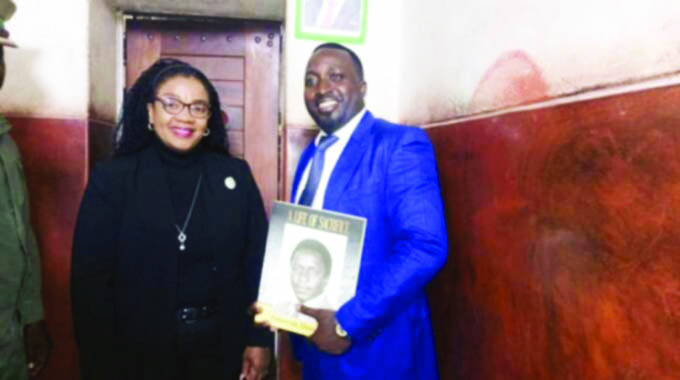
Gibson Mhaka, Zimpapers Politics Hub
THE hinges groan in protest as one pushes open the heavy wooden door fitted with equally heavy iron bars of Cell 44 in ‘B” Hall of Khami Remand Prison, West of Bulawayo.
Here, one cannot help, but feel the weight of history.
This cell, once a place of solitary confinement for political activists during the colonial era, now stands as a powerful symbol of resilience.
Originally used by the Smith regime to house both convicted criminals and political prisoners, Cell 44 served as the incarceration site for President Mnangagwa who is now Zimbabwe’s first citizen, during his six years of political imprisonment at Khami Maximum Security Prison where he was detained as a teenager.
He was aged 18 when he was imprisoned for contravening Section 37 (1) (b) of the notorious Law and Order Maintenance Act. His prison number was 841/66 and he was bundled into Cell 44 of “B” Hall.
This period of imprisonment is said to have played a significant role in shaping his political views and his eventual rise to power.
President Mnangagwa’s imprisonment, along with that of many other brave individuals, transformed the cell into a symbol of resistance and hope.
The cell stands as a symbol of relentless fight against oppression and the quest for freedom.
Its history serves as a stark reminder of the injustices of the Smith Regime and the resilience of those who dared to challenge it.
The then young, but politically conscious Cde Mnangagwa had been arrested in Salisbury’s Highfield Township in 1965 for being part of the Crocodile Gang that carried out sabotage activities against the Rhodesian regime after receiving military training in China.
Operations of the Crocodile Gang had included killing a resident farmer and police reservist, Petrus Oberholtzer at Nyanyadzi and blowing up a train at Fort Victoria, now Masvingo.
The latter incident led to the capture and subsequent hanging of James Dhlamini and Victor Mlambo.
In January 1965, Cde Mnangagwa was arrested by police inspectors at Michael Mawema’s house in Highfield in connection with the incident.
It is believed that Mawema, a nationalist, had betrayed Cde Mnangagwa to the police.
After being arrested and tortured, Cde Mnangagwa, then a young man, confessed to the crime under the Law and Order Maintenance Act.
Though facing the gallows, he was ultimately spared due to his age. Today, the very cell that once held him stands as a powerful testament to resilience.
The history of this section of Khami Prison was first revealed in January 2018.
A visit today reveals a stark transformation underway. The historic Cell 44 is shedding its past and embarking on a new chapter.
When one enters the single cell, they are now greeted by President Mnangagwa’s portrait on the wall with a big prison register showing his booking placed on a small table.
His biography is also placed on the monument for visitors to have an appreciation of the nature of the crime committed and the profile of the prisoner.
Speaking after a familiarisation tour of the Khami Prison Complex, where he also visited Cell 44 in January this year, Deputy Minister of Justice, Legal and Parliamentary Affairs Advocate Nobert Mazungunye said the cell reminded him of the value and sacrifice President Mnangagwa and other liberation heroes and heroines made in the liberation of the country.
“I am pleased to have visited the cell in which President Mnangagwa was incarcerated and that is Cell number 44. For me it is so historic.
“I saw the records which indicated that he stayed in that cell for about six years which is a lot. It means they are our elders whose input we have to value.
“They were incarcerated for the liberation of the country and the independence we now enjoy and we have to appreciate that. We also applaud the Zimbabwe Prisons and Correctional Services for keeping it as a monument for everyone to come and see,” said Adv Mazungunye.
Relentless efforts are also underway to ensure that it holds immense historical and cultural significance, transforming it into a place of great importance and interest. This monument now tells the story of President Mnangagwa, a man who stared down oppression and emerged a leader.
The National Museums and Monuments of Zimbabwe (NMMZ) has been instrumental in this transformation, working to adopt and designate prison cells, like the one that held President Mnangagwa, as national monuments.
These cells housed countless nationalists and freedom fighters during the country’s struggle for independence.
Acting executive director of the NMMZ Mr Darlington Munyikwa said the conversion of Cell 44 at Khami Remand Prison into a museum is a significant cultural and historical preservation effort.
He said once the project to convert Cell 44 into a museum receives official approval from their parent ministry, the Ministry of Home Affairs and Cultural Heritage, NMMZ will be responsible for designing, implementing, and managing the initiative.
Mr Munyikwa said the project will be conducted under the supervision of the Ministry and the NMMZ will be responsible for developing the concept note, storyline, designs, artefact collection, and mounting of the exhibition.
“The conversion of cell 44 at Khami into a museum is a significant cultural and historical preservation effort.
“The objective is to preserve and showcase the cell where His Excellency, the President of the Republic of Zimbabwe, Dr ED Mnangagwa, was imprisoned for six years, serving as a symbol of his struggle against colonialism and his journey towards freedom of Zimbabwe. In particular it symbolises the youth’s struggle for freedom,” said Mr Munyikwa.
Regarding the exhibits Mr Munyikwa said the restored cell will be the central exhibit in Hall B, showcasing President Mnangagwa’s living conditions and personal belongings.
On His Excellency’s journey, a chronological exhibit titled “His Excellency’s Personal Story” will trace the President’s life from childhood to his rise to the Presidency. This section will highlight his fight against colonialism and his imprisonment at Khami Prison.
To provide further context for the President’s story, another exhibit titled; “Khami Prison in History” will explore the prison’s involvement with prisoners of war. The exhibition won’t solely focus on the President.
“Prisoners’ Stories” will showcase personal accounts and artefacts from other political prisoners who shared President Mnangagwa’s experiences.
“To bring the history to life, the exhibition will also include interactive elements. Visitors can explore a replica of the cell door, write a letter as if they were a prisoner, or take a virtual tour of the prison itself,” said Mr Munyikwa.
He said the design concept prioritises both authenticity and accessibility.
“The cell and surrounding areas will be restored to their original state, using original materials and techniques whenever possible without overpowering the present state of the building.
“The museum cell will be designed to be accessible to visitors on demand with a trained tour guide ready to give the historical narrative of the role of prisons during colonial Rhodesia,” he said.
Trained guides will be available to lead visitors through the exhibit.
These tours will provide contextual information and insights into the life and imprisonment of President Mnangagwa.
By converting Cell 44 into a museum, Mr Munyikwa said NMMZ would achieve multiple goals.
“First, we preserve an important piece of Zimbabwe’s history. Second, we honour the legacy of His Excellency, The President of the Republic of Zimbabwe, Dr ED Mnangagwa. Finally, the exhibit aims to inspire future generations to work towards a more just and equitable society,” said Mr Munyikwa.
The NMMZ will collaborate with the Zimbabwe Prisons and Correctional Services to design a framework which will allow seamless access to Cell 44 for museum purposes, ensuring it can be integrated into the exhibition without affecting ongoing operations at Khami Remand Prison.
Upon completion, the cell will hold immense historical and cultural significance which stems from its association with the struggle against the colonial regime, a dark period in Zimbabwe’s history.
Museums play a vital role in preserving and promoting the rich history and traditions of a community. The cell will also serve as a repository of historical artefacts, documents, and knowledge.
This will ensure the future generations have access to the country’s liberation story, particularly from the perspective of political prisoners who endured the cruelty of the Rhodesian government while detained for opposing white minority rule.
Tourism and Hospitality Industry Minister Barbara Rwodzi said they were also plans to develop Cell 44 and the surrounding area of B Hall at Khami Remand Prison into a tourist attraction.
“We absolutely have plans to turn Cell 44 into a tourist attraction, just like other historical monuments.
“As you may know, monuments fall under the purview of the Ministry of Local Government and Public Works. However, the Ministry of Tourism is working collaboratively with them to make this project a reality,” said Minister Rwodzi.



 leeroy
 Online Reporter