

 admin
adminZimbabwe.
“The Ministry of Health and Child Welfare will lobby the Office of the President for an increased portion of the National Aids Trust Fund towards anti-retroviral therapy (ART) mostly for ARV medicines,” deputy programme co-ordinator for HIV care and treatment in the ministry Dr Joseph Murungu said.
Addressing HIV and Aids advocates during a meeting on scaling up access to treatment versus funding gaps arising recently, Dr Murungu said the Health Ministry will also lobby the Finance Ministry for an increased allocation for ARVs.
“We will also liaise with locally based bilateral and multilateral partners for more financial resources towards the ART programme,” he said.
He said Government needs about US$9,1 million to provide treatment to 66 532 people in dire need of ARVs.
Government intends to provide ARVs to 451 944 people by end of 2012.
Currently, there are 385 412 people on treatment.
Dr Murungu said although the National Aids Council and other partners such as the Global Fund, US government and ESP are still assisting Zimbabwe, the treatment gap still exist to meet its target of providing treatment to needy people living with HIV and Aids.
“As we move towards 2015, our treatment gap becomes wider because the Global Fund, which is providing funding for about 193 000 people will be coming to an end,” Dr Murungu said.
He said by then, Government will require about US$51 million to provide treatment to the 373 357 people.
He said currently there are no treatment gaps for children as all children targeted for ARVs are covered.
However, the treatment gap would rise next year and beyond.
Currently, there are 55 401 children on ARVs, who are all covered by donors.
He said Government is supposed to provide treatment to people in need of them, failure of which will result in increased risk of HIV drug resistance, which is six times more expensive to treat.
He said failure to provide treatment will also lead to increased transmission of HIV and tuberculosis.
“Implications of not meeting our target will lead to increased morbidity and mortality associated with Aids,” he said. He added: “Significant gains have been observed in scaling up ART services in Zimbabwe despite a harsh operating environment.
“Sustainable solutions are required to achieve desired programme goals,” he said.
According to statistics from the Ministry of Health and Child Welfare, ART coverage has improved with 369 431 adults and 39 234 children receiving ART by October 2011 bringing coverage to 71 percent for adults and 37 percent for children.
These figures are, however, still below the universal access target of 80 percent.


Online Reporter
- Chronicle , Herald , Manicapost , SundayMail , SundayNews
- September 19, 2026
- 95 views
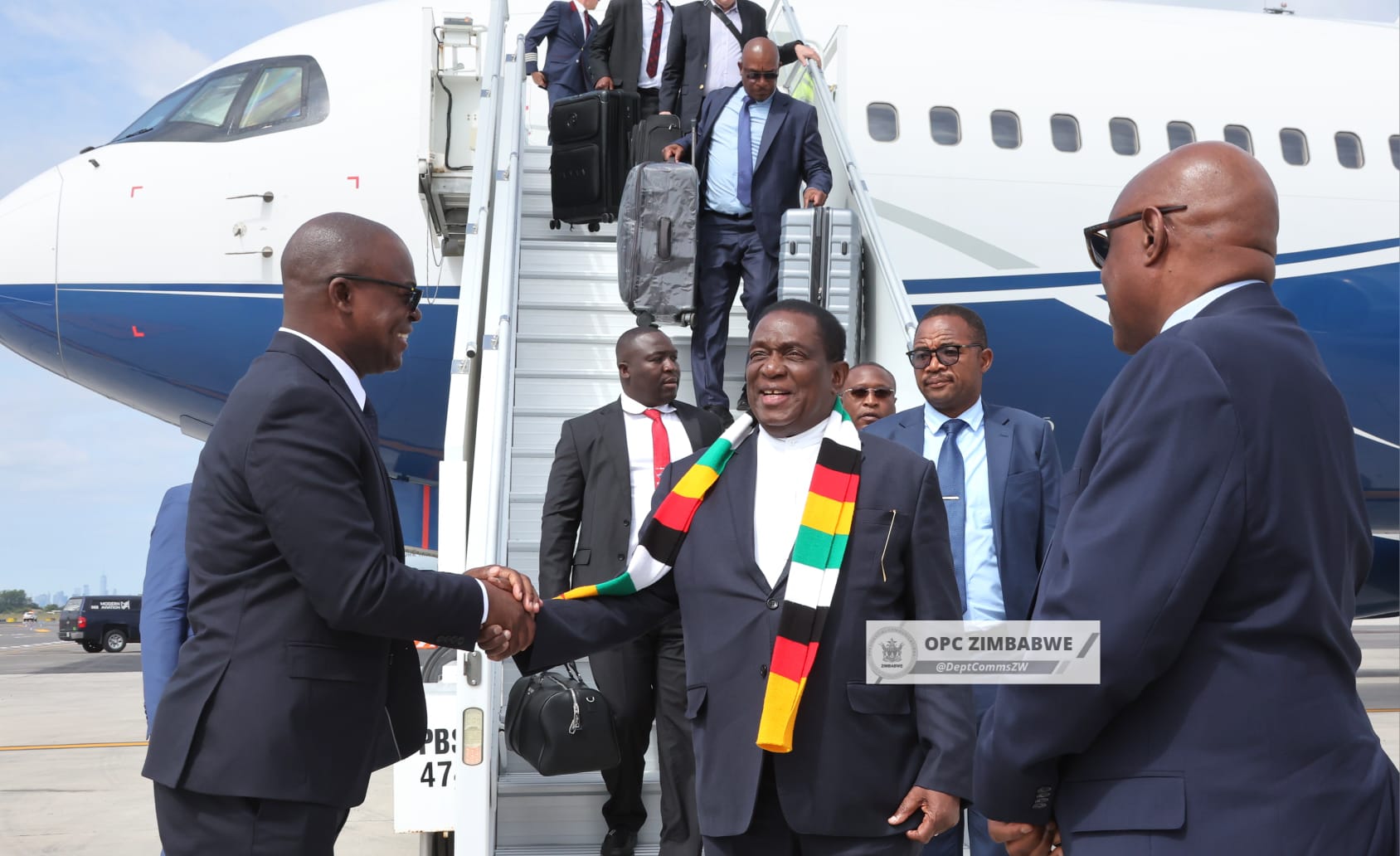
NEW: President Mnangagwa arrives in New York, to attend Zimbabwe Business Forum tomorrow
Wallace Ruzvidzo in NEW YORK, USA PRESIDENT MNANGAGWA has arrived in New York to join fellow Heads of State and Government at the 81st Session of the United Nations General…
