Chronicle Editor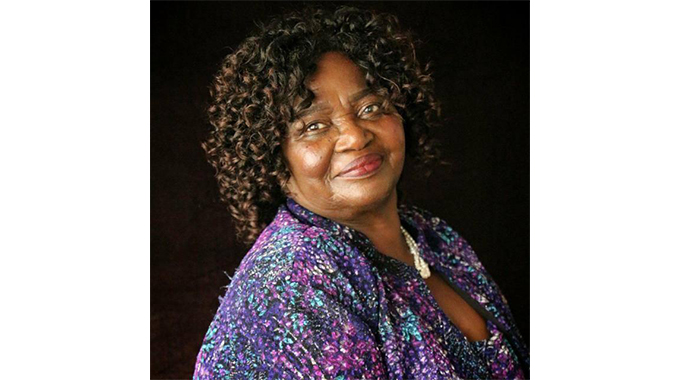
Innocent Kurira, Sports Reporter
WHEN Zimbabwe gained independence in 1980, there was need for the country to effect racial integration in all sports, especially in schools, to mirror the new State.
The new Zimbabwe State had inherited an educational system premised on racial segregation and although the white population was less than five percent, white schools received more than half the annual education budget.
White schools averaged one teacher for 15 pupils while in black schools, the ratio was one teacher for 44 learners.
The ugly and undeniable truth of racism is that it promoted all forms of bigotry and hatred of the black majority.
Although the country had attained independence, the sad reality was that racism and discrimination remained nestled in a hidden school curriculum.
The Group A schools, which were almost exclusively white, sought to perpetuate the previous discriminatory system by racialising sport despite a gradual increase in the enrolment of black pupils and deployment of black teachers.
Before independence, sports that were available to and dominated by blacks were athletics and football, while disciplines like rugby, cricket, tennis, swimming and hockey, among others, were exclusively white sports.
The Group A schools maintained that system after independence and kept blacks away from sports which whites viewed as belonging to them.
It was all left to the black teaching staff in those schools to use their privileged platform and responsibility to teach their learners innate values and dignity that were neither defined nor limited by their race, colour or creed.
Black learners needed inspiration and guidance from women and men of substance and character and Euphrasia Midzi (76) seized the opportunity to model respect for black schools’ athletes by taking up the role of a hockey coach in a white dominated school.
She wanted to use the intrinsic power of sport to help undo the age-old systemic racism and promote social cohesion and important values such as mutual respect and tolerance.
In the process, Midzi was also writing her own piece of history as one of the pioneer black women hockey coaches in a white dominated Group A school.
She narrates how it all started at Selborne Routledge Primary School in Harare in 1981.
“When I joined Selbourne Routledge Primary School in 1981, we had been advised on the need for us to be very firm as it was not going to be easy to be accepted at these Group A schools,” said Midzi.
“There was one black teacher and a few black students. It was not easy because as black teachers we were doubted but we survived the experience. We would get into situations where our white counterparts felt we wouldn’t be able to administer anything.”
Besides all challenges she encountered, it was at Selborne Routledge Primary School where she fell in love with hockey.
“When we were growing up, schools only had netball and football. These were the things that we knew and I was not interested in them. It was discovered in the staff room one day that I was not taking part in any sporting activities and they asked why I shouldn’t take netball and I refused until a lady by the name Mrs Jackson convinced me to try hockey as she was a hockey coach herself.
“I agreed because for me it was something challenging and that is where my love affair with the sport began. Mrs Jackson tasked me to be in charge of the Grade 3s and I started from the basics and begun enjoying doing it,” Midzi said.
She was, however, forced to quickly abandon the school team that she had created a bond with after relocating to Bulawayo and it was in the City of Kings where she did most of her work in hockey.
“Unfortunately, I had to move to Bulawayo and leave the group I had in Harare. I got a place at Hugh Beadle Primary School and was asked again about my extra curriculum activities and I said I can coach hockey. People were surprised and asked what I knew about hockey.
“The school had all the hockey equipment but they were not using any of it. I started with a few boys and girls and people would watch me coach these kids and they began to appreciate the work I was doing and we had a good team in no time.
“I had a colleague, Mr Richard Ntuli and I asked him to help out with the boys’ team and he agreed. He was more like me, he loved a challenge. We created what I would call a terror team which played so well, but I then moved to Coghlan Primary School,” said Midzi.
She again found the school with equipment but with no hockey team.
“At Coghlan I was the third black teacher. I got there and I told them I wanted to coach hockey and again people were surprised but it worked out well and another great team emerged from there. After a few years, I had trained some teachers and left hockey and joined the choir because the one who had been in charge had left.”
Midzi said she took up music because she loved challenging assignments.
In a bid to get more primary schools playing hockey, Midzi organised workshops for teachers from other schools to learn the game so that there could be meaningful competition since there were very few schools playing the sport.
She says the biggest disappointment she witnessed was that despite immense talent they unearthed, most players never pursued the game post school.



 Online Reporter