Eddie Chikamhi
Zimpapers Sports Hub
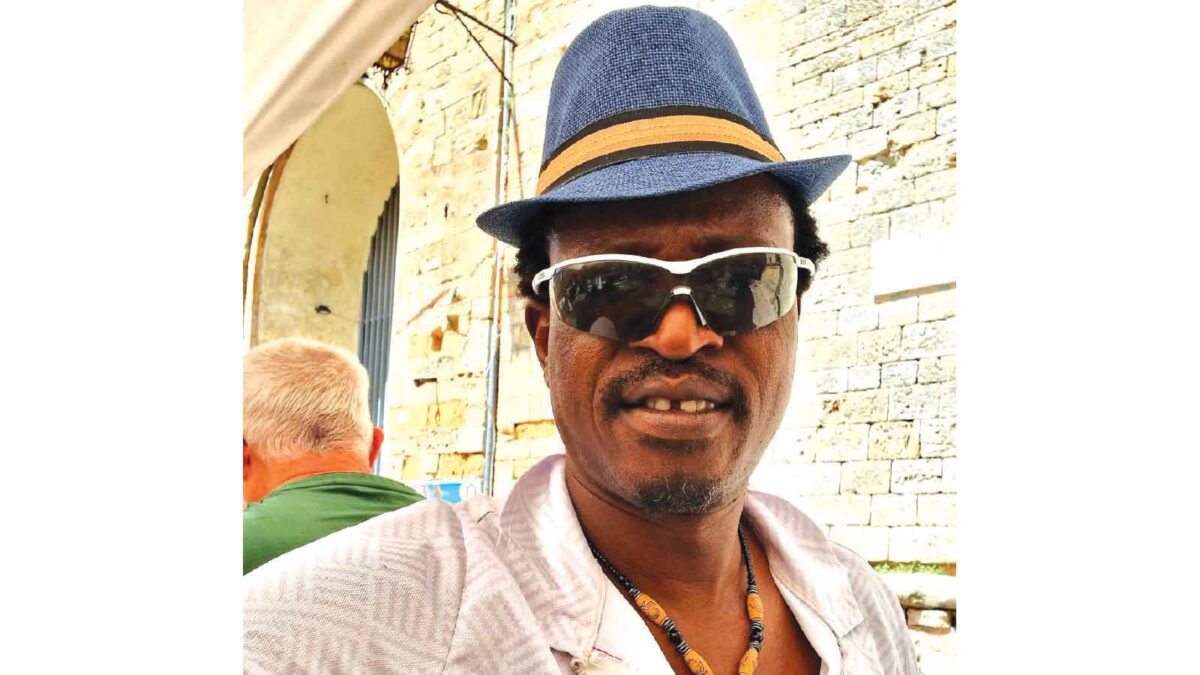
AFTER nearly three decades of acquiring world-class coaching badges, gaining invaluable insight from Europe’s football royalty and battling systemic racial barriers, former Zimbabwe international George Mbwando believes he is back where his heart truly belongs.
The 50-year-old has been appointed national Under-17 coach, a role he believes completes his football journey from player to mentor.
“I’m so excited because this completes my full football cycle,” Mbwando told Zimpapers Sports Hub.
“This is what I always wanted to do; to give back all that I’ve learned to the youngsters. I’ve been working with the age-group teams in Europe for more than 15 years now and this is a chance to work with my own. It also boosts my profile.”
Mbwando’s return home adds to a remarkable chapter in the depolarisation of Zimbabwean football under the leadership of ZIFA president Nqobile Magwizi.
For years, former players and legends who flew the country’s flag high on international stages were largely sidelined from the game by insecure administrations, who saw them as a threat to their ambitions.
But recently the gates have been opened wide.
Mbwando was encouraged to see members of his former Warriors class of 2006 that included Norman Mapeza, Peter Ndlovu, Esrom Nyandoro, Tinashe Nengomasha, Benjani Mwaruwari, Zenzo Moyo and Kaitano Tembo actively involved in shaping Zimbabwean football.
“Very soon I’ll be based home and I’ll be working full-time because, as a coach, when you accept the job it’s a full-time job where you work every day,” he said.
“There’s no free day when you’re a coach. You are always planning and scheming for the next training or the next match and so on.”
Having spent nearly 30 years in Germany, Mbwando holds high-level qualifications and is just one step away from acquiring the UEFA Pro Licence, which is the highest tier of coaching credentials in world football.
His journey saw him rub shoulders with the pinnacle of global football management, sitting side by side with Thomas Tuchel during their UEFA B Licence course, exchanging ideas with Julian Nagelsmann and sharing pitch-side history with Jurgen Klopp, who still remembers him from his playing days at Alemannia Aachen while Klopp was coaching rival side Mainz.
Despite his qualifications, Mbwando directly encountered the stark realities of racial discrimination facing black coaches in European football.
“I did my UEFA B Licence with Thomas Tuchel,” he said.
“We actually sat next to each other, but after a couple of months, Tuchel gets a call from a Bundesliga team. For us as black coaches in Europe, especially in Germany, it’s a bit tough.
“Unless you’re a Vincent Kompany, who was captain of Manchester City, who captained Belgium or something like that, then you might stand a chance. Otherwise, they will never appoint us as coaches.”
His decision to come back home was in response to advice from Rudi Voller, a former German striker-cum-national team coach, before assuming the present role of sporting director of the German national team.
“In July, at the international trainer congress, Rudi Voller told me: ‘Go back and do something for your country because you are wasting time and your knowledge here. When the chance comes, just go and do it.’”
Taking that advice to heart, Mbwando has set out to contribute positively by championing a transparent, elite youth structure that acts as a conveyor belt to the senior national team.
At a time when age-group teams have been smeared by allegations of favouritism, cartels and corruption, Mbwando insists on meritocracy over privilege, while improving grassroot infrastructure.
The former Warriors defender plans to cast his scouting net far and wide, both at home and across the diaspora.
“We will search for talent almost everywhere,” he said.
“We will give chances to kids from privileged backgrounds and also to kids who are poor and for whom football may be the only way out of poverty. Whoever plays better plays. Nothing more, nothing less.”
Mbwando plans to leverage his extensive European network to scout diaspora talent in England and Germany, offering young players a welcoming environment free from prejudice.
The former defender pledged zero tolerance for age cheating, insisting integrity must buttress any successful football development programme.
“Age cheating will not be tolerated,” he said.
“I would rather lose with players with the right ages than win with players with false ages. With age cheating, I don’t blame the players because the players are under the ages of let’s say 15 to 16 years.
“We’re talking of kids here. You convince a kid to change his birth certificate to win a tournament,
but the guilty conscience will never leave them. We will be very tough on that.”
Mbwando believes provision of football facilities remains key in grassroots development and urged schools to play a part in this initiative, after ZIFA recently revived national team structures from Under-15s.
“Now that everything is set up, the next thing is to improve our playing fields. I would advise all the headmasters or all the schools everywhere to take advantage of the rainy season and develop school football fields,” he said.
“This is something that can be done during the school holidays and continued afterwards. When the grass grows, ensure no one steps on it; it’s a holy place and then in one year you’ll be having a proper football field which will be used only for games. That’s where we can start everything.”
Magwizi is also excited to have people like Mbwando in the trenches.
“George represents a wonderful piece of Zimbabwean football history,” he said. “In 1995, he was part of the Zimbabwe side that reached the final of the All-Africa Games here in Harare.
“That experience became part of his own football journey. He went on to enjoy a professional career that included several years in Germany.
“Today, decades later, he is back in a national team environment, sharing what he learnt with another generation of young Zimbabwean footballers.
“That is what a football pathway should look like. A young player enters the system, experiences international football, develops, builds a career and, one day, brings that knowledge back to help those coming behind him.
“Football development is not simply about producing players. It is about creating generations that pass knowledge and experience back into the game.