Chronicle Editor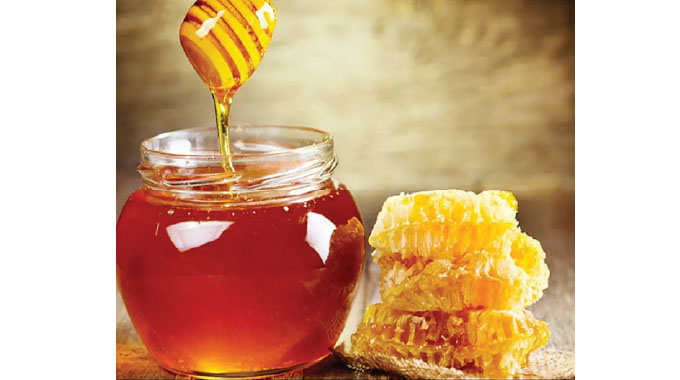
Velile Dube/Chronicle Reporter
It is liquid in nature, is usually natural and highly sought after in international markets.
Though not as pricey as its metal sibling, it fetches good earnings when harvested.
In this article we will attempt to shed light on how one could work “hand in hand” with bees to increase their wealth while benefitting the environment.
The honeybee industry is worth US$4.74 billion worldwide.
So how will venturing into this business benefit you?
Let’s do the simple math…
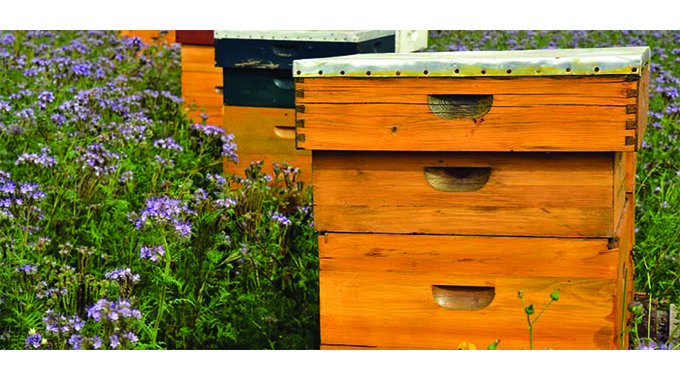
A typical wooden hive costs US$40.00 with a bi-annual harvest of 60kgs of raw honey.
The honey can fetch from US$3.00/kg upwards depending on the quality, packaging, labelling, and market.
If one has good vegetation in the form of citrus and acacia trees, have impressive packaging and are targeting the right market, they stand to gain more.
Typically, when one is embarking on a beekeeping project, you will require hives and catch boxes which are miniature hives that are expected to fill up faster than the bigger hives.
These hives and catch boxes are laced with propolis, a resin like material made by bees from the buds of poplar and cone bearing trees.
Bees use this substance to build hives hence when smeared on catch boxes and empty unoccupied hives, it acts as an attractant to bees, inviting them to settle their colony in hive and or catch box.
Once a catch box is laced with propolis, it is strategically placed in high shaded areas to easily be located by bees.
In a fortnight, all factors constant, the bees must have settled in the catch boxes or hives.
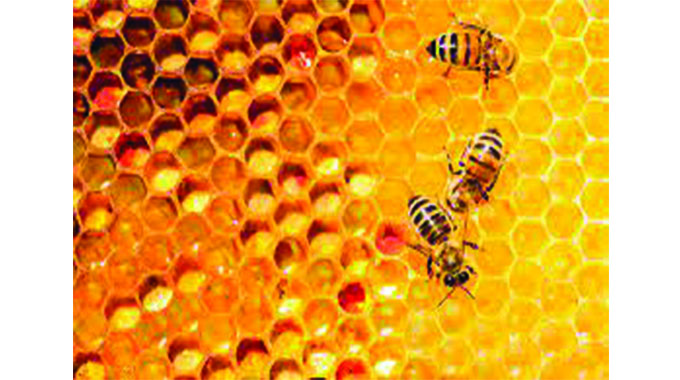
Hives and catch boxes are made of wood and have a shelf life of 8 – 10 years.
What this means is that with your initial investment of $40.00, you can expect to harvest for 8 years.
An opportunity exists for Zimbabwe to take advantage of Africa’s image as a ‘natural’ continent to increase our market share in the organic honey sector.
The demand for honey and other hive products in the world market is high compared to the current production.
Honey and beeswax production in Africa is estimated to be less than 10 and 25 per cent of its potential respectively.
There is an increase in demand for honey and bees wax for industrial use across the world.
The easy availability of a wide range of these products, coupled with the product’s ability to impart a desirable taste in food and beverage products, is aiding the market demand.
Most food processing and pharmaceuticals companies are now preferring to use honey because of its unique flavour, taste, and health and other perceived benefits.
Products such as salad dressings, baked goods, snacks, and beverages containing honey usually have higher prices than those without on supermarket shelves.
Honey can be used in beverages, processed foods, jams, and jellies and is increasingly used as an ingredient in health and beauty products.
Honey can be used as a food spread, in home baking and in beverages.
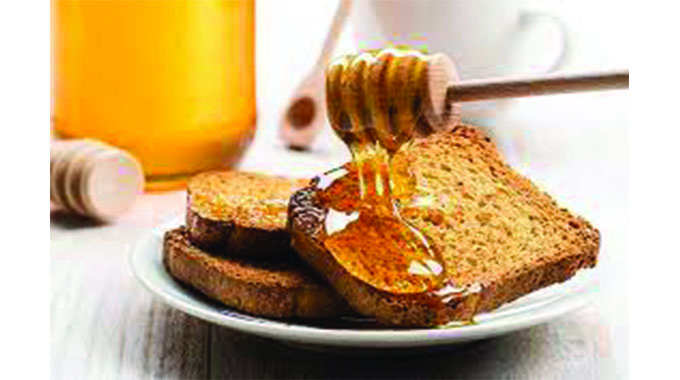
Commercial uses of honey include being a sweetener in cereals, cake mixes, processed foods, jams, jellies and increasingly as an ingredient in health and beauty products.
In terms of markets, the United States of America was the largest importer of honey in 2020, with a world market share of 24.3 percent, followed by Germany and Japan with 12.1 percent and 6.1 percent market share respectively, according to Trade Map.
During the same period, the top importers in the EU alone were Germany, United Kingdom, France, Italy, and Belgium recording positive annual growth in value between 2018 and 2019 of 8 percent, 9 percent, 3 percent, 12 percent and 8 percent respectively.
In 2020, the world traded over 700,000 tonnes of natural honey valued at over US$2.3billion.
Bee farmers usually exhibit at the Bulawayo Agricultural Show which runs yearly side by side with the Zimbabwe International Trade Fair.



 Online Reporter