

 admin
admin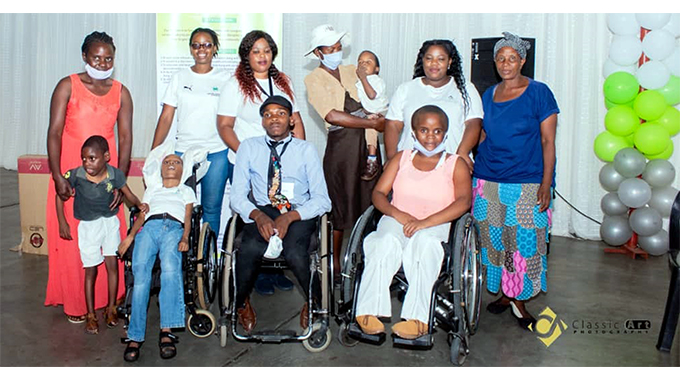
Hazel Marimbiza
Every month Bahle Nyoni sends her disabled 15-year-old granddaughter, Memory, to go and get a food hamper at Michael Tinotenda Foundation (MTF), a locally based charity organisation.
The fear of being unable to feed her disabled grandchild lingers over Nyoni for days. She pits one bill against the next – transport fares to work against gas for cooking, rent against hospital bills for Memory – trying always to set aside money to make up for what she can’t get from MTF.
“I eat much if there’s enough,” said Nyoni. “But my grandchild is the most important. She has to eat first.”
“I am grateful for the food hampers we get because they help us save the little we have,” she added.
People with disabilities face enough hardships in their life. Not only may they experience difficulty getting around or completing tasks compared to the average person, but they may also deal with mental struggles and the stigma society holds against their own abilities. Yet, research also shows that individuals with disabilities are much likelier to face yet another hardship: food insecurity.
The cost of living in Zimbabwe is now high. Prices have soared in recent months, and groceries have become more expensive. Rents are rising, and it’s getting harder and harder for people to stay on their feet.
The majority are unemployed, stricken with poverty and they are the hungriest. Some neighbourhoods do have working families but still they can’t afford groceries. Hunger has grown faster across suburbs due to lockdowns.
In late March, an executive order was placed by the Government to close all non-essential businesses and schools across the country to prevent the spread of Covid-19. For some citizens, business was simply on pause. However, for the majority who live below the poverty line, it left them suffering from food insecurity and feeling uncertain about their future.
“How will I put food on the table? I suffer from diet-related health issues like high blood pressure, diabetes, and heart disease. I don’t want to die and leave my grandchild alone, but the inability to obtain nutritious food is a huge obstacle.
My granddaughter suffers from cerebral palsey. It’s really hurtful and stressful to me sometimes when it comes to trying to feed myself and my family. I really do appreciate MTF for providing us with food hampers. It really means a lot. And this means a lot to all of us caring for disabled persons in this community,” said Nyoni.
Throughout the rise of the pandemic in Zimbabwe, MTF, a local charity organisation has been the boots on the ground giving food hampers to many families with disabled children during the Covid-19-induced crisis.
One part of the non-profit’s mission outreach is making sure that at least every disabled child in the community gets a meal for survival. With some residents caring for disabled children living without a stable income, MTF knew they had to step in.
“I started this initiative because I noticed most people with disabled children do not have money to buy food as most of them are no longer working. I also just love helping people,” said Fadzai Ruziye, founder of MTF.
MTF’s selfless work on the frontlines is the reason why disabled people still have hope. Ruziye is an everyday hero who chooses to be a part of the solution to end hunger. One person willing to take action, multiplied by many, is how hope happens.
Ruziye was taught the principles of generosity by her parents and they are now woven through every part of her life. She is always looking for a way to do good for the people around her.
When asked about her reasons for giving, Ruziye said: “I strongly believe in humanitarian work. Let me help. Let me show some love.
“Love is actually just really caring for the next person. Let me do the little that I can do to put a smile on people’s faces, to let someone know that someone loves them and is thinking of them.”
Ruziye also expressed her gratitude to her family and friends: “They have helped me in so many ways and encouraged me to keep on going. Sometimes I do not even know where the next food hamper will come from but somehow someone always chips in to help. I am really thankful for that.
They’re working hard to really, really try to help me, and I appreciate everything that they’re doing to make MTF a success.”



 Online Reporter
 Blessing Chizhande