Nyore Madzianike
Senior Reporter
VILLAGE Business Units (VBUs), established under the Presidential Rural Development Programme, are beginning to pay dividends, with communities recording tangible benefits, as Government continues to empower rural people through business-oriented agricultural initiatives.
The success of the initiative is reflected in the over 2 000 operational Village Business Units, with some communities declaring dividends averaging US$55 per household per month.
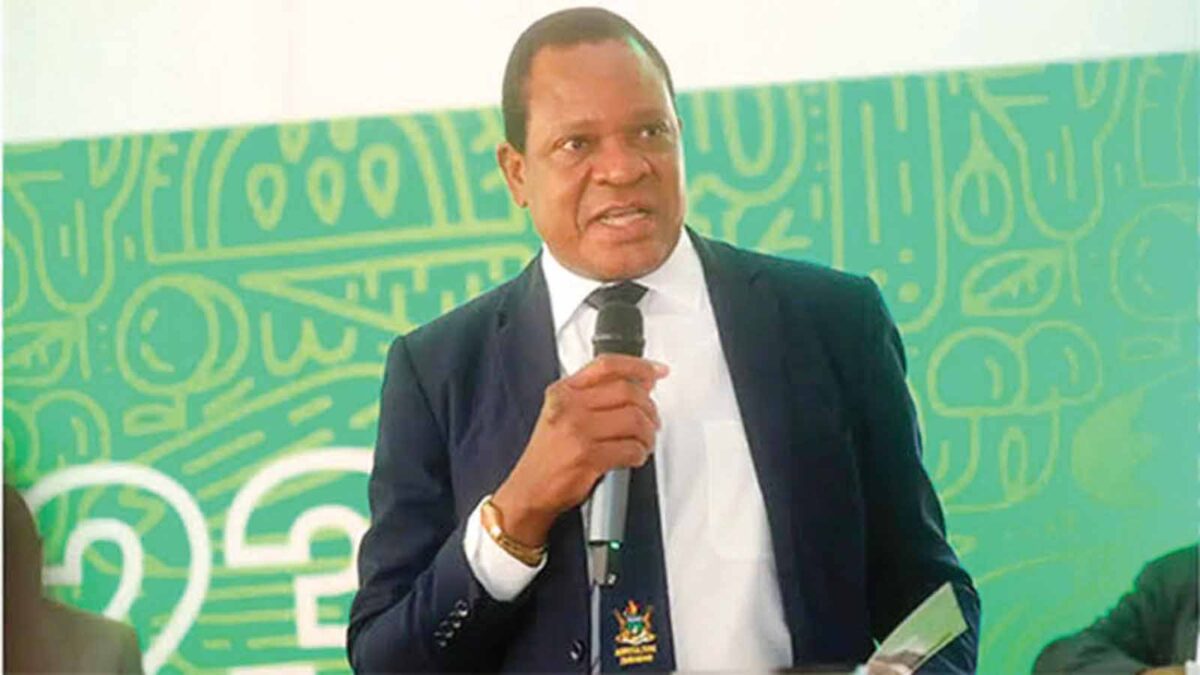
Speaking in Parliament recently, Agriculture, Mechanisation and Water Resources Development Minister, Dr Anxious Masuka, said the success of the programme was underpinned by Government’s investment in mobilising, training and equipping rural communities with necessary skills to manage viable businesses.
He said the process began with the mobilisation of villagers by Agricultural Business Advisory Officers, formerly Agritex officers, who were responsible for preparing communities to take ownership of the investments.
“For the 6 074 boreholes that were drilled under the Presidential Rural Development Programme and for the over 2 000 business units that are now operational, what precedes all this is the Business Advisory Officer, previously an Agritex Officer, mobilising the villagers for this investment by Government.
“Ordinarily, we know that Agritex in the past has never been trained to run a business. The Agritex Officers are not business officers. We are transforming them to become Agricultural Business Advisory Officers,” he said.
Minister Masuka said Government was strengthening the capacity of agricultural colleges to equip officers with entrepreneurship, innovation and business advisory skills under Education 5.0.
In the interim, Government is drawing on the expertise of the Agricultural and Rural Development Authority (ARDA), Agricultural Marketing Authority (AMA) and Agricultural Finance Corporation (AFC) to provide the necessary support to communities.
“To bridge this gap in the interim, we are bringing the Agricultural and Rural Development Authority, the Agricultural Marketing Authority, and the Agricultural Finance Corporation to provide the necessary skills that will allow this village to ordinarily operate and efficiently run a business,” he said.
The minister said the results were already encouraging, with many communities successfully operating their businesses and realising financial returns.
“Many of the villages actually have run very successful village business units on average, declaring a dividend equivalent to USD55 per household per month. Generally, they are successful,” he said.
The programme is also being strengthened through the Government’s drive to promote climate-resilient agriculture, particularly the production of small grains such as sorghum and millet in areas that experience below-average rainfall.
Minister Masuka said 1 320 Village Business Units would benefit from Pfumvudza inputs, including fertiliser and herbicides, to support the production of small grains.
“This year we have Village Business Units that we believe are capable of producing millet, sorghum and other small grains,” he said.
“We have 1 320 Village Business Units which are going to benefit from Pfumvudza inputs, fertiliser and herbicides.”
He said the programme had already been rolled out, with Government working together with ARDA to provide inputs for sorghum and millet production.
“In every area, we expect that 10 tonnes will be distributed. For this programme, I believe that it is going to reach different communities,” he said.
Minister Masuka added that Government would address any communities that might not have received the inputs by the end of the month.
The initiative is also opening new opportunities for rural communities through the Expanded Agricultural Mechanisation Facility launched by President Mnangagwa on November 11 this year.
Minister Masuka said the development would see villages benefiting from mechanisation for the first time in the country’s history.
He said the Government had adopted a whole-of-sector approach involving different institutions to ensure the village business units were properly managed and sustainable.
Under the arrangement, the Agricultural and Development Advisory Services Directorate will be responsible for mobilising villagers and providing the training required to manage the businesses.
ARDA would then deploy managers with agronomy expertise, while AMA ensures production is market-led, and the AFC Bank provides working capital to support farming as a business.