Sikhulekelani Moyo [email protected]
GOVERNMENT requires ZiG9,4 billion to address national housing needs in 2027 but has been allocated an indicative ceiling of only ZiG1,444 billion, leaving a funding gap of ZiG7,9 billion, National Housing and Social Amenities Minister Professor Paul Mavima has said.
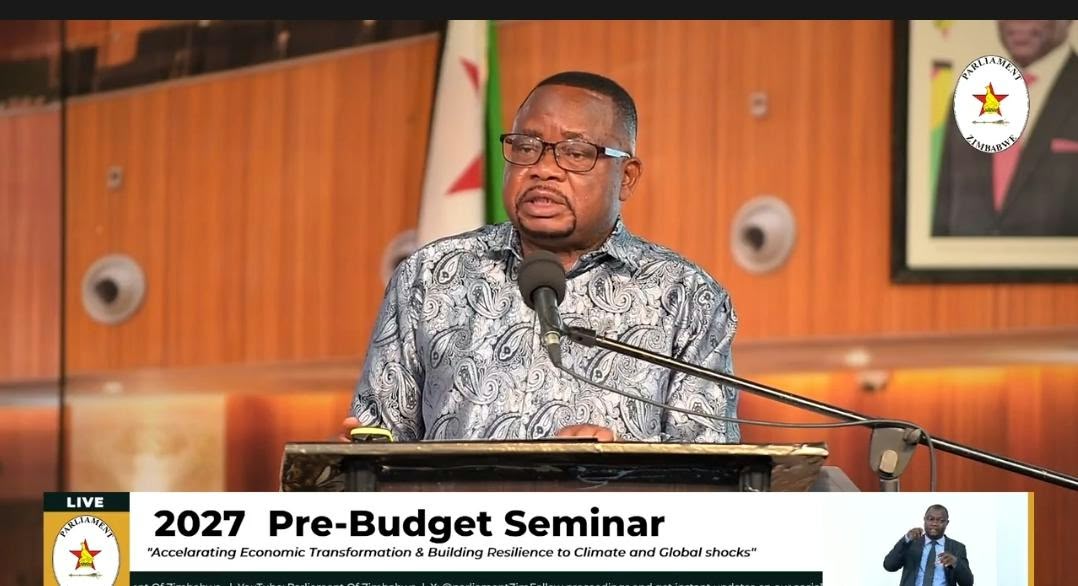
Presenting his ministry’s budget proposals at the 2027 Pre-Budget Seminar, Prof Mavima said the 84,6 percent funding shortfall could undermine efforts to increase housing stock, upgrade informal settlements and complete stalled infrastructure projects.
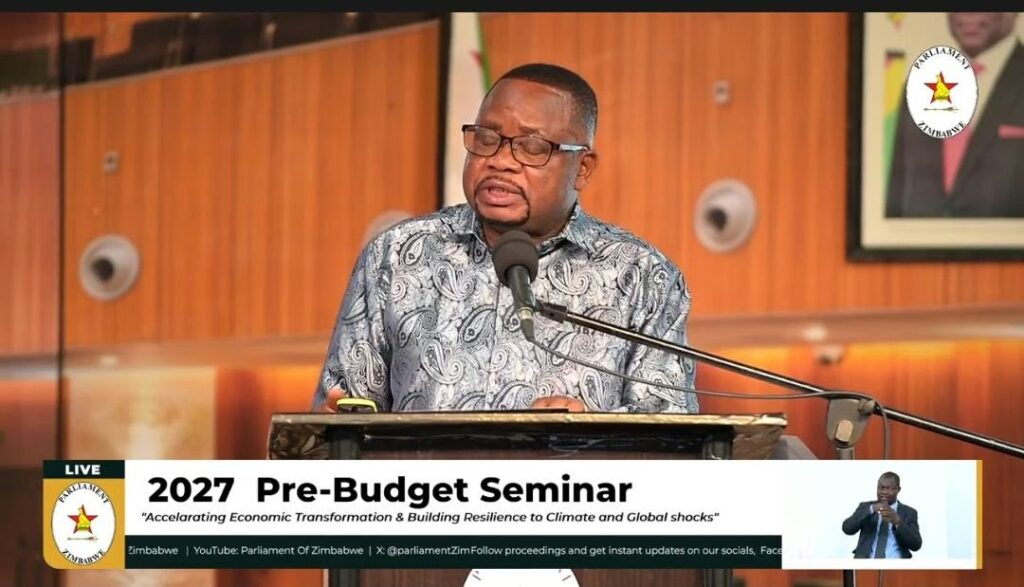
He said housing demand continued to outstrip supply, with infrastructure gaps and the proliferation of informal settlements adding to the challenges.
“Basically, the challenges that have been identified include rising housing demands, concessions, affordable supply, gainful concessions, and infrastructure gaps that require coordinated effort,” said Prof Mavima.
He said the ministry’s priorities were aligned with the National Development Strategy 2 (NDS2) and focused on expanding housing provision, upgrading settlements and improving access to social amenities.
“Our priorities include making sure that we have completed stone projects, upgraded settlements. We have coordinated social amenities and modernised our regulations that facilitate the delivery of both housing and social amenities,” he said.
“Our priorities, I will not go into details about that, but basically we want to make sure that we are growing our housing stock both for our civil servants as well as for the generality of Zimbabwe.”
The ministry also intends to attract private sector investment into housing delivery and improve infrastructure provision in residential settlements.
“We want to also facilitate private sector lay housing and social amenities delivery. We want to make sure that we have adequate infrastructure both on-site and off-site for our settlements. We want to regularise informal settlements and self-explanatory priorities under NDS2,” he said.
On the ministry’s 2026 budget performance, Prof Mavima said expenditure had reached ZiG508 million by September, against a revised allocation of ZiG948 million, representing 54 percent budget execution.
He said delayed releases of allocated funds had affected the implementation of planned programmes.
“Most of the problems we faced in terms of achieving our targets relates to the late releases of the budgeted resources. And we continue to appeal to Treasury to provide resources as expeditiously as possible,” he said.
Prof Mavima appealed to Parliament to help address the funding shortfall, saying additional resources would enable the ministry to meet its targets.
“This is where we want to appeal to Parliament so that if this gap is reduced, we will be in a position to address most of the needs that are in our targets. Partnership will be experiencing a gap of 84,6 percent,” he said.
He identified the upgrading of informal settlements as one of the ministry’s major funding priorities for 2027, describing the prevailing situation in many communities as untenable.
“What we need mainly to cover for 2027 is upgrading informal settlements and everyone will agree with me that this is an untenable situation, especially in most of our areas,” he said.
The ministry also intends to complete stalled housing and social amenities projects across the provinces and strengthen financing mechanisms to support housing delivery.
Prof Mavima said Government wanted to capitalise the National Housing Fund and recapitalise the Housing Guarantee Fund to improve access to housing finance.
“There is also issues related to just the general funding and financing of housing delivery. And we want to see capitalisation of the National Housing Fund and recapitalisation of the Housing Guarantee Fund. Again, this will allow Zimbabweans to access housing,” he said.
He said several projects had remained incomplete for extended periods because of inadequate funding, with the ministry requiring additional resources to bring them to completion.
“There are quite a number of projects that we would like to see completed. And the list is right there before you. I want to concentrate on the bottom line where we show the difference between what we are providing and what we are being allocated. So we require ZiG2,6 billion, but we are being allocated ZiG1 billion. And one of these projects is being stored for a long period of time and we need these resources so that we can complete the projects,” he said.
Prof Mavima said adequate funding was essential for the ministry to fulfil its mandate of providing decent and accessible housing.
“Honorable Speaker, I think the position is very clear. We are the ministry that provides housing for our citizens. We are the ministry that ensures that Zimbabweans are afforded decent and accessible housing. And our resources right now are what we need to provide housing if needed,” he said.
“We appeal to Treasury and we appeal to Parliament to provide such resources so that we can fulfill that important mandate.”