Online Reporter
Nqobile Bhebhe, [email protected]
CALEDONIA Mining Corporation has invested approximately US$250 million in Zimbabwe over the past nine years through tax, royalty, salary, procurement and other statutory payments.
This strengthens Victoria Falls Stock Exchange-listed miner’s status as one of the most significant mining companies and a key contributor to the country’s economic growth and development.
The company, which operates the flagship Blanket Gold Mine in Gwanda and is advancing projects such as the Bilboes Gold Project and Motapa Project, has become a key player in Zimbabwe’s fast-growing mining sector through ongoing investment, production growth, community empowerment and local supplier development.
The company’s latest Environmental, Social and Governance (ESG) Report shows a significant increase in economic contributions as Caledonia transitions to a multi-asset gold producer.
In 2025, Caledonia spent US$31,9 million on local suppliers, up from US$16,5 million in 2024, while community development investment rose to US$1,6 million from US$1,4 million the prior year.
Dividends paid to the Gwanda Community Share Ownership Trust (GCSOT) rose sharply to US$5,5 million, compared to US$1,4 million in 2024.
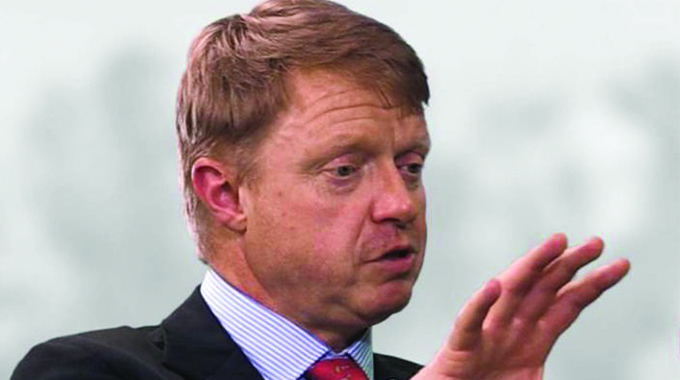
Chief executive officer Mr Mark Learmonth said the group’s approach to social responsibility is centred on ensuring that the benefits generated by its mining activities are shared with employees and surrounding communities.
Mr Learmonth said 2025 marked an important milestone for the Employee Trust following the final repayment of the loan that had been used to acquire its shareholding in Blanket Mine.
“The year marked an important milestone with the final repayment of the loan originally used to acquire the Employee Trust’s 10 percent shareholding. As a result, the Trust now receives the full benefit of dividends without encumbrance,” he said.
He said a dividend paid in February 2026, based on Blanket Mine’s 2025 performance, translated to approximately US$600 per beneficiary.
“This dividend represents a direct economic benefit to participating employees through the Trust. Separately, the broader community continues to benefit from dividends allocated to its shareholding, reinforcing our inclusive ownership model.
“The dividends paid in respect of 2025 performance delivered a meaningful cash return to each beneficiary, highlighting how our approach creates shared, long-term value.”
Mr Learmonth said employee and community ownership remained a key pillar of Caledonia’s sustainability strategy.
“Together, these benefits reflect our belief that long-term alignment is strongest where employees and communities each hold a genuine stake in the business,” he said.
Caledonia is among the few mining companies in Zimbabwe that have successfully implemented employee and community share ownership schemes, enabling workers and local communities to participate in the value generated by mining operations.
The model has become a benchmark for inclusive and sustainable mining development in the country.
Beyond ownership initiatives, the company continues to support the economy through local spending and fiscal contributions.
“Beyond ownership, Caledonia continues to make substantial contributions to Zimbabwe’s economy through employment, local procurement, taxes, royalties and statutory payments.
“Over the past nine years, the group has contributed approximately US$250 million to the Zimbabwean economy, with 2025 representing a step-change in the scale of annual contributions.
“These payments are made transparently and in accordance with both Zimbabwean law and international reporting standards, reinforcing our commitment to accountability, governance, systems and disclosure readiness.”
The ESG report notes that payments to the Government in 2025 included income tax on Blanket Mine’s profits, PAYE on employee wages and benefits and the statutory five percent gold royalty.
Caledonia has also paid statutory obligations in the form of withholding tax on cross-border transactions, revenues linked to gold refining arrangements, dividends paid to the National Indigenisation and Economic Empowerment Fund (NIEEF) for its 16 percent stake in Blanket Mine, as well as customs duties, levies and other statutory charges.
“By ensuring that these contributions are fair, transparent and aligned with both Zimbabwean law and international reporting requirements, we support national development and economic stability. We also demonstrate that the value generated by Caledonia is shared with the state as well as with local shareholders and surrounding communities.”
Mining remains Zimbabwe’s largest export-earning sector, with gold among the country’s top foreign currency generators.
As one of the country’s leading gold producers, Caledonia’s continued investment in production expansion, exploration and mine development is helping support national efforts to increase mineral output and grow the mining industry’s contribution to the economy.
Mr Learmonth said that as Caledonia transitions into a multi-asset gold producer, ESG principles will remain central to its growth strategy, ensuring long-term value creation for shareholders, employees, communities and the country.
The mining house also reported significant progress in promoting local content development and supplier participation, key priorities in Zimbabwe’s drive to build stronger domestic mining value chains.
Mr Learmonth said the company implemented several initiatives during 2025 aimed at increasing local purchases and strengthening the capacity of Zimbabwean suppliers.
“For the first time, in 2025, local procurement share (55 percent) exceeded foreign purchases (45 percent).
The local procurement interventions were undertaken for key operational requirements, including explosives, cyanide, trackless mobile machinery, drilling consumables, and loader and loco spares.
“Two of the main initiatives included the supplier incubation initiative and local capacitation through consignment stocking.”
The shift is expected to create greater opportunities for local manufacturers, service providers and small-to-medium enterprises, while supporting the country’s industrialisation agenda and reducing reliance on imported mining inputs.
Mr Learmonth said five local suppliers were selected under the incubation programme and received targeted support to accelerate business growth.
“Consignment stocking started in Q4 2025, whereby foreign purchases were replaced through agreements with local suppliers, which has involved engagement on pricing and stock levels.
“Focus areas for 2026 include continuous collaboration and visits with local suppliers, continuation of the incubation initiative and completion of consignment agreements for identified products.”