Online Reporter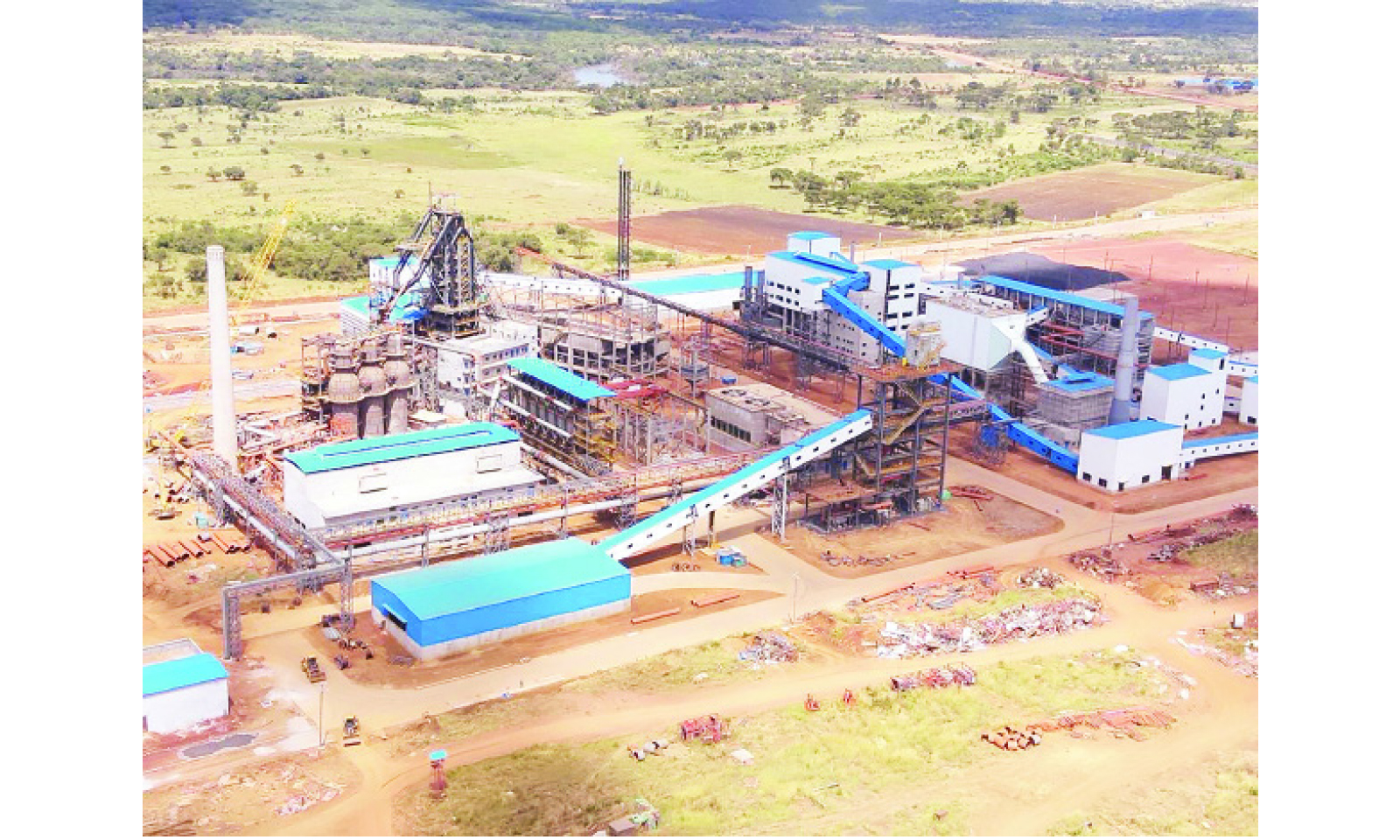
Tichaona Zindoga-Herald Correspondent
A quiet industrial revolution is taking place in Zimbabwe.
China’s investments play a key role in the metals value chain — and this could help southern African country’s in a massive and transformative way.
Think of 18th-19th century Europe and America: The Industrial Revolution, marked a significant transformation from agrarian economies to industrialised societies. Advancements in machinery, technology, transportation, and production processes led to substantial economic and social changes.
The demand for raw materials, particularly metals, drove the development of mining technologies and infrastructure, laying the foundation for the industrial boom.
Metals played a crucial role in various sectors during this period. Innovations in smelting and refining processes allowed for mass production of high-quality metals, essential for manufacturing durable machinery, tools, railways, ships, and buildings.
The transportation sector, especially the development of steam engines and railways, relied heavily on metals, facilitating the efficient movement of goods and people. The metals industry was central to technological advancements, economic growth, job creation, and the expansion of trade and industries, making it a cornerstone of the Industrial Revolution.
Zimbabwe — which has been referred to as “the Persian Gulf of strategic minerals of our earth” with vast mineral deposits such as iron, chrome, coal, copper and the platinum group of metals (PGMs) — has up to 68 commercially exploitable minerals.
In addition, the so-called rare-earth minerals.
A combination of factors has meant the country is yet to fully realise its true potential and economic transformation to the scale of the antecedent industrial revolutions in the West.
But this is changing, thanks to the involvement of Chinese investment.
Recently, President Mnangagwa commissioned the Palm River Energy Metallurgical Special Economic Zone in Beitbridge, Matabeleland South, in which a Chinese company Xintai Resources, is pouring US$3.6 billion into the production of chromium-based materials and coke.
President Mnangagwa said the Xintai investment “will play its part as a critical block for our nation’s industrialisation and modernisation”, adding that this would help Zimbabwe’s national economy forward and “unlocking unprecedented opportunities for employment, technological progress, and social development.”
According to the President, the Chinese project is a huge boost to Zimbabwe’s path to industrialisation as it integrates energy and metallurgy, two critical sectors with the potential to redefine the country’s industrial landscape.
The mega project dovetails into other huge Chinese industrial mineral value chain projects that have been enunciated in recent times.
Eagle Canyon project
In 2024, the “Eagle Canyon Zimbabwe project metals park”, a multi-billion dollar mine-to-energy industrial park was launched by the Chinese company, Eagle Canyon International Group, in partnership with Pacific Goal Investment, with the aim of processing and beneficiating minerals like lithium, platinum, and nickel into battery metals, creating a significant value addition to Zimbabwe’s mining sector.
Valued at over US$13 billion, the first-of-its-kind-in-Zimbabwe industrial park will include the construction of two 300MW power stations, a coking plant, graphite processing plant, a nickel-chromium alloy smelter, and a nickel sulphate plant would be established on a 5 000 hectare-piece of land from which 1 000ha would be utilised by Eagle Canyon.
Dinson Industries
Chinese metals giant Tsingshan Holding’s Dinson Industries integrates coal mining, chrome mining and processing and the game-changing iron and steel plant at Manhize.
The subsidiaries involved are Dinson Colliery in Hwange, Afrochine Smelting in Selous, near Chegutu and Dinson Iron and Steel Company. The company has further interests in lithium and copper; and is part of a group of Chinese companies that formed a New Energy Minerals consortium in 2023.
Dinson has so far demonstrated the Chinese industrial investment and development reviving Zimbabwe’s steel sector that had collapsed following the de-industrialisation that took place in previous decades that saw the State-owned Zimbabwe Iron and Steel Company (Ziscosteel) disintegrating.
Dinson has revived the sector with the company becoming an influential player due to its impact upstream, downstream and middle of the stream industries.
The company’s investment has transformed Mvuma, a previously agricultural rural area, with a new town that is being built to accommodate up to 15 000 residents; and the company’s own 6000-plus workers.
Further, a number of economic activities are radiating from Manhize, including rail and road transport logistics that are reaching as far as neighbouring Mozambique, where, based on Zimbabwe’s investment a whole new industrial hub is taking shape.
The impact of the Chinese investment in Zimbabwe is also keenly felt at a time that the steel sector in Africa’s most industrialised economy — South Africa — has collapsed, making Zimbabwe the top dog in the region and Africa.
Zimbabwe has lately reasserted its position as a leading producer of chrome and ferro-alloys with Chinese investments playing a role in mining and smelting.
Chrome is essential in various industries, including stainless steel production, surface plating, foundry sands, leather tanning, and the creation of pigments and dyes.
Its properties, such as corrosion resistance, hardness, and thermal conductivity, make it invaluable in manufacturing durable and high-quality products.
Ferro-alloys, including ferrochrome, ferromanganese, and ferrosilicon, are crucial in steel manufacturing, the automotive industry, aerospace and defence, power generation, and the chemical industry.
These alloys enhance the hardness, strength, and corrosion resistance of steel, making them indispensable in producing high-performance materials.
The Chinese-owned Zimbabwe Zhongxin Smelting Company, Zimbabwe Mining and Alloy Smelting Company (Zimasco), Jin An are involved in chrome mining in Zimbabwe. China’s second largest iron ore trader, Sinosteel Corporation controls Zimasco with a reported 73 percent stake.
There are huge economic opportunities that have come from the exploitation of the country’s chrome resources including, employment opportunities, support for local industry, and export revenues with chromium exports being among the highest foreign currency earners for Zimbabwe currently.
Where to put the energy
China’s investments in Zimbabwe are also closely associated with energy and power infrastructure developments both for individual projects — which Dinson is doing at Manhize where it will be mostly self-sufficient through its power plant and renewable energy — and the national grid. Already, China’s bilateral assistance to Zimbabwe involves the expansion of the country’s electricity generation capacity at major hydro and thermal facilities.
The Titan New Energy Group — linked to investors of Jin An (mentioned above) early 2025 embarked on the construction of a 720MW coal thermal power plant in Hwange, with an investment of US$1 billion. In addition to the coal thermal power plant, the project includes plans for a 200MW solar power plant in Gweru as part of Phase 2.
Speaking at the groundbreaking ceremony, President Mnangagwa said the project was a milestone in Zimbabwe’s “journey towards modernisation, industrialisation and sustainable socio-economic development, anchored on a robust energy sector.”
He said: “Electricity is the lifeblood of industrialisation and is critical for our mining, agriculture and manufacturing sectors, among others. These vital projects also reaffirm Zimbabwe’s commitment to achieve energy self-sufficiency and determination to leap towards a future driven by innovation.”
Lastly, in 2023, the China Energy Engineering Group proposed a1 000-megawatt floating solar farm on Lake Kariba.
The US$1 billion project involves installing over 1.8 million photovoltaic panels on 146 modular floating units. The solar farm will support mining operations and other major electricity consumers, contributing to Zimbabwe’s efforts to reduce carbon emissions and transition to renewable energy sources.
Setting up plants such as battery-grade lithium refineries, which have long been demanded by Government will require loads of green energy, and this could well be the spearhead.
To ensure the success of these various projects in Zimbabwe, much energy will be required to make the investment climate favourable so as to benefit the country and its people.