

 Online Reporter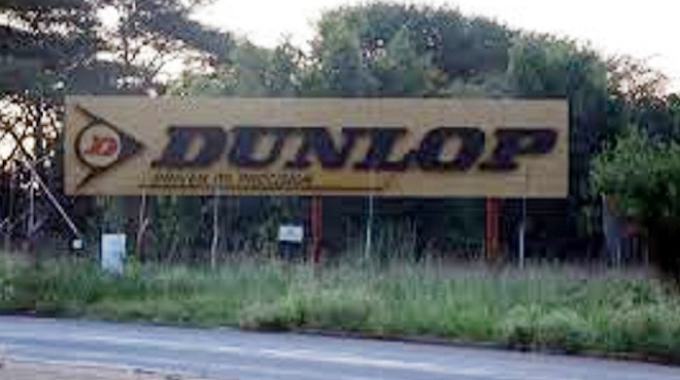
John Mupa, [email protected]
EVERY discarded item tells a story of lost value, missed opportunities and unrealised futures. This story is about tyres — but it is really about circles: how we build them, how we break them, and what happens when an industrial ecosystem unravels because we fail to recognise the value embedded in what we label as “waste”.
In the 1990s and early 2000s, Dunlop Zimbabwe was more than a factory; it was an institution. Under the leadership of David Mathews, the company reinvigorated its brand with messages such as “Something is happening at Dunlop,” “Passion for Performance,” and “The driving force.” However, Dunlop’s real strength was not rooted in advertising. It lay in the ecosystem it had built.
Long before the concept of a circular economy entered mainstream discourse, Dunlop practised it. Waste was not an afterthought; it was a resource. Allied enterprises — including Dunlop Rubber and Allied Products and Art Flooring — took tyre offcuts and by products and transformed them into mats, hoses, seals and durable flooring materials. Materials leaving one production process re entered another as inputs. Jobs were created. Environmental impact was reduced. Economic value was retained locally. It was an industrial system designed around reuse and interdependence, where very little was lost.
Over time, however, this ecosystem was gradually dismantled. In the early 2000s, Dunlop Zimbabwe was delisted, and waste dependent subsidiaries were separated and sold as part of broader corporate restructuring. From a balance sheet perspective, this appeared efficient. In practice, it weakened the internal value chains that had sustained circular flows. Internal demand for by products disappeared. Material loops were broken. Resilience diminished. What followed was an increasingly difficult operating environment characterised by macroeconomic volatility, constrained capital availability, import competition and regulatory uncertainty. In this context, materials that had once generated revenue increasingly became costs — quiet markers of foregone future value.
Shifts in ownership frameworks during this period also reshaped the investment landscape. While intended to broaden economic participation, these changes introduced uncertainty that unsettled long term industrial partnerships. In the tyre sector, several foreign linked investors scaled back or exited entirely. Companies such as Apollo Tyres withdrew, and Dunlop Zimbabwe — historically linked to global supply networks associated with firms like Sumitomo Rubber Industries — lost access to the capital, technology and market linkages necessary to sustain large scale manufacturing.
This context is important because tyre manufacturing is inherently global. Typically, between 60 and 80 percent of production inputs are imported. Synthetic rubber and specialised chemicals account for an estimated 60 to 70 percent of total rubber use. Steel wire and textile reinforcements such as nylon and polyester are also sourced externally, largely from South Africa and China. External partners were therefore not peripheral to Dunlop’s operations; they were integral to the system’s viability.
At the same time, Zimbabwe’s contribution was substantial. Dunlop Zimbabwe employed a skilled local workforce capable of converting imported inputs into finished products. This activity supported the balance of payments through value addition, import substitution and exports. It made meaningful contributions to employment and gross domestic product. Importantly, Dunlop did not disappear overnight. Operations were reorganised under Auto Tyres Zimbabwe with local ownership. However, without sustained capital injection, continuous technological upgrades and reintegration into global supply chains, production eventually ceased. The industrial circle was left incomplete.
This leads to a broader structural question: how can functioning industrial ecosystems be preserved, adapted and strengthened during periods of economic transition and ownership change? No factory — and no economy — operates in isolation. Capital, like waste, is neither inherently good nor bad; its value depends on how effectively it is integrated, governed and transformed. In a circular system, even low value outputs can become sources of wealth when skills, institutions and partnerships align.
The lesson
The story of Dunlop Zimbabwe is not simply about one company. It illustrates what happens when the connective tissue binding an industrial system is weakened. Waste is unclaimed value. When the links between firms, materials, skills and capital are disrupted, losses extend beyond production volumes to include jobs, innovation and future opportunity.
The tyre may still roll elsewhere. But once the circle is broken, prosperity becomes far harder to sustain.


