Online Reporter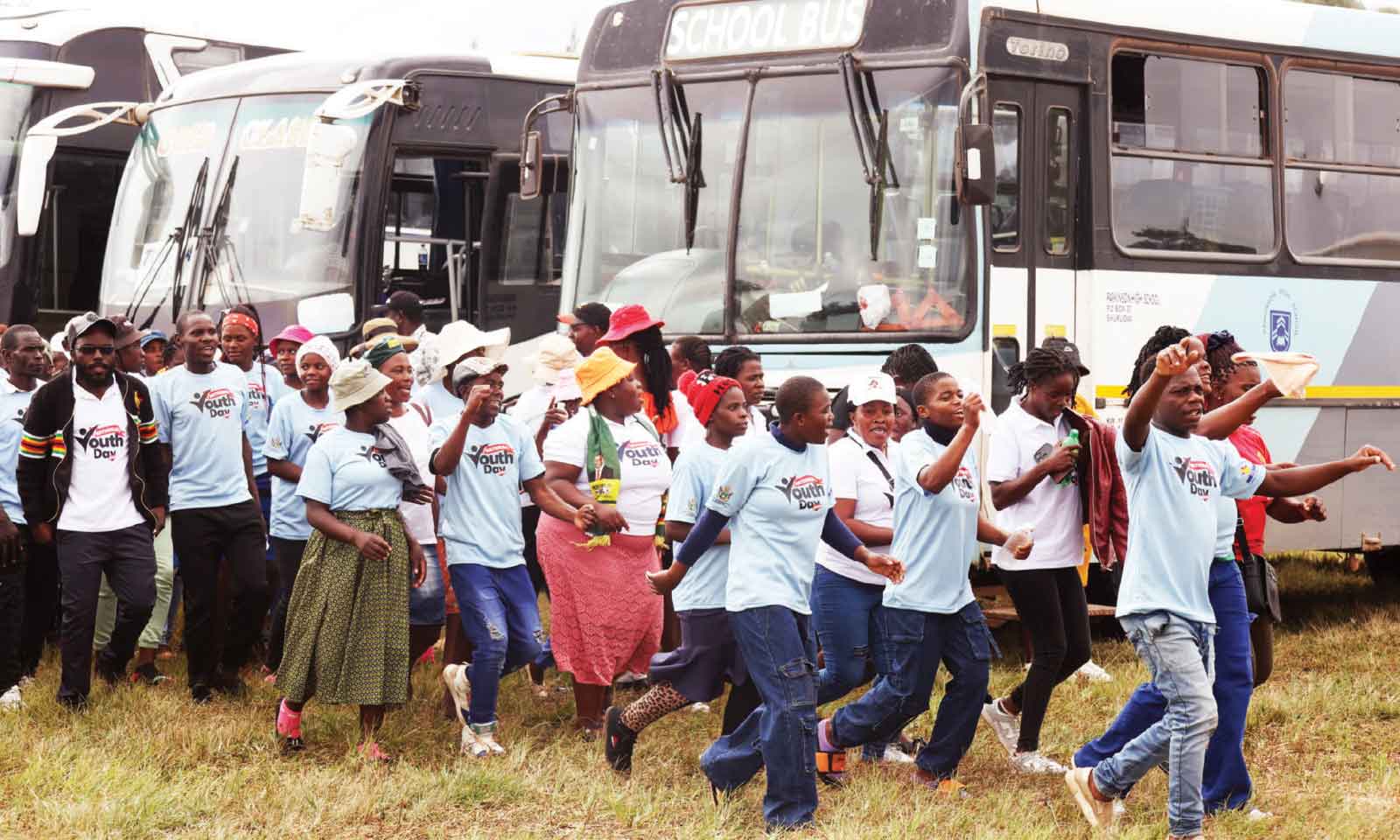
Richard Muponde
Zimpapers Politics Hub
THE National Youth Day commemorations held on February 21 at Igava Vocational Training Centre in Marondera transformed into a thunderous political statement, with the oversubscribed crowd powerfully endorsing President Mnangagwa’s leadership and the proposed Constitutional Amendment No. 3.
What was initially planned as a gathering of about 30 000 youths quickly evolved into a historic mass mobilisation. The venue was packed beyond capacity, with a sea of party colours and affiliates’ regalia stretching across the vocational college grounds, spilling onto feeder roads and into Marondera town.
The overwhelming turnout has been read by political observers and party structures alike as a clear demonstration of grassroots confidence in President Mnangagwa’s stewardship and the national development trajectory under the Second Republic.
From the early hours of the morning, buses and private and party vehicles, streamed into Igava in convoys resembling a vehicle export harbour. Long after the official programme ended around 2pm, even as rains fell, hundreds of vehicles were still arriving while others departed, underscoring the unprecedented scale of attendance.
Supporters reported that once separated in the crowd, locating colleagues became nearly impossible without mobile phones, a vivid illustration of the sheer human density at the venue.
The over-subscription of the event has strengthened the narrative within the political circles that the youth constituency, often viewed as politically fluid, is increasingly consolidating behind President Mnangagwa.
Amendment No. 3: Continuity of revolutionary development path
The massive youth presence has also injected fresh political energy into discussions around Constitutional Amendment No. 3, which seeks to align with Resolution No. 1 and extend President Mnangagwa’s tenure by two years to 2030.
Supporters argue that the proposed extension is not merely a political adjustment but a strategic necessity to safeguard the development momentum already underway.
Under the Second Republic, Zimbabwe has witnessed accelerated infrastructure modernisation, agricultural recovery through climate-proofed programmes, re-engagement and engagement diplomacy gains, mining sector expansion and value addition.
Therefore, policy continuity is viewed as critical to fully realise Vision 2030’s upper middle-income economy target under the philosophy “Nyika Inovakwa neVene Vayo / Ilizwe Lakhiwa Ngabanikazi Balo.”
President Mnangagwa’s youth doctrine takes root
Addressing the jubilant gathering, President Mnangagwa delivered a firm and forward-looking message that placed the youth at the centre of Zimbabwe’s economic future.
He declared: “Young people of our great motherland, the future prosperity of Zimbabwe is firmly in your hands. You must take charge of the economic development of our country with discipline, innovation and patriotism. The Second Republic has opened doors of opportunity across all sectors, agriculture, mining, industry, ICT and entrepreneurship, and I challenge you to walk boldly through those doors. Do not wait to be employed; create employment. Do not doubt your capacity; Zimbabwe believes in you. Together, with unity of purpose and love for our country, we will achieve Vision 2030 and leave no one and no place behind.”
The remarks were met with sustained cheers, further reinforcing the strong emotional connection between the President and the youthful demographic.
Analysts attribute the swelling youth support to tangible policy interventions implemented since 2017.
Key youth-facing achievements include, infrastructure revolution, massive road rehabilitation, dam construction and energy projects have expanded economic opportunity corridors for young entrepreneurs, Agricultural Transformation
Programmes such as climate-proofed farming and rural industrialisation have drawn many youths into agribusiness value chains.
The establishment of innovation hubs, increased internet penetration and digital economy reforms have positioned Zimbabwean youths for participation in the Fourth Industrial Revolution.
Youth empowerment funds and vocational training expansion have shifted many young people from job seekers to emerging job creators.
Government, working with the Youth League, has intensified protective social programmes to safeguard the demographic dividend.
Another notable undercurrent at Igava was the visible influx of new party members, many reportedly defecting from opposition ranks.
Youth League mobilisation campaigns, coupled with empowerment programmes and economic stabilisation measures, have made the ruling party increasingly attractive to first-time voters and young professionals.
ZANU PF Secretary for Youth Affairs Cde Tino Machakaire has previously emphasised that stability, empowerment and structured mobilisation remain central to consolidating youth support, a strategy that appears to be yielding dividends on the ground.
This year’s National Youth Day commemorations were held under the theme:
“Youth Agenda for Transformation”, the event symbolised a deliberate shift toward skills development, production and youth-driven industrial participation.
The choice of venue, a vocational institution, reinforced Government’s message that the future of Zimbabwe lies in practical skills, innovation and productivity rather than dependency.
The Igava turnout has injected renewed political momentum into the Second Republic’s march toward Vision 2030.
What emerged from Marondera was more than a commemorative gathering, it was a show of numerical strength, organisational capacity and generational alignment behind President Mnangagwa’s development agenda.
For supporters of Amendment No. 3, the message from the ground appears unmistakable: the youth constituency is increasingly viewing continuity of leadership as synonymous with continuity of development.
One conclusion is difficult to ignore. Igava was not just full, it was politically loud. And in Zimbabwe’s evolving political economy, the voice of the youth is becoming ever harder to dismiss.