

 Online Reporter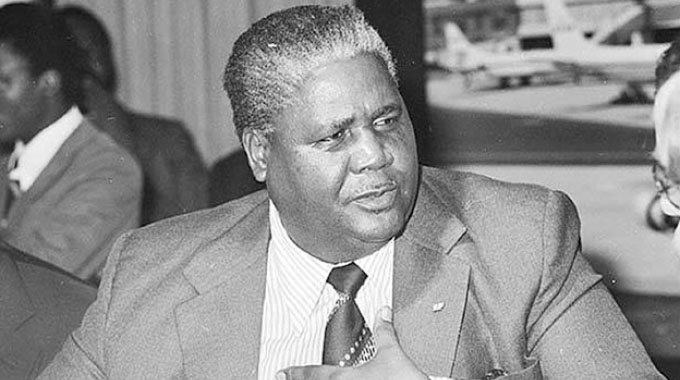
Lovemore Dube, Zimpapers Sports Hub
LONG before independence, when tribal tensions in Bulawayo boiled over onto football terraces, the late Vice President Joshua Nkomo stepped in, not with a police baton, but with a call for unity. His push to rename two of the city’s fiercest rivals, Highlanders and Zimbabwe Saints, was more than symbolic. It was a move to stop the bloodshed.
Zimbabwe Saints had played under the name Mashonaland United since their split from Mashonaland FC in 1965. Highlanders, on the other hand, had started as Lions FC in 1926 before adopting Matabeleland Highlanders in 1937.
But by the mid 1970s, the fierce rivalry between the two sides had spilled beyond the pitch. Violence among fans became common, especially in the lead up to matches. Tribal tensions, mirrored in the clubs’ names, were tearing communities apart. After his release from prison in 1975, Nkomo called on the leadership of both clubs to adopt names that reflected unity, not division. He wasn’t alone, other nationalists, including the late Dr. Herbert Ushewokunze, backed the push to steer football away from fuelling tribal conflict.
“Zimbabwe Saints used to be Mashonaland United,” recalled Douglas Mutema, a former Saints midfielder, who partnered the legendary William Sibanda in the team’s midfield. “When Mashonaland United was changed to Zimbabwe Saints during Smith’s regime, they were asking, what was saintly in a Black person? People were arrested for that name. They wanted us to call the team Rhodesia Saints. Dr. Ushewokunze lived near Makokoba and was part of the discussions. Some of us were even taken to the cells.”
Mutema was among those arrested during the transition from Mashonaland United to Zimbabwe Saints. The Smith regime viewed the change as subversive and refused to allow Black teams to carry names that expressed dignity or national pride.
Before the name changes, clashes between fans became so frequent and intense that Rhodesian law enforcement implemented an unusual strategy: suspected troublemakers were required to report to the nearest police station every Friday and were only released after 5PM on Sunday, well after most matches had ended.
Nkomo and his peers believed that unity was more important than regional loyalty, especially in a country on the brink of independence. The renaming of both clubs was part of a broader national project to foster peace. In the years that followed, both teams flourished.
Zimbabwe Saints, also affectionately known as Chikwata, won the 1977 league and cup double. They added another championship and the Chibuku Trophy in 1988. Their teams featured some of the most gifted players in the country’s history, including Bruce Grobbelaar (briefly), Ephraim Chawanda, Misheck Sibanda, Douglas Maneto, Philemon Dangarembwa, Musa Muzanenhamo, Agent Sawu, Obey Sova, George Ayibu, Garikayi and Innocent Rwodzi, Stanley Mutasa, Ronald Sibanda, Mthulisi Maphosa, Mtshumayeli Moyo, Henry McKop, Shayne Khamal, Boyce Malunga, Shaky “Toendepi” Nyathi, Joseph Machingura, John Sibanda, Matambanashe Sibanda, Mlungisi Ndebele and Muzondiwa Mugadza.
Highlanders, known as Bosso, became a football powerhouse, winning nearly every major trophy on offer from 1980 onward, including seven league titles, to go with their 1974 national play-off win. The club developed household names such as Madinda, Adam and Peter Ndlovu, Stanford Ntini, Peter Nkomo, Nhamo Shambira, Tutani Moyo, Alexander Maseko, Dumisani Nyoni, Makwinji Soma-Phiri, Sikhumbuzo Ndebele, Thulani Ncube, Bekithemba Ndlovu, the two Gift Lungas, Zenzo Moyo, Thabani Masawi, Noel Kaseke, Mubariki Chisoni, Siza Khoza and Tapuwa Kapini.
Nkomo understood the power of football not just as a game, but as a force for social cohesion. His intervention helped ease tensions and paved the way for a more united Zimbabwe, starting with the terraces of Barbourfields and White City Stadium.


Players could have hid the call to de-tribalise football in Bulawayo but management of these teams particularly Highlanders, remained deep in tribal waters to this day. I challenge anyone on this.
How I wish ,at the height of his power as VP ,Dr Nkomo should have resolved the issue of Gukurahundi once and for all. Sad that he went to his grave before the nation could heal.Had his vision been adopted Zim would be the envy of region but sadly we are the laughing stock