Chronicle Editor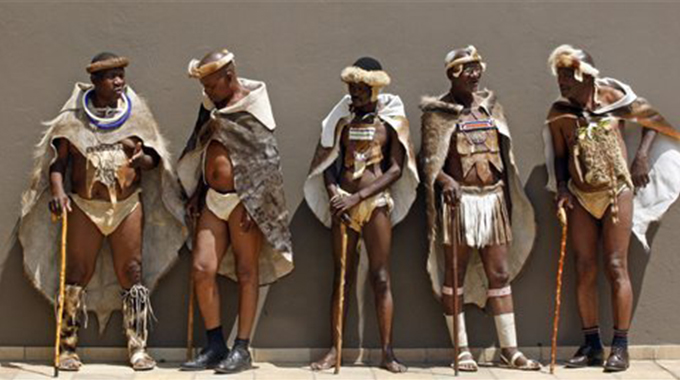
People and Culture: Mzala Tom
A king or chief had his own spear, knob-headed stick and shield that he used in battle. He also carried these as part of his dress code at public events and meetings. His shield was of an ox whose colour was intusi, red with a white mark.
Izigqizo for a king or chief included a necklet made of the toenails of an eagle and lion claws. As much as izigqizo were for adornment, they were also for magical and symbolic purposes.
The eagle toenails protected the chief spiritually from his enemies and symbolised that he was a fierce leader who would defend his subjects like an eagle. The lion claws were taken from the hunt that the king, chief or military general was part of.
One had to go on a lion hunt to show bravery before becoming a king, chief or army general.
After killing the lion, the claws were drilled with a sharp metal device known as incukuthu. A string was then threaded through to make izigqizo. Thereafter, they were mixed with powerful herbs, making them became a potent spiritual force. When the man spoke, his voice was powerful like a roaring lion. His countenance was fierce like that of an eagle and a lion.
The king, chief or military leader also wore izigetsho, amadloli and imithika/imithinsi. The king and chiefs also wore leopard skins on their waist. These skins were worn with other animal skins as amabhetshu.
Other animal skins were from genets, insimba or inkone. Only kings were allowed to wear leopard skins on their shoulders. The black colour was generally not accepted. Chiefs also had an option of wearing imithika/imithinsi, where they often added leopard skins on top of them.
The chief’s indlukula is distinguished by a white feather that is sworn in the centre. The king’s indlukula had feathers of a roller bird, ifefe, to distinguish it. The feathers are colourful blue and lilac.


 Online Reporter