Online Reporter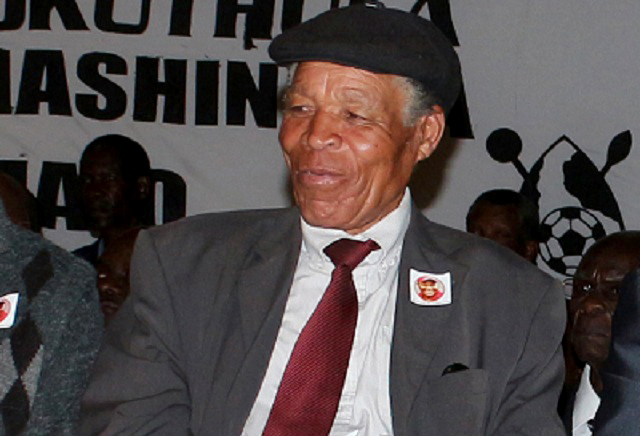
Lovemore Dube
SILAS Ndlovu says one of the biggest secrets behind Highlanders’ rise in the 1970s was simple: he stopped caring where a player came from and picked him for what he could do on the pitch.
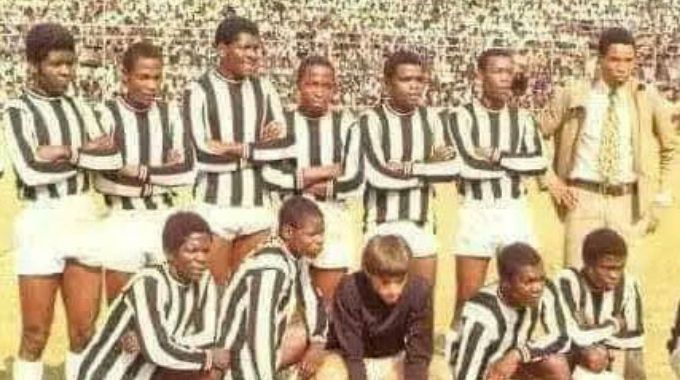
The former Bosso manager says that approach helped create the famous “Destruction Squad”, which dominated Zimbabwean football in the 1970s.
“I will engage a player regardless of ethnicity,” Ndlovu said.
“I had seen that work wonders at Dynamos and other Harare clubs. I told them I would get players who would bring results whether they were Ndebele or not.”
Ndlovu, now a farmer in Manningdale, Bulawayo, was speaking to Zimpaper about his long association with Highlanders, which included a successful spell as manager from 1972 to 1977 and a return as chairman in 1989.
His first major task was rebuilding a team that had been relegated in 1971.
In 1972, Bosso won promotion back to the national league with virtually the same squad.
The following year, Ndlovu began assembling the side that would become known as the Destruction Squad.
Among his recruits were Isaac Mafaro and Stanley Nyika from Sables, Peter Zimuto, Itai and George Chieza from Mhangura, while other players included Martin Kennedy, Chutika Tembo, Tymon Mabaleka, Peter Bhebhe and Cavin Duberly.
He also identified a teenage Bruce Grobbelaar.
“We won so many medals from 1973 to 1975 including three consecutive regional league titles and were runners-up in the Castle Cup,” he recalled.
Ndlovu said he also modernised the club’s approach to coaching, introducing greater emphasis on physical preparation, skills, technique and tactics.
“In 1972 we managed to do well in national competitions reaching semi-finals. There was self-belief among the players,” he said.
But the glory years were followed by turmoil.
In 1977, several senior players broke away to form Olympics, a move Ndlovu says was driven by money and outside influence.
“It was a heartbreak for me as the club’s coach and manager. It really hit me hard as I never imagined that a team we had built so painstakingly could disintegrate just like that because of the lure of money,” he said.
Ndlovu also remains bitter about the controversial end to the 1976 title race, when Highlanders lost the championship to Dynamos after their Barbourfields match was abandoned because of a waterlogged pitch.
He said Highlanders were leading by a point and needed only a draw, but Dynamos were awarded the match on a walkover.
“There never was a hearing and we lost the title to Dynamos,” he said.
The fallout contributed to the formation of the South Zone Soccer League, with Ndlovu becoming its general manager and forging links with clubs in South Africa.
He said several Zimbabwean players subsequently moved to South Africa through those connections, including Shadreck Ngwenya, Onias Musana, Maxwell Tshuma, Matthew Mwale and Douglas Maneto.
Ndlovu also played a role in the development of the country’s post-independence football structures, serving on the normalisation committee that paved the way for the formation of Zifa.
His football journey had begun at Highlanders before he moved to Harare and played for Dynamos.
Born in Esigodini and educated at Dadaya Mission, Ndlovu said his experience at Dynamos exposed him to modern football and also the ethnic tensions that affected the game at the time.
He later returned to Bulawayo and helped transform Highlanders both on and off the field.
In 1989, he returned as chairman and inherited a club facing a Z$260 000 debt and the threat of losing property through an auction.
He secured an overdraft, channelled revenue through the club’s bank account and opened accounts for players.
The club also invested in its juniors, with Peter Ndlovu among the youngsters who eventually broke into the senior team.
In 1990, Highlanders won the league and cup double — the first in the club’s history.
Looking back, Ndlovu believes Highlanders’ biggest strength remains its development system.
He urged the club’s leadership to invest more in juniors, revive the Highlanders Sports Association and turn the clubhouse into a revenue-generating hub.
“These mercenaries that come to the club have no Bosso at heart,” he said.
“People must pull in the same direction and avoid being in camps.”
For Ndlovu, however, the memories of what could have been remain.
“If not for the Madzima and Olympics fiasco, Highlanders could have been a dominant force without any interruption,” he said.
Next week: Ndlovu gives a player-by-player analysis of his stars from the Destruction Squad era.