admin
admin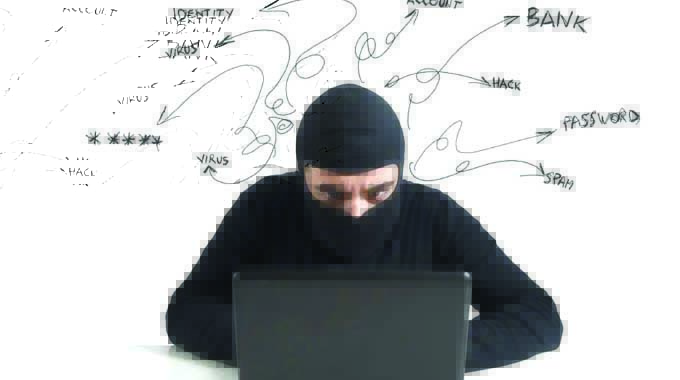
Cybercriminals always opt for an easy way to make big money. They target rich people or rich organisations like banks, casinos, and financial firms where a huge amount of money flows daily and hack sensitive information.
Catching such criminals is difficult. Hence, that increases the number of cybercrimes across the globe. Computers are vulnerable, so laws are required to protect and safeguard them against cyber criminals.
Reasons for the vulnerability of computers:
Easy to access – The problem behind safeguarding a computer system from unauthorised access is that there are many possibilities of breach due to the complex technology.
Hackers can steal access codes, retina images and advanced voice recorders among others that can fool biometric systems easily and bypass firewalls can be utilised to get past many security systems.
Capacity to store data in comparatively small space – The computer has the unique characteristic of storing data in a very small space. This makes it a lot easier for people to steal data from any other storage and use it for their own profit.
Complex – The computers run on operating systems and these operating systems are programmed with millions of codes. The human mind is imperfect, so it can do mistakes at any stage. Cybercriminals take advantage of these gaps.
Negligence – Negligence is one of the characteristics of human conduct. So, there may be a possibility that in protecting the computer system we may make any negligence that provides cyber-criminal access and control over the computer system.
Loss of evidence – The data related to the crime can be easily destroyed. So, loss of evidence has become a very common and obvious problem that paralyses the system behind the investigation of cybercrime.
To tackle cybercrime effectively, establish multidimensional public-private collaborations between law enforcement agencies, the information technology industry, information security organisations, internet companies, and financial institutions.
Unlike the real world, cybercriminals do not fight one another for supremacy or control.
Instead, they work together to improve their skills and even help out each other with new opportunities. Hence, the usual methods of fighting crime cannot be used against cyber criminals.
Use strong passwords: Maintain different password and username combinations for each account and resist the temptation to write them down. Weak passwords can be easily cracked using certain attacking methods like Brute force attacks and Rainbow table attacks.
The following precautions can be taken to avoid your password getting hacked;
Using keyboard patterns for passwords. e.g. – qwertyui
Using easy combinations. e.g. – Raju1990, Feb1990
Using Default passwords. e.g. – Welcome123, Ravi123
Keeping the password, the same as the username. e.g. – Raju/Raju
Be social media savvy: Be sure to keep your social networking profiles (Facebook, Twitter, YouTube,) set to private. Be sure to check your security settings. Be careful of what information you post online. Once it is on the Internet it is there forever.
Secure your mobile devices: Many people are not aware that their mobile devices are also vulnerable to malicious software, such as computer viruses and hackers. Be sure to download applications only from trusted sources. It is also crucial that you keep your operating system up-to-date. Be sure to install anti-virus software and use a secure lock screen as well. Otherwise, anyone can access all your personal information on your phone if you misplace it or even set it down for a few moments. Someone could even install malicious software that could track your every movement through your GPS.
Protect your data: Protect your data by using encryption for your most sensitive files such as financial records and tax returns. A person can stay one step ahead of the hacker by getting information about the scams and hacking styles on the Internet.
Protect your identity online: When it comes to protecting your identity online it is better to be too cautious than not cautious enough. It is critical that you be cautious when giving out personal ID such as your name, address, phone number, and/or financial information on the internet. Be certain to make sure websites are secure when making online purchases. This includes enabling your privacy settings when using/accessing social networking sites.
Parental Control: In the era of online technology, parents should monitor all the activities of their children online. Parents need to be cautious and should keep an eye on browser history and email accounts regularly. A better way of handling this is by enabling parental control in mobile apps, browsers, and at the router level so that they will be able to access only the secured sites.– krazytech.com



 Online Reporter