admin
admin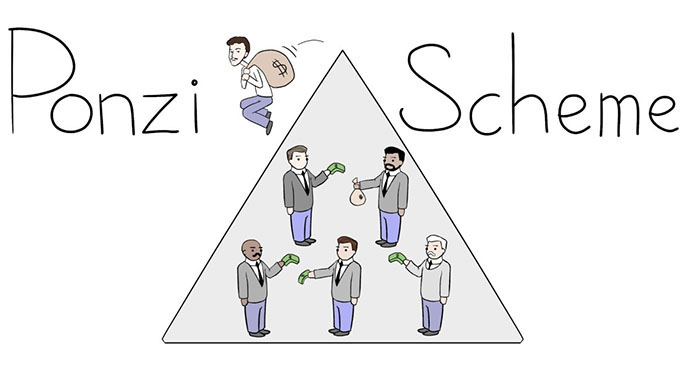
Robert Mitchell
In a Ponzi scheme, new investors’ money, not profits of the purported business venture, is used to pay the promised return to previous investors.
What Is a Ponzi Scheme?
A Ponzi scheme, or Peter-to-Paul scheme (from the phrase “robbing Peter to pay Paul”) is an investment scheme wherein new investors’ money is used to pay the promised return to previous investors” rather than profits of the purported business venture.
Unlike borrowing money to pay an outstanding debt, with a Ponzi scheme there is still a debt, but it is owed to a different person and is larger.
Key elements of Ponzi scheme are as follows:
- Using new investor funds to pay prior investors;
- Representing that the investor returns are generated from a purported business venture; and
- Employing artificial devices to disguise the lack of economic substance or defer the recognition of economic loss.
Most Ponzi schemes rely on a theoretical business model to produce the touted profitability and superior returns to its investors.”
Other theoretical business ventures giving rise to a Ponzi scheme have included stocks, bonds, notes, hedge funds, oil or gas deals, fictitious investments like prime bank notes, generic drugs, clothing brokerages, hybrid animal breeding, domestication of native plant species, precious metals, foreign currency transactions, commodities and lending related schemes like hard money loans.
A Ponzi scheme, which has little or no legitimate earnings, requires a consistent flow of new investor money.
Therefore, a Ponzi scheme collapses when it becomes difficult to recruit new investors or when a large number of investors ask to cash out, thereby making it difficult to meet promised returns and maintain required payments.
When a Ponzi scheme is on the verge of being exposed or collapsing, the promoter may:
- Take the money and disappear;
- Transfer investors into a new or existing shell entity that is self-liquidating;
- Create new management, which may include the promoter and/or a select group of investors;
- Sell the business;
- Pay off any investor who complains; and/or
- Try to control, manipulate and divert any regulatory investigation of the scheme and seek investor loyalty in doing so.
Often, investors are slow to admit that they have been the victim of a Ponzi scheme out of fear that “public exposure will create a crisis of confidence that could create a run on the promoter and makes things worse,” fear that they will look “foolish for being blinded by greed,” and fear that if they break rank and blow the whistle, they “will be drummed out of the high-interest scheme” and “blackballed in his professional or social circles.”
As a result, investors “frequently cling to even the faintest of hopes that everything will work out for the better.
The Ponzi scheme promoter will often capitalise on these sentiments and tell investors that he or she got in over their head, meant well and things simply got out of hand, or vow to make good on one last venture, which may be nothing but yet another Ponzi scheme.
How to Detect a Ponzi Scheme
The “real economic engine” of a Ponzi scheme is its investors and an “ever-expanding investor base.
By using common persuasion and psychological tactics, which, according to a FINRA-funded study, include the following:
- Enticing one with the prospect of wealth and a life of luxury. The truth is that it is often “too good to be true.”
- Establishing credibility through associations or involvement with reputable individual or entities or those with special credentials or experience, particularly in the legal, financial and investment industry.
- Saying that others have already invested. This includes creating the appearance of success.
- Offering to do a small favour in return for a big favour, such as giving a discount in return for an immediate partial investment.
- Creating a false sense of urgency by claiming a limited supply or limited time offering.
One can also avoid becoming a potential investment fraud target by understanding and recognising the following warning signs or red flags of a traditional Ponzi scheme
Promises of high, guaranteed investment returns with little or no risk. One should be suspicious of any guarantees that an investment opportunity will perform a certain way, as all investments have some degree of risk.
Insurance or guarantee is promised to mitigate risk. One should be suspicious of any supposed insurance or guarantee that is promised to mitigate the risk of any investment.
Overly consistent, positive returns. One should be suspicious of any investment that continues to generate regular, positive returns despite the overall market conditions and economic state of affairs. One should also be skeptical of controlled or contrived demonstrations used to prove the business model works. Sell.
One should be suspicious of unregistered investments or investments that are supposedly exempt or except from registration.
Difficulty receiving payments or cashing out. One should be suspicious if there is difficulty receiving payments, difficulty cashing out of the investment, or offers to “roll over” promised payments with even higher investment returns.
Capitalising on comfort and affinity. One should be suspicious of those who appeal to and capitalise on relationships with relatives, friends, colleagues, social circles and certain close-knit groups, such as churches and professional or fraternal organisations, to obtain the confidence of a group’s leaders and members at large, whose credibility induces others to invest.
The victim pool is less likely to critically review the investment opportunity offered by a ‘brother.’ The victim tends to let down his guard when dealing with someone within his inner circle.” The promoter will want to be your friend and seem to care about you, but is doing so to earn your trust and money.
Investor testimonials. One should not rely on reputation or word of mouth alone, and should be suspicious of investor testimonials that cannot be checked out, particularly those of more respected or popular investors.
III. How to Avoid a Ponzi Scheme
The best way to avoid a Ponzi scheme is to do the following before investing:
Research the promoter, and find out if he or she is properly licensed.
- Inquire into and compare the risks with the potential rewards of the investment.
- Understand the investment, and verify its details and the promoter’s claims.
- Understand the nature of underlying business and its operating history, success rate, who is responsible for its operations and their education, experience, skill and training, investment history; get annual reports, audits, financial statements
- Ask promoters about their education and experience and what institutions have invested with them, and what commission, fee or any other benefit they will earn through the investment and how and through whom they are paid
- Exercise due diligence; do a background check and search the Internet regarding the investment and individuals and companies involved in the investment.



 Online Reporter