Online Reporter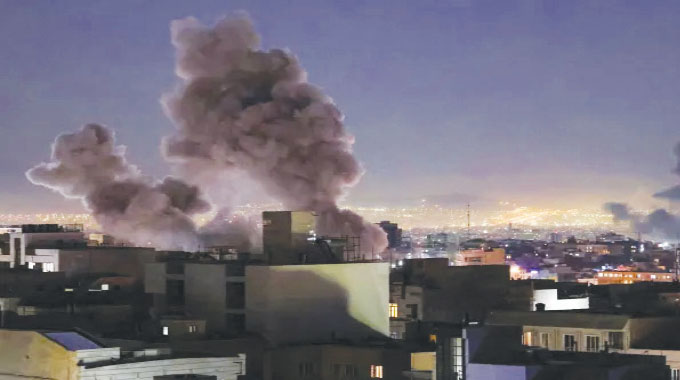
Vijay Makhan
As conflict in the Middle East disrupts energy, food and trade systems, Africa is once again absorbing the economic shock of a war it did not start — raising deeper questions about whether the rules-based order still holds, or whether “might is right” is reasserting itself in global affairs.
In a recent article, I posed a question that many had begun to ask, albeit sometimes sotto voce: is multilateralism failing — and is the concept of “might is right” once again becoming the organising principle of international relations?
The ongoing war involving the United States, Israel and Iran appears, regrettably, to be answering that question, not in theory, but in practice.
The international system, as it evolved after the Second World War, rested, at least nominally, on a framework of rules: respect for sovereignty, adherence to international law and the primacy of the United Nations as a forum for collective decision-making.
That framework was never perfect. However, it provided a measure of predictability. Today, that predictability is eroding.
Military action undertaken outside clear multilateral sanctions, justified through shifting narratives and contested claims, raises uncomfortable questions about the state of the international order. When force is deployed first and justification follows, the line between order and expediency begins to blur.
Conflicts no longer remain confined to their point of origin. They travel, swiftly, through arteries of the global economy.
The first channel is energy. Many African economies remain dependent on imported fuel. Price increases feed directly into inflation, fiscal pressure and household hardship.
The second is food and fertiliser. Disruptions linked to the Gulf have implications for agricultural production across the continent, with potential consequences for food security and rural livelihoods.
The third is logistics. Shipping routes adjust, insurance premiums rise, transit times lengthen. The cost of doing business increases.
For some, there may be marginal gains — ports seeing additional traffic, exporters benefitting from price shifts. But for the continent as a whole, the balance is negative. Africa is not a party to this conflict. Yet Africa is paying for it.
The deeper issue is not the immediate shock. It is what the shock reveals. Africa’s exposure is structural. A continent reliant on imported energy, external supply chains and maritime routes remains vulnerable to external disruption.
Each crisis — whether geopolitical, financial or climatic — reinforces the same pattern: external events translate into domestic strife. This is not sustainable.
The present conflict also raises a more fundamental concern. If multilateralism is indeed weakening — if rules are applied selectively and power exercised with increasing latitude — then small and medium-sized states face a more uncertain future.
For decades, Africa has invested political capital in multilateral institutions. The United Nations, international law and rules-based engagement have been central to its diplomatic posture. Its voice was heard and concerns addressed, though not always to its entire satisfaction.
But if those structures are bypassed or diminished, what then? What recourse remains for those who are not in a position to shape events through power?
In an earlier reflection, I suggested that small states can no longer afford the luxury of spectatorship. That argument applies equally to Africa as a whole.
The continent cannot remain a passive recipient of external shocks. It must begin to articulate a more co-ordinated and strategic response. This is not a call for confrontation. It is a call for coherence.
Energy security, food systems, logistics resilience and economic co-ordination must be treated not as separate policy domains, but as elements of a broader strategic framework.
The role of the African union
The African union has rightly called for restraint, de-escalation and dialogue. That is necessary. But the moment calls for more. It calls for the articulation of a continental strategy that addresses the economic-security implications of external conflicts — linking energy, agriculture, trade and finance into a coherent response.
At the level of Regional Economic Communities, the response has been less visible. Organisations such as Igad, Comesa and Arab Maghreb union operate in regions directly exposed to developments in the Middle East.
Yet a co-ordinated, clearly articulated response has yet to emerge. This highlights a recurring challenge — Africa’s exposure is continental. However, its response remains fragmented.
If the international system is indeed moving toward a more power-driven logic, then Africa must respond not by retreating but by reinforcing its own strategic capacity.
This means:
l strengthening co-ordination among states
l investing in resilience across key sectors
l maintaining a principled commitment to international law — even when others appear less inclined to do so.
For if the rules weaken, it is often those with the least power who bear the greatest cost. Africa is once again paying for a war it did not start, cannot shape, and can scarcely afford.
However, the lesson of this moment should not be one of resignation. It should be a resolve to act collectively, to think strategically, to ensure that future shocks find the continent better prepared than the last.
For if “might is right” is indeed reasserting itself in international affairs, then the response of those without might cannot be passivity. It must be unity. — NewAfrican.