

 Siphakeme .Mnindwa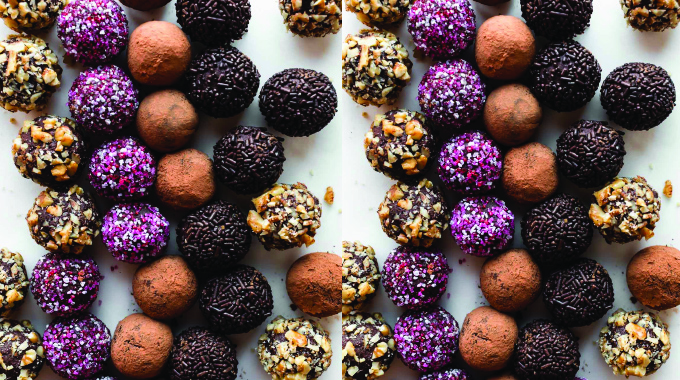
So Sweet
TRUFFLES, those enigmatic subterranean fungi, hold a unique and prized position in the culinary world, extending even to the realm of chocolate. Their intoxicating aroma and exquisite flavour, which have captivated palates for centuries, can add a sophisticated and unexpected twist to this beloved treat. Their mysterious origins and complex lifecycle continue to fascinate scientists and food enthusiasts, and their use in chocolate is just one example of their versatility.
The story of truffles begins deep underground — quite literally. These fungi belong to the Tuber genus, a group of ascomycetes that form a symbiotic relationship with the roots of certain trees, primarily oaks, beeches, and hazels. This relationship, known as mycorrhiza, is a mutually beneficial partnership in which the truffle provides the tree with essential nutrients and water, while the tree supplies the truffle with sugars produced through photosynthesis.
The exact origins of truffles are shrouded in mystery, with evidence suggesting their existence dates back to ancient times. Theophrastus, a Greek philosopher and botanist of the 4th century BC, is believed to be the first to mention them in his writings. The Romans also held truffles in high regard, believing them to be a gift from the gods. Pliny the Elder, in his Natural History, even offered several (often fantastical) explanations for their appearance, including the notion that they were created by lightning strikes or grew from the roots of trees.

Throughout history, truffles have transitioned from a rare and mysterious delicacy to a highly sought-after culinary ingredient. During the Middle Ages, truffles fell out of favour, largely due to their association with the devil and witchcraft. However, they experienced a resurgence in popularity during the Renaissance, becoming a prized possession of European nobility. King Louis XIV of France was a particularly enthusiastic truffle aficionado, and his court played a significant role in popularising them.
The 19th century marked the golden age of truffles, particularly in France. The Périgord region became renowned for its black truffles (Tuber melanosporum), and truffle hunting became a popular pastime. This era also saw the development of more sophisticated truffle-hunting techniques, primarily using trained dogs. Pigs, with their keen sense of smell, were initially used, but their tendency to eat the truffles they found proved problematic. Dogs, on the other hand, can be trained to locate truffles without damaging them.
While the black truffle and the white truffle (Tuber magnatum pico) are the most famous, there are numerous other varieties, each with its own unique characteristics. The black truffle, known for its intense aroma and earthy flavour, is considered a culinary gem and is primarily found in the Périgord region of France, as well as parts of Italy and Spain.
The white truffle, highly prized for its potent, garlicky aroma and delicate flavour, is even more expensive than the black truffle and is primarily found in the Piedmont region of Italy. The summer truffle, a more common and less expensive variety, has a milder flavour and aroma than the black or white types. Similarly, the Burgundy truffle is similar to the summer truffle but with a slightly more intense flavour, and it is harvested in autumn.
Truffles are a versatile ingredient, capable of elevating a wide range of dishes, including, surprisingly, chocolate. Their unique flavour is best appreciated when used sparingly, allowing their aroma to shine through. They are rarely cooked at high temperatures, as this can diminish their delicate flavour—a consideration that extends to their use in chocolate.
Some common uses for truffles, outside of chocolate, include being shaved over pasta or risotto, where the heat from the dish gently releases the truffle’s aroma, infusing the meal with its flavour. They are also infused in oils or butters, creating truffle oil and truffle butter — popular ways to add a subtle truffle flavour to dishes. A small amount of truffle can add depth and complexity to sauces and soups, while the creamy texture of eggs complements the earthy flavour of truffles beautifully, making them a wonderful pairing.

When it comes to chocolate, truffles are often incorporated in a few key ways. Truffle-infused chocolate ganache is a popular choice, where the earthy notes of the truffle blend with the rich, sweet chocolate. This ganache can then be used to create chocolate truffles (the confectionery kind!), filled chocolates, or even incorporated into cakes and desserts. The truffle flavour can also be introduced through truffle oil or butter, carefully added to the chocolate mixture to ensure a balanced flavour profile. The key is subtlety; the truffle should complement the chocolate, not overpower it.
Truffles are among the most expensive foods in the world, with white truffles sometimes fetching prices of thousands of pounds per kilogram. This high price is partly due to the fact that truffles are notoriously difficult to cultivate, making them even rarer and more valuable. This scarcity contributes to the premium price of truffle-infused chocolates. The aroma of truffles is produced by a complex combination of volatile organic compounds, including androstenone — a pheromone also found in pigs.
This is why pigs are so attracted to truffles. Truffle-hunting dogs are often specially trained from a young age, and their skills are highly prized. Interestingly, the “truffle shuffle,” a dance move popular in the 1980s, was inspired by the way truffle hunters used to search for truffles.
The future of truffles is uncertain. Climate change, deforestation, and the increasing demand for truffles are all threatening their natural habitat. Efforts are being made to cultivate truffles, but this is a complex and challenging process. Despite these challenges, the allure of the truffle remains strong, and these enigmatic fungi will likely continue to be a prized culinary treasure for generations to come — including in the world of fine chocolate. Their mysterious past and unique flavour profile ensure their place as a truly fascinating and sought-after ingredient in the culinary world.



 Online Reporter