malvernmugadzikwa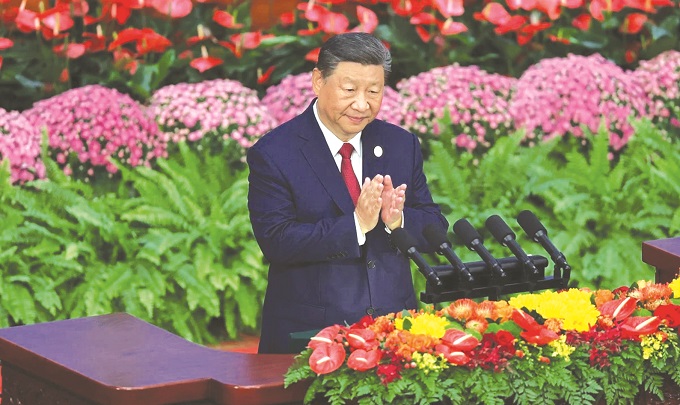
Munetsi Madakufamba
From the just-concluded 2024 Forum on China-Africa Cooperation (FOCAC) in Beijing, I share my insights, from a Southern African perspective, on issues of possible relevance to the policymaker in preparation for implementation of the FOCAC-Beijing Action Plan (2025-2027).
***************
THE highly anticipated Forum on China-Africa Cooperation ended with a declaration and a three-year action plan for “jointly building an all-weather community with a shared future”, backed by substantial financial support, underscoring Beijing’s overarching vision for the continent.
At the close of FOCAC, which was hosted by Chinese President Xi Jinping and attended by 53 leaders of African countries with diplomatic relations with China, the wide-scope FOCAC-Beijing Action Plan (2025-27) was adopted.
The 10-point action plan covers mutual learning among civilisations, trade prosperity, industrial chain cooperation, connectivity, development cooperation, health, agriculture and livelihoods, people-to-people exchanges, green development and common security.
African leaders have been unanimous in their expression of contentment.
President Mnangagwa, who is also the chairperson of the Southern African Development Community (SADC) that is made up of 16 member states, emphasised that there is no need to reinvent the wheel in pursuit of modernisation but rather learn from China’s experience.
“Through innovation, learning from the successes and hurdles faced by others, pitfalls can be avoided and momentum gained to speed up development, modernisation and industrialisation,” he said.
South African President Cyril Ramaphosa said the US$50,7 billion pledged by China to implement the Beijing Action Plan is a “great boon to the African continent”.
He further said the action plan shows the shared desire for modernisation.
Rwanda’s President Paul Kagame acknowledged that China had proven many times to be a reliable friend and partner, adding that FOCAC, as a “model of cooperation is one that we deeply appreciate and seek to continue”.
As policymakers move to engage with the FOCAC-Beijing Action Plan over the next three years, here is what they need to know.
Overall, China-Africa relations are seen from a mutual benefit perspective.
For example, as China shows more willingness to support Africa, the continent, too, is increasingly warming up to Beijing.
China is attracting African support for its signature international initiatives — the Global Development Initiative, the Global Security Initiative and the Global Civilisation Initiative. This is crucial, as China asserts its leadership role on the global stage.
With the BRICS partnership increasing its influence and spreading its global tentacles as more countries express desire to join and thus cementing linkages with China, there is good reason for Beijing to affirm that the “rise of emerging markets and developing countries has become unstoppable”.
The near-universal attendance at FOCAC 2024 by African leaders (51 Heads of State and Government, with only two of the 53 countries with diplomatic ties with China represented at a junior level, plus the African Union Commission chairperson and the UN secretary-general) was a strong message by itself, as they all had an opportunity for separate meetings with President Xi through the week.
President Xi’s speech to the FOCAC summit, in which he announced the 10-point action plan, was instructive in many ways.
There is no single path to modernity
First, as part of principles underpinning the 10 partnership action points, he highlights the issue of governance as an area where experience can be shared.
He is sending a message to Africa that you do not need to continue labouring with the Western model of democracy that has produced contradictions and has internal fissures that often incapacitate the African state, undermining its role in leading development.
By inviting 1 000 members of African political parties to China to learn and share governance experiences, he is offering an alternative model for Africa to benchmark on and to see how this can be adapted based on each country’s context and circumstances.
It is also a message that challenges the Western notion that the only path to modernity is through democracy and libertarianism.
There can be a nuanced role for the nation that can be fashioned by a conscientious leadership as the state’s involvement in politics, society and the economy is context-dependent, complex and influenced by various factors, including historical, cultural, economic and political considerations.
Limitless market access for African products
Second, President Xi says “China will voluntarily and unilaterally open its market” to African products.
This is significant because China is the world’s second-largest economy and, therefore, having that opportunity available to Africa will not only address the trade imbalances that we have often seen many African countries expressing concern about, but will also greatly boost the African economy as there will be a limitless market, particularly for agricultural products.
Third, through the partnership action for connectivity, Africa’s digital economy will be immensely boosted.
The continent has generally lagged behind in terms of the digital economy, often due to lack of connectivity.
By expanding Africa’s connectivity infrastructure, this will lower transactional costs within and across countries, which is important in promoting the continent’s regional integration efforts.
Decentralised renewable energy solutions critical
Fourth, President Xi’s speech underscores China’s commitment to green development.
This will provide an important plank upon which Africa can stand in its fight against climate change, both in terms of addressing challenges in agriculture and food security, and in the provision of renewable energy solutions.
China is the biggest producer of the world’s solar products.
Facilitating access to these products will, therefore, benefit Africa to expand energy access to the 40 percent of the citizens who are still outside the national grid, with no access to electricity.
Having access to the technology that China offers will also be a game-changer in helping Africa to move with speed towards its green transition agenda.
Out of the 20 countries with the biggest energy access deficits in the world, 18 are in Africa.
Significant investment is required to address the energy access disparity, and this is where China can play a pivotal role to bridge that gap.
While China has previously prioritised utility-scale installations such as the 300-megawatt (MW) Kariba South Hydropower Plant in Zimbabwe, or the 50MW solar power in Kenya, we will likely see a shift towards small-scale projects in off-grid communities; for example, in remote areas, in line with the Africa Solar Belt programme that China launched in Kenya last year.
This programme was designed to drive renewable energy investments in Africa, prioritising smaller projects that can be more socially impactful.
The programme targets to instal solar home systems for 50 000 African households, aiming to uplift their livelihoods.
Shift to smaller socially impactful projects
Fifth, in his speech, President Xi talks about “1 000 small and beautiful livelihood projects” and “African SMEs (small and medium enterprises) empowerment programme”.
This signals a shift from the big cross-country and cross-regional projects of yesteryear to smaller, and perhaps more socially impactful projects.
This has potential to be a turning point for Africa as this approach can bring more flexibility and can respond better to the community-level needs of the people.
Development, after all, is about the people, and if it does not benefit people directly, then it runs the risk of being superficial.
However, this new approach of “small and beautiful projects”, with all the good intentions, is likely to meet with a number of challenges as it digs deep into the belly of local politics.
How the communities will be selected for the decentralised renewable energy systems without stirring up local political complexities will be instructive.
If not managed carefully, China could well find itself wading into the minefield of inflammable constituent politics in some of the African countries, particularly around election times.
The “peak China theory” is a fallacy
Last, there has been a narrative among Western policymakers to organise on the assumption that China has reached its peaking power and, therefore, will now face the fate of yesteryear superpowers.
It is within the same context that the 2021 FOCAC pledge of US$40 billion (down from the US$60 billion package each for 2015 and 2018) was seen as a signal for a declining China.
Conclusions were, therefore, emerging that there is a trend that shows that China is ready to “retrench Africa”.
It can be argued that China was keen to use FOCAC 2024 to partly disprove this theory, and to underscore that its friendship with Africa is one that “transcends time and space” and “surmounts mountains and oceans”, as proclaimed by President Xi.
The US$50,7 billion package announced to fund the action plan is not only an eye-popping figure, but a message to all that Africa’s development must be taken seriously.
A developed Africa will benefit everyone.
Based on the outcome of FOCAC 2024, we can say without any fear of contradiction that the “peak China, declining China” theory is based on a broken compass.
Munetsi Madakufamba is the executive director of the Southern African Research and Documentation Centre (SARDC), a leading Zimbabwe-based think tank and regional knowledge resource centre dedicated to policy research and analysis in a range of relevant subject areas, informing development, and contributing ideas and practical solutions to Africa’s challenges. SARDC works with the SADC Secretariat and member state governments, sub-regional organisations, international organisations and other research networks to undertake research that informs development.



 Online Reporter