Vusumuzi Dube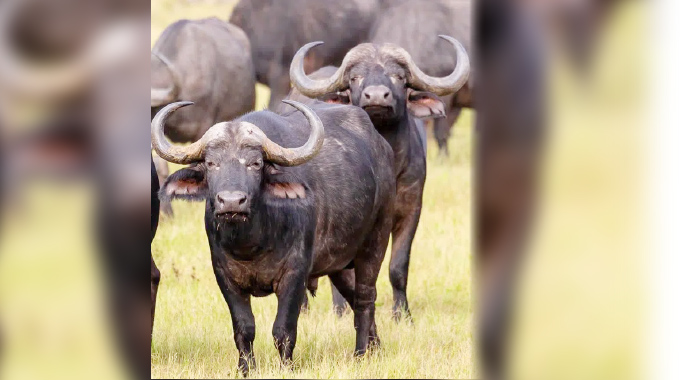
Fairness Moyana
IT’S almost nightfall in Mabale, Hwange District in Matabeleland North Province. Mr Hanganani Dube limps to his nearby field to drive away cattle that have invaded his wilting millet.
His steps are measured and careful as he winces in pain from an injury he sustained following an elephant attack two years ago.
Mr Dube, a lucky and rare survivor of an elephant attack sustained a broken leg and multiple fractures to his ribs, which confined him to hospital for more than three months. “I was herding cattle in the forest when I was attacked by two elephants. It’s a miracle that I survived,” he recalls.
A breadwinner in a family of six, he says he never got any form of assistance or compensation.
“I’m now struggling to fend for my family ever since I suffered a permanent disability from the attack. My movements and physical work like herding cattle and ploughing are now limited, as a result.”
The same script reads for Ms Elizabeth Ndlovu (64) of Mpumelelo village in BH 10 under Chief Mvuthu in the same district. The only difference is that she survived a buffalo attack. “Everything happened so fast. I was going to the goat pen a few metres from my homestead when a lone buffalo charged and attacked, leaving me for dead,” she narrated from a hospital bed.
The buffalo, which had strayed from the Forestry Commission sanctuary had survived an attack by poachers when it pounced on Ms Ndlovu, goring her stomach and leaving her intestines protruding. She was rushed to the Victoria Falls Hospital and had to be whisked to Mpilo Central Hospital in Bulawayo, due to her critical condition.
The buffalo was immediately put down by a Communal Areas Management Programme for Indigenous Resources (Campfire) ranger, who had to fire seven rounds to put it down.
Though she counts herself lucky, she says her family has been struggling to raise money for her hospital bills and medication.
“Hwange Rural District Council (HRDC) helped organise an ambulance when I was transferred from Victoria Falls Hospital to Mpilo. There is no other assistance or compensation that I have received since then and life has been difficult for me and my family.”
Two days before her miraculous survival, Mr Elliot Sianyanga of Sonyathi village in Mabale was attacked by a lone bull elephant as he made his way home. Though he initially survived the attack, he would later succumb to his injuries after being rushed to Mpilo Central Hospital, leaving behind a wife and three children.
Following the attacks, HRDC appealed for assistance to raise funds towards the care of the two human-wildlife victims – Ms Ndlovu and Mr Sianyanga.
Mr Winder Muleya, a Binga fisherman would arguably be revered as a hero who fought tooth and nail to shut the gaping jaws of death as elephants and a crocodile sought his life. He is lucky to be alive after he wrestled a crocodile, which attacked him when he jumped into the Mlibizi River as he escaped two charging elephants.
Though he survived, the fishing expedition was almost tragic. His body was marred by scars that would forever change his life. Due to the extent of his injuries and damaged tissue, Mr Muleya lost both legs and an arm to amputation, as doctors battled to save his life.
“My livelihood is gone because I survived on fishing. I used to meet my family’s needs through fishing and it’s all I have ever known. Now, I am left to donations from well-wishers,” he says as he fights to keep back tears.
The common denominator in the lives of the three is that they are victims of human-wildlife conflict who have borne the physical and emotional pain and are now facing a bleak future after having lost their livelihoods.
From lions and hyenas in Hwange attacking livestock to elephants and baboons in Jambezi destroying crops to crocodiles attacking people and livestock in water bodies in Binga to buffaloes goring people – the problem is universal, affecting mostly poor communities. The impacts are often costly and devastating.
World Wide Fund for Nature (WWF) defines human-wildlife conflict as “any interaction between humans and wildlife that results in negative impacts of human social, economic or cultural life, on the conservation of wildlife populations, or the environment.”
According to the Zimbabwe Parks and Wildlife Authority (Zimparks), there has been a notable increase in human-wildlife conflict and in trying to offer some relief to the communities, the Government okayed the creation of a Human-Wildlife Conflict Relief Fund to compensate the victims after approving the Parks and Wildlife Act Amendment Bill in June 2023.
“The Bill will provide for the creation of a Human-Wildlife Conflict Relief Fund, which will offer some monetary relief to victims of human-wildlife conflict,” read a notice then. Once set up, the fund will help to cover funeral assistance for casualties of human-wildlife conflict, hospitalisation and treatment for those injured and support programmes that reduce deaths caused by animals and support affected families and communities.
This came against the backdrop of a marked increase in competition for resources by humans and wildlife prompted by climate change and spontaneous population growth, leading to increased conflicts.
In 2023 alone, more than 35 people were killed by wildlife and more than 80 injured while about 68 people lost their lives to wildlife attacks in 2022.
Seventy-one deaths and 50 injuries were recorded in 2021, compared to 60 deaths and 40 injuries in 2020.
Elephants and buffaloes were most involved, making Zimbabwe record the highest in the region, with neighbouring Botswana recording the least number of deaths due to human-wildlife conflict despite having the biggest elephant population of over 200 000.
Studies by scientists and wildlife experts show that climate change is contributing to the increase in human-wildlife conflict. Recurrent droughts and high temperatures have resulted in traditional waterholes drying up as well as food shortages for wild animals.
The negative effect has been competition for water and food between humans and wildlife leading to conflict. In addition, reports indicate that both human and wildlife population growth has compounded the problem.
Demand for land for settlement has seen in some instances humans encroaching or moving closer to wildlife areas. Zimparks has also raised concern over the increase in wildlife population in most of the country’s sanctuaries. Zimbabwe’s biggest wildlife sanctuary, Hwange National Park has seen the population of elephants doubling to over 100 000 against a carrying capacity of 45 000.
This is a stark contrast to Africa’s elephant population, which has experienced a dangerous decline over the last 30 years. This, according to authorities, is largely due to stringent conservation efforts and an international ban on the elephant and ivory trade.
Restrictions on culling are causing major ecological damage as culling or relocation programmes helped balance populations with resources.
Currently, the Convention on International Trade in Endangered Species of Wild Fauna and Flora (Cites) – the international body that regulates trade in endangered species – only allows for the culling of 500 elephants per year in Zimbabwe.
With trophy hunting imports now banned from the United Kingdom and other European countries, the demand for hunting has taken a knock too. This has resulted in Zimparks struggling to manage the ballooning elephant population due to resource constraints with donor funds from mostly Western wildlife enthusiasts and organisations concentrating on strengthening conservation efforts.
In the past, Southern Africa was a major hotspot for hunting with revenue, especially from the trophy fee shared with local communities through carefully designed quotas, which made the off take sustainable and geared to the management of the wider ecosystem for conservation and biodiversity benefits.
African community leaders, conservationists and scientists say the ban on trophy hunting imports ignores African perspectives and threatens to reverse conservation gains.
This in turn has resulted in dire consequences for poor people’s livelihoods, increasing poverty and hunger in highly marginal places, as elephants continue to ravage their limited subsistence crops.
“We feel left out of decision-making over management of natural resources such as wildlife. We bear the brunt of conserving wildlife and yet we don’t benefit from them.
There is no compensation we get for human life lost or damage to property,” said Mr John Ncube, a villager in Mabale.Villagers argue that while Campfire has tried to address this, the model falls short of ensuring communities truly benefit with no mention or legislation speaking to the compensation issue.
The issue of human-wildlife conflict has affected not only Zimbabwe but other wildlife producer countries mostly in Southern Africa. In 2022, Zimbabwe hosted a conference in an attempt to rally international support for the sale of its ivory stockpile ahead of the Cites meeting in Panama, in the same year.
With support from Botswana, Tanzania, South Africa, Namibia and Zambia, the Government called for the lifting of the ban on trading in ivory, which the country argued would generate revenue for conservation and community development at a time when the Covid-19 pandemic was wreaking havoc, further reducing tourism and hunting income amid a subdued national budget.
The country is sitting on a 166 221.18kg stockpile worth US$700 million, which it cannot sell due to the ban on international trade in elephant tusks. Cites banned the international trade in ivory in 1989.
But, following careful consideration that some African elephant populations were healthy and managed, it permitted Botswana, Namibia and Zimbabwe to make a one-off sale of their ivory in 1997 and 2008.
Zimbabwe wants Cites to lift the international ban on trade in ivory to enable it to use the proceeds to fund its wildlife conservation programmes, which include anti-poaching, drilling boreholes in Hwange National Park where animals face water shortages, especially during droughts like the one the country is facing this year, as well as combating human-wildlife conflict.
Proposals tabled by Zimbabwe, Botswana and Namibia for further sales at the two last Cites conferences failed, and the latest call has also been rejected by a bloc of 28 other African elephant range states, as well as by conservation organizations.
The countries argued that the cost of managing elephants versus the derived benefits was weighing heavily on their fiscus bringing them at loggerheads with affected communities facing human-wildlife conflict.
The continued ban has, however, curtailed poaching and illegal trade in ivory with the product making its way to the Asian black market, where ivory prices can peak to as high as US$3 000 a kilogramme.
Communities are caught at the centre with some in frustration aiding illegal poaching of wildlife, especially elephants.
Wildlife organisations such as Painted Dog Conservation (PDC), Environment Africa (EA), World Wildlife Fund (WWF) and Ifaw, among others have engaged communities in their conservation efforts by establishing economic empowerment projects and in some instances availing social amenities through the construction of classroom blocks and a clinic.
In addition to employing locals, some have been training communities in the use of chilli guns and fences to chase away jumbos as part of efforts to reduce human-wildlife conflict.
While the politics play out on both national and international platforms, what is certain is that communities continue to count the cost while calling for a voice in the management of their wildlife.


 Online Reporter