malvernmugadzikwa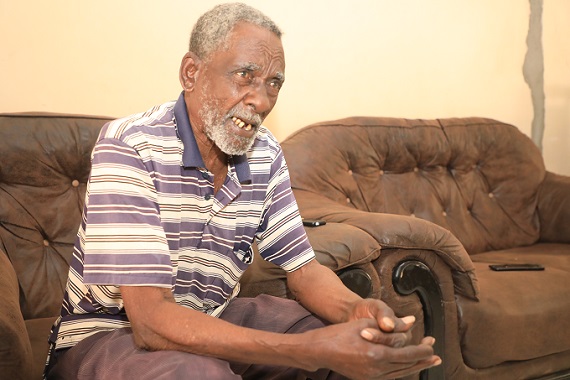
HE held the rank of detachment commander in the Gaza province (military operation area) and specialised in artillery. He was also involved in some crucial battles that led to Zimbabwe’s independence. This week, we begin the story of CDE WILLIE GAVHU, whose Chimurenga name was Cde Changamire Monomotapa. In this instalment, he tells our Political Editor KUDA BWITITI about what led him to join the war.
*********************
Q: Please give us a brief background about yourself.
A: My name is Willie Gavhu. I was born on June 26, 1946 in Zongoro, Mutasa district, near the Manyika Bridge Business Centre in Manicaland province, under Headman Muchirahondo, Chief Mutasa’s area.
Some call my home area “KuManica Bridge”. My parents were Shakespeare Munei Gavhu and Agnes Gavhu.
I did my primary education at St James Primary School (Zongoro) up to Standard Six.
This was the highest educational level Africans could reach locally during those colonial days.
Had I chosen to proceed with my education, I would have had to go through the South African metric system route. However, I could not do so due to financial constraints. So, soon after finishing Standard Six, I was employed by a clothing company called Ferco and trained in-house (apprentice) as a technician, specialising in servicing and repairing electric circuits, sewing machines and other machinery.
I worked for the company for some years until I left to join the liberation struggle in 1975.
Q: What led you to join the liberation struggle?
A: The whites treated us as second-class citizens in a country that God had created for us.
The company that I worked for was owned by Indians, but they, too, were racist.
If you made a mistake while performing your duties, you would be called derogatory names, such as “you dog or baboon” . . . So, racial discrimination was not only perpetrated by the whites . . .
Q: Was it not difficult for you to leave your job to join the war?
A: I need to point out that in addition to the abuse and racial discrimination that I suffered, I had a burning desire to contribute to the country’s liberation. The salary that I was earning as a technician — $24 monthly — was not that bad compared to the wages of that time.
We had a black supervisor named Chivanga, who always encouraged us to be loyal to our work, but, due to my determination to join the armed struggle, I already knew that my destiny to fight for my country was sealed.
Therefore, because of my resolve, my final decision to leave was not a difficult one.
I was also motivated by many of my agemates and friends from my neighbourhood in the Salisbury (now Harare) township of Mufakose, who were leaving the country in numbers to join the war.
Earlier, my brother, Montgomery Gavhu, whose Chimurenga name was Cde Morari Chakanyuka, had also joined the war effort.
So, really, it was not a difficult choice. In fact, my home area had several cadres who left to join the liberation struggle, and these include ZANU PF national chairperson Cde Oppah Muchinguri-Kashiri.
Q: Describe how you left home to go to join the war.
A: I first boarded a bus from Salisbury to my rural home in the Zongoro communal lands, Mutasa district. I then left my village in Muchirahondo to cross the border into Mozambique on foot, a distance of about 30 kilometres.
I was accompanied by two of my colleagues from my village. One of them was Simon Paradzai (he later died during the war), but I am forgetting the other recruit’s name. We left our village around 6pm. It was not difficult to cross into Mozambique because we knew the routes quite well. We arrived in Chimoio, Mozambique, the next day, around 6am or 7am.
Upon arrival, we got to a grinding mill at a place that was commonly called PaDaff, where other comrades were already gathered. We were well-received, and I immediately found myself being useful because, as a technician, I could easily operate the grinding mill and other machinery.
The grinding mill had not been working for about a week and I fixed it.
I was then instructed to remain at the milling facility and continue helping in operating the grinding mill. Paradzai and the other recruit I crossed with proceeded to the Doroi Camp.
While working at the grinding mill, I was then selected to go to the Chimoio ZANLA Camp for training. I assumed the name Cde Changamire Monomotapa as my nom de guerre.
Next week, Cde Gavhu will tell us about the training he received at Chimoio Camp and how it made him a revered guerrilla fighter and commander.


 Online Reporter