Chronicle Editor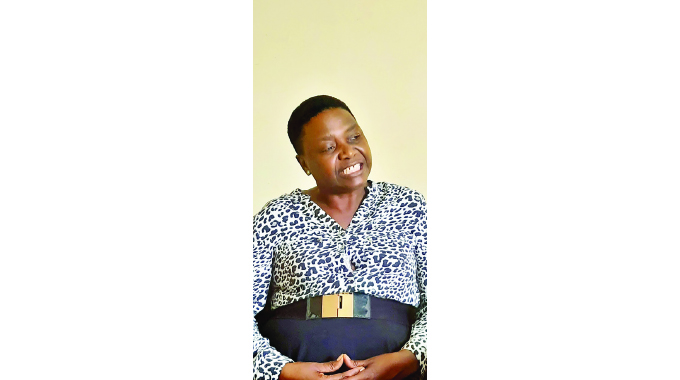
TODAY we conclude our interview with Cde Moratiwa Valentine Gazi pseudonym Cde Abigail Mabetha, a former ZIPRA woman instructor who later on became the Women’s Brigade Chief of Transport. Cde Gazi was one of the female combatants who managed to make a breakthrough when the Rhodesian regime launched a ground and aerial attack on Mkushi camp on 19 October 1978. Although a majority of the women who included recruits who had just started their training were unarmed, the few armed ones fought back tenaciously and the racist Rhodesians acknowledged that by saying at first they thought they were engaged in battle with men. In rounding up her narrative Cde Gazi, the spouse for 41 years to another former ZIPRA guerilla Cde John Gazi tells our Assistant Editor Mkhululi Sibanda (MS) how she survived the Mkushi attack.
Below are excerpts of the interview. Read on……
MS: Cde Gazi let’s look at the fateful day of 19 October 1978 when Mkushi was bombed where hundreds of comrades died during that attack. Please take us through that painful incident.
Cde Gazi: I need to go back to the developments before that attack. We had a new group that had arrived for training and they were more than 1 500 of them. A new camp was opened for the trained personnel and was named New Mkushi which was located between three to five kilometres from the old camp. The recruits came at the end of August 1978 to commence training. We trained them at the Old Mkushi Camp. The attack on Mkushi happened on the same day with the attack on Freedom Camp (FC) near Lusaka. It was said to be revenge attacks by the Rhodesians after ZIPRA downed the Viscount aircraft near Kariba on 3 September 1978. Following the downing of the Viscount the Rhodesians were always itching for revenge. From our side as ZIPRA we also anticipated the attack because like any military force we had spies within the Rhodesians who passed on information to our side. So in another way we were ready.
MS: How did you prepare for that?
Cde Gazi: As part of our defence system we had defence pits for the recruits. When not at training they were usually deployed in their defence pits since we were anticipating a ground attack. Maybe let me give you a rough sketch of the camp, there was a nearby river that flowed past the kitchen but that one was not a big obstacle or big threat like the Mkushi River which was at least three kilometres from where we were. Mkushi River was a big obstacle in the sense that besides being a large water body, it was also crocodile infested.
MS: In terms of weapons who were armed at the camp?
Cde Gazi: There was a defence platoon which was deployed around the camp. As instructors we were all armed with AK-47s, some with folded butts. Personally I had my AK-47 rifle with me when we came under attack. During the attack the Rhodesians did most of the damage at the old camp because the recruits were still new to the military life compared to our group that had completed training. From our group or those at the new Mkushi camp comrades could manoeuvre because they were well equipped tactically but the recruits had not yet fully grasped the tactics.
MS: On that day how was the mood in the camp?
Cde Gazi: There was a strong feeling that we might be attacked as information had filtered to us that the Rhodesians had bombed the Freedom Camp (FC) on that day. It was then decided that comrades should have their breakfast as early as possible because the situation was not clear, it was very unpredictable. So I urged my company of recruits to go and eat as soon as possible so that in case of an attack sibe sisuthi. I also encouraged my cousin Jennifer Ndlovu to do the same with the company she commanded. I then briefed my company that in case we were attacked we should move towards the east as on the opposite side there was an open space, isikwakwa which I had realized could be a death trap for us. After breakfast while coming from the kitchen I decided to pass through the toilet, a makeshift structure made up of tree branches and logs. While inside the toilet I heard a loud bang. I then dashed outside and nearby there was an ant-hill. I ordered my company to move out of their defence pits and head towards the east like I had said during my briefing. I emphasized that they avoid the parade square and move towards the east. It was not easy under such intense conditions because some of the recruits in fear just remained frozen inside their pits. We bolted towards the east and the Rhodesian fighter jets were bombing and their helicopter gunships were taking a heavy toll on unarmed recruits. When we got to a place where there was a small hill and as we manouvered around the hill that is where they started hammering us heavily. We took a lot of casualties and there was a lot of dust and blood that was spluttering. My eyes were heavily affected by this. I took cover in nearby bushes as I was partially blinded. I held on to my AK – 47 for dear life. By that time now my company was scattered as it had taken a direct hit from the bombardment. The enemy was dropping napalm bombs all over the camp area causing more casualties and burning the vegetation around the camp. The whole area became red, umkhathi waphenduka waba bomvu. When the bombardment shifted from where I was I got up and scrambled towards better cover as a Spotter plane was hovering over us.
MS: Were you not afraid of getting lost and end up falling into an ambush?
Cde Gazi: I had no choice. As I moved on I saw footprints of the other comrades and I followed them. I moved until I reached a place where I found others. They thought I had died in the bombardment. The Zambians organised transport to move the survivors. Among the people I found there, was one of the trained guerillas who had been our instructor Cde Kumbirai who said we should go back and assist the injured. We proceeded to do that but before long a Spotter plane appeared and we had to turn back. The seriously injured were then ferried to a hospital in Ndola. I can tell you the Zambians wept when Mkushi was bombed, that showed the strong bond they had with us and our armed struggle. Some of us on that night we put up at the local police station. We later moved to Ndola where we found a lot of people who sympathised with us but because of what had happened we didn’t trust anyone. From there we moved to Kafue 2 where we were kept at Aaron Milner’s farm. Milner, a Zambian Cabinet Minister then religiously supported our armed struggle. That is where I first met John Gazi.
MS: So that’s where your relationship with Cde Gazi kicked off?
Cde Gazi: Yes. Cde Khoza one of our medical staff came to attend to the injured in the company of Cde John Gazi who came driving a WAZ to assist in transporting the injured. At this juncture I don’t want to say much but what I can only say is that I met John Gazi at Kafue 2. At that point it never crossed my mind that Mr John Gazi would later on become my beloved husband. We have been married since August 1981. We are blessed with four children and six grandchildren. We stayed koMilner where there was a lot of farming taking place especially the growing of potatoes. Then one day Rhodesian planes flew over us and we all took to the bush to hide. We later on learnt that these planes had bombed one of our camps near Lusaka which was mainly composed of the old and disabled men we used to call King Killers. It became apparent that we could be bombed again so we moved from Kafue 2 to Solwezi where a military camp for women was re-established. That is where a proper military structure was set up and it was re-established at the beginning of 1979.

MS: Tell us about that structure…
Cde Gazi: The ZIPRA High Command sat down and decided that the Women’s Brigade should have its own Command Structure. Getrude Moyo (late Simon Khaya Moyo’s wife) was appointed the Brigade Commander and was deputised by current commander of the Zimbabwe National Army (ZNA) Bulawayo District, Colonel Ossie Mhandu. Brigade Political Commissar was Martha Mathonsi, Head of Armoury Thabisile Toitoi Shoko, Head of Transport was Daughters Iris Chiratidzo Mabuwa deputised by myself Abigail Mabetha (Moratiwa Valentine Gazi), Chief of Staff was K.D that is Keabetsoe Dube deputized by Rosemary Mathe (Senzeni Sigoge Mkhonto, the mother of Lorraine Maphala). Head of Logistics was Senzeni Manzi ( Velaphi Vebbinah Khumalo) deputised by Sikhumba. Head of Training was Ntombiyezizweni Juwa while the Head of Reconnaissance was Gift Tichatonga (Nompumelelo Abu- Basuthu). Head of Artillery was Jester Chivi who is married to Dubhu (Brig-Gen Tjile Nleya) deputised by Savvy Dlodlo, Head of Communication was Mavis Netsai who was deputised by Teresia Susan Msalilie. Head of Operations was Blondie Cheto deputised by Duduzile Todlana Mnkandla, Head of Intelligence was Sikhumba deputised by Siyathemba Ndlovu. This structure had battalion commanders, company commanders, platoon commanders and section commanders with their commissars. I had the misfortune of losing my sister’s daughter, Fortune Nkala who was a platoon commander to typhoid at Solwezi, it was a painful experience. The Chief of staff KD-Keabetsoe Dube left the camp in pursuit of furthering her studies in the United Kingdom with Daughters Iris Chiratidzo Mabuwa then appointed as the Chief of Staff and myself I took over from Mabuwa as Chief of Transport. The brigade commander, Chief of Staff and Head of Communication were then relocated to Kabwata in Lusaka. When the ceasefire was effected I was summoned to Lusaka to be based at Kabwata and it came with a lot of changes. After staying in the bush for all those years I moved into a flat at Kabwata, those were apartments for those who were based there and the apartments belonged to Zapu.
MS: Any particular reason for being withdrawn from Solwezi to Lusaka?
Cde Gazi: I went to Kabwata to reinforce Mabuwa, Mavis and Getrude Moyo to come up with a register of all the women combatants. I was assigned to go and collect the female combatants in Solwezi, 75 buses were organised for moving them from Solwezi to Victory Camp. The information that the High Command wanted was the real name of the comrades, pseudo names and place of origin as by that time we were preparing to return home. The register was compiled, after the ceasefire. All female combatants were flown in batches to Salisbury (now Harare) International Airport. When we returned home the women combatants wore green camouflaged uniforms and black berets. I flew with the second group from Lusaka to Salisbury. When we got home we were given families to stay with and I lived at the house of a Ncube family at Patapata Flats in Mpopoma Bulawayo. Later on we moved to Sierra Assembly Point at Insukamini near Gweru. From Sierra I was part of the four girls who were chosen to go to New Sarum now Manyame and wrote a test so that we could join the army pay corps. I passed that test and was attested into the ZNA with the rank of a sergeant based at KGV1 in the army pay and records. However, I later left the army on the 30th September 1982 and on 22 December 1982 I joined the Bulawayo City Council as a clerical assistant Grade 4. I have risen through the ranks in the council. Outside the council my family is into farming and mining. May the souls of our departed rest in peace. it is now our duty to ensure that they did not die in vain. A LUTA CONTINUA.


 Online Reporter