Online Reporter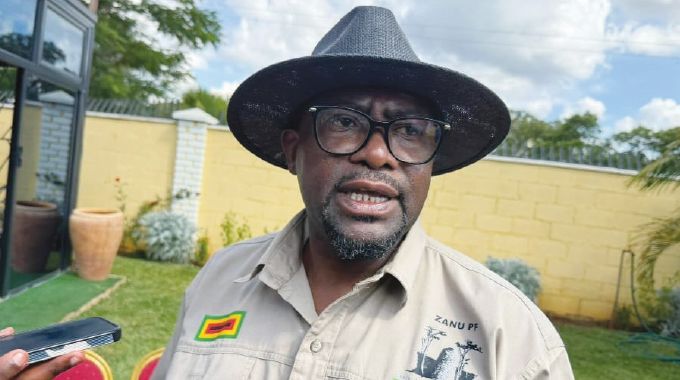
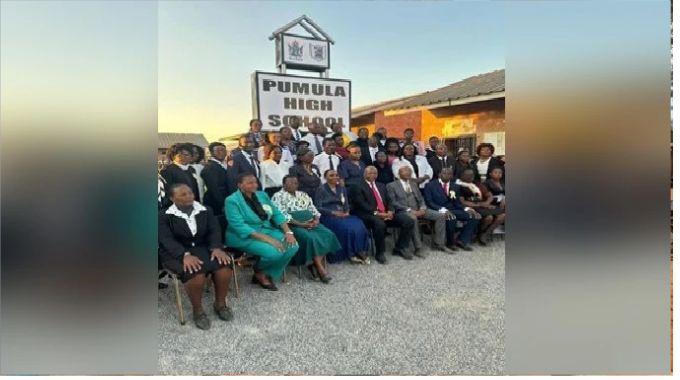
NINETY members recently made headlines after officially joining the ruling party, Zanu-PF, under the Dzokai Kumusha/Buyani Ekhaya (Come Home) programme.
The group, which includes 65 war veterans and 25 former opposition members, was led by United Kingdom-based politician and lawyer, Cde Pardon Tapfumaneyi.
Cde Tapfumaneyi, who previously contested as an independent candidate for the Mpopoma-Mzilikazi constituency, lauded President Mnangagwa for creating a platform for those in the diaspora to re-engage with the revolutionary party.
Zimpapers Politics Hub senior reporter, Gibson Mhaka (GM), sat down with Cde Tapfumaneyi (PT) to discuss his journey from independent politics to Zanu-PF solidarity.
Cde Tapfumaneyi described his decision to join the ruling party as a “Damascus moment” inspired by President Mnangagwa’s inclusive leadership and the Second Republic’s clear developmental trajectory.
Below are excerpts from the interview.
GM: For the benefit of those who may only know you as a legal professional in the UK or as a former independent voice, how would you describe yourself today, and what is the core motivation driving this high-profile return to the Zanu-PF fold?
PT: I was born a twin to Memory Tapfumaneyi at Mpilo Central Hospital in Bulawayo on October 16, 1970, in a family of nine siblings. My father, Freddy Tapfumaneyi Masamvi, was a car salesman, and my mother, Betty Munama Jaravani, was a dressmaker and trader.
My grandfather, Jonasi Tapfumaneyi Masamvi, comes from the same clan as the late Chief Rekai Tangwena, the first traditional leader to be interred at the National Heroes Acre.
My educational journey began at Jabulani Pre-School, followed by Lukanyiso Primary School and Mpopoma High School for my O-levels. I completed my A-levels at Hamilton High School. Before pursuing law, I had a brief stint in education, teaching at Nswazi Secondary School in Mbalabala in 1990.
Regarding my professional journey, I trained as a public prosecutor in 1991 under a scheme sponsored by the British government in collaboration with the Ministry of Justice, Legal and Parliamentary Affairs.
At the time, His Excellency President Mnangagwa was the Minister of Justice, and Cde Patrick Chinamasa was the Attorney General. I served at Tredgold Magistrates Court and later the Attorney General’s Office (Western Division).
After moving to the UK in 2000, I earned an LLB (Hons) from De Montfort University and a Postgraduate degree in Human Rights and Global Ethics from the University of Leicester. I have been an immigration lawyer in the UK for 20 years.
My motivation for returning is a deep commitment to Zimbabwe’s development. I desire to contribute my skills towards Zanu-PF’s vision for unity and growth, leveraging my understanding of international governance and diplomatic practices.
GM: You mentioned that Zanu-PF’s “warmth” was felt personally upon your return. Beyond the welcome, what was the specific “lightbulb moment” in the UK that convinced you that Zanu-PF, rather than the opposition, was the right vehicle for Zimbabwe’s future?
PT: Like Saul, who became Paul, I had my “Damascus moment”. As a prodigal son, I decided to come back to my father’s house, Zanu-PF, answering the call: Nyika inovakwa nevene vayo/Ilizwe lakhiwa ngabanikazi balo.
The turning point was the party’s genuine focus on the diaspora. For a long time, the diaspora was a “constituency in orbit” — contributing huge remittances but left out of the decision-making matrix.
Zanu-PF is changing that. Furthermore, the President’s vision, particularly the National Development Strategy 2 (NDS2), provides a clear roadmap towards Vision 2030.
I realised that while others offer rhetoric, Zanu-PF offers a tangible developmental agenda.
GM: Having previously run as an independent candidate, what have you found to be the biggest advantage of working within the structured hierarchy of Zanu-PF versus standing alone?
PT: Structure is everything. Zanu-PF’s clear hierarchy enables effective collaboration, which is a far cry from the “strategic ambiguity” sold to us by the opposition.
As an independent, you must finance every campaign and project from your own pockets, which eventually takes a personal toll.
Within the party, there is access to a vast network and Government support for initiatives.
Affiliates like the Zimbabwe Indigenous Miners Association (Zima) show how the party combines empowerment with recruitment.
GM: As a lawyer, what specific legal or administrative frameworks from the diaspora do you believe could be “imported” to help Zimbabwe reach Vision 2030?
PT: We need to focus on four key pillars: strengthening corporate governance to improve transparency, reinforcing anti-corruption institutions, accelerating the digitalisation of Government services to enhance efficiency, and ensuring secure property rights to protect land tenure and ownership. These are the benchmarks of a modern, prosperous economy.
GM: Many professionals in the diaspora remain hesitant to return. Based on your discussions with party leadership, what concrete assurances can you give to other skilled Zimbabweans abroad?
PT: The message from the leadership is clear: Zanu-PF values diaspora expertise. There is a genuine willingness to facilitate the reintegration of returnees.
We are discussing incentives such as tax breaks, housing schemes, and business opportunities to ensure that those who bring their skills home find a conducive environment to thrive.
GM: You have been based in the UK for some time. How do you view President Mnangagwa’s engagement with the diaspora?
PT: The President has been very intentional about re-engaging the diaspora. For a long time, many of us felt alienated, but the Second Republic has opened doors for us to contribute our skills and capital towards building the Zimbabwe we want.
GM: Bulawayo has faced significant de-industrialisation. What is your “Day One” priority for Mpopoma and Mzilikazi to kick-start job creation for the local youth?
PT: I am passionate about Bulawayo. Growing up, we had functional centres like Inyathi Youth Centre and Mpopoma Park.
Today, those facilities are defunct. The Mpopoma Library doesn’t even have working toilets.
This neglect by the opposition-led council has driven our youth towards drug and substance abuse.
My priority is economic revitalisation through youth engagement. We need to turn disused beer hall gardens into creative and innovative hubs.
By providing skills training and revitalising infrastructure — roads, water, and energy — we can take our youth off the streets and back into industry.
GM: You highlighted Bulawayo as a centre of culture. How do you plan to balance modern industrialisation with the preservation of the city’s unique identity?
PT: Through my work with the African Forum for Cultural Diplomacy, I have seen how heritage can drive the economy. Mzilikazi is a hub of pottery and arts, and it is the cradle of our football legends. We must commercialise and promote this culture through heritage tourism. Modernisation shouldn’t erase our roots; it should provide the resources to preserve them.
GM: You stated you are not here for a position and are willing to work from the “cells to the top”. How does a UK-based professional adjust to the grassroots “cell” structure?
PT: It requires humility. I am here to listen and learn from those who have been on the ground. You cannot lead people you do not understand. My goal is to work within the cell structures, understand local needs, and contribute where I am most useful.
GM: Some long-term party members might be wary of high-profile returnees. How do you intend to earn the trust of the Zanu-PF rank-and-file?
PT: Trust is earned through service and consistency. I intend to demonstrate my dedication to the party’s goals through hard work and transparent communication. I am not here to disrupt but to collaborate and achieve shared objectives.
GM: You noted a decline in Bulawayo over the 26 years the opposition has held power. In your view, what was their fundamental failure?
PT: Their failure was a total lack of governance and the disastrous “ambiguity strategy”. You cannot run a city or a country on secrets and confusion.
Zanu-PF’s strength lies in policy continuity and a focus on national stability. We are building on successful initiatives rather than starting from scratch every time there is a disagreement.
GM: In the context of the Constitution Amendment (No 3) Bill and the President’s vision, why do you believe “continuity” is more important for Zimbabwe right now than a standard change in leadership?
PT: Continuity ensures that the progress we have made towards Vision 2030 is not lost. Development requires momentum. Consistency in leadership and policy attracts investors and builds confidence.
To reach our goal of becoming an upper-middle-income society, we must stay the course.