ON Monday, 19 October, women veterans from the Zimbabwe People’s Revolutionary Army (ZPRA) gathered to commemorate the destruction of Mkushi Training Camp in Zambia on 19 October 1978, following a deadly aerial and ground assault by Rhodesian forces that resulted in the deaths of hundreds of women freedom fighters.
The gathering was aimed at planning the mobilisation of resources to enable the veterans to visit the camp, pay their respects to their departed colleagues and reconnect with a history of sacrifice and struggle in the liberation of the country.
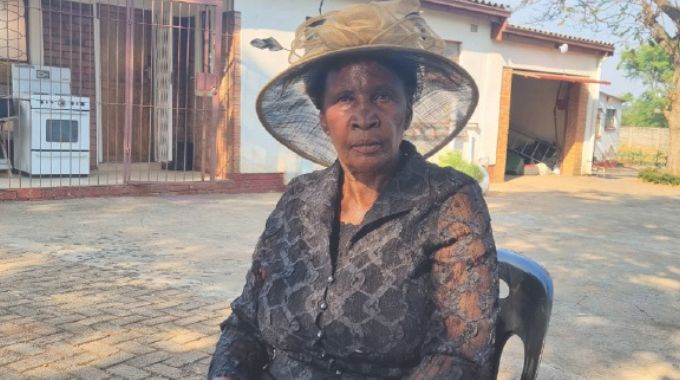
As part of the commemorations, our Day Editor, Vincent Gono (VG), conducted an interview with one of the survivors of the Mkushi bombing, Cde Priscilla Sithole, whose liberation war name was
Cde Buhle Sibanda (Cde Sibanda). She gives a blow-by-blow account of what happened on that fateful day.
Excerpts of the interview are below:
VG: Cde Sibanda, you were an eyewitness to the events of 19 October 1978, when Mkushi Camp in Zambia was bombed. Can you take us through the events of that day?
Cde Sibanda: The day began like any other. I vividly remember it, it was a Thursday.
We woke up and went about our training routines. At around 8 am, our Chief of Staff, Cde Jane Ndlovu, told us to be alert. She instructed us to return to our section pits, which were close to our tents and remain vigilant. However, she did not go into detail as to what was happening or what she had heard.
VG: What had she heard and were you not suspicious that something was wrong? Was that instruction usual?
Cde Sibanda: The instruction was quite unusual, especially at that time of the day. The fact that she told us to be alert meant that something was wrong. We later learnt that word had reached them that Freedom Camp had been attacked that same morning and that Mkushi could also be targeted.
VG: So, what did you do? How were the pits organised?
Cde Sibanda: Each one of us had her own pit. However, on that occasion, we did something that was not allowed. The three of us went into my pit. I was with Dorcas Sibanda and Nolizwe Masuku (now late). We took cover in my pit and positioned ourselves strategically, with each of us facing a different direction.
After about two hours, I saw a helicopter approaching the camp and knew that the assault had begun. I later gathered that there were actually two helicopters and about six jets. Without telling one another what to do, we simultaneously left my pit and ran in different directions. The bombing started just as we were running away. It was all pandemonium.
VG: Where did you run to?
Cde Sibanda: I did not go far from the camp. Running continuously carried the danger of being spotted and becoming a target, so the idea was to find somewhere to take cover. I therefore ran and hid in the long grass along the Mkushi River. Half of my body was submerged in the water and I could clearly see what was happening at the camp.
The attack was quite serious. The jets were dropping bombs from the air, while paratroopers were being deployed from the two helicopters. Within a few minutes, the camp had been razed to the ground. Smoke could be seen billowing from what used to be our kitchen, while the bodies of fellow comrades who had been caught in the bombing and shooting lay scattered all over the place.
The entire atmosphere was filled with the smell of death, fresh human flesh and blood. Others were screaming in pain after being shot and injured. It was unbearable. It was cruel, savage and horrifying. The scene was unsightly.
VG: You witnessed all that while in hiding. What were you thinking? Were you not afraid of being seen?
Cde Sibanda: I saw almost everything. I was deeply hurt. It was painful and it made me very angry with the Rhodesians. I became determined to avenge what had happened and never contemplated turning back. My fear of death disappeared.
However, there was one soldier who came very close to where I was hiding. He came and sat not very far from my hiding place and ate while I watched him. Another comrade, Loveness, who was hiding beside me, almost made the mistake of speaking because she thought the soldier had seen us. I signalled to her to remain silent until he had finished eating and walked away.
VG: How long did you spend in hiding? Did you not feel cold or hungry?
Cde Sibanda: You know, there are things you feel when you are in comfortable circumstances, but not when you are in a situation as uncomfortable as being the meat in a sandwich. I did not feel hungry, despite not having carried anything to eat.
Of course, it was October and scorching hot, Zambia is hot, but temperatures would drop at night.
Nevertheless, I did not move from the place where I was hiding.
There was talk of crocodiles in the river, but I was not attacked. In fact, while I was in hiding, I never really thought much about that possibility.
As for how long I stayed there, the attack happened on Thursday and we only got out of hiding on
Monday after our commanders had arrived. It was Cdes Sigoge, Dr Bhutshe, Dr Khoza, Cde Kumbirai and Cde Thodlana who came.
They assessed the extent of the destruction and I can tell you it was bad. Some of our comrades had been burnt beyond recognition, while others had sustained serious injuries to which they later succumbed.
VG: What did they do when they arrived and where did they take you?
Cde Sibanda: We were taken to Kabwe Hospital by Dr Khoza. We spent the night there and underwent medical examinations. There were ten of us, but one person died in hospital from injuries sustained during the attack.
The following day, we were transferred to Kafue Transit Camp, where we reunited with some of the survivors who had arrived there before us. We stayed at Kafue for a month before being taken to Solwezi Camp, where we resumed our training.
VG: How were you organised at Solwezi? Was it similar to Mkushi?
Cde Sibanda: At Mkushi, the company was large, comprising about 145 members. However, at Solwezi, we were organised into different departments, which were smaller than the company we had at Mkushi.
VG: Did you return to Mkushi or did you complete your training at Solwezi?
Cde Sibanda: Mkushi had been destroyed. It was in ruins and no longer fit for purpose. We therefore completed our training at Solwezi in 1979. By that time, however, efforts towards the Lancaster House Conference were gathering momentum.
VG: So, after completing your training, what happened? What did you do, given that the war was almost over?
Cde Sibanda: We were deployed to campaign under ZAPU and I was part of the group that operated in Gwanda, covering areas under Chief Nhlamba, Chief Mathe and Chief Mathema.
We did not go home. We then moved to the Sierra Assembly Point at Insukamini in Gweru and this was even before we had seen our parents.
After that, there was a process of integration, but I did not join the army. Instead, I became a waitress at Nitram’s Castle Arms Hotel, together with other comrades, including Bekezela Ndlovu, Catherine Ncube (Oddrets), Maka Ncube and Pauline Maseko (Zimbabwe).
Other comrades were working at Nest Egg. Unfortunately, we lost our jobs after the properties were seized by the Government during the post-independence disturbances.
We are, however, hopeful that the Second Republic, which has expressed eagerness to return the properties, will fulfil that commitment. We are not very sure whether we will benefit, especially given that we were not paid anything when we lost our jobs.
VG: Thank you so much for sharing your account. However, our readers may want to know who exactly Cde Sibanda is, a brief background of yourself would suffice.
Cde Sibanda: I was born on 21 July 1955 in Jakalasi Line, under Chief Mathuphula in Tsholotsho. I did my primary education at Lotshe Primary School before moving to Mzilikazi Primary School and then Khaphane Primary School in Tsholotsho.
I later returned to Bulawayo, where I became a youth member under Mhali Branch in New Magwegwe. I became politically conscious and in 1977 and coming from a family that was political,
I joined three girls and two boys and set out for military training in Zambia.
We travelled via Maitengwe Border Post, where we met eight others and crossed into Francistown.
From there, we were transported to Zambia in groups. We arrived at Victory Camp, which was essentially a transit camp before proceeding to Mkushi, a training camp for women freedom fighters where we started training until its attack in 1978.