peter
peter
WE continue our interview with Cde Jephat Christopher Mukombwe pseudo name Cde Farai Nherera, a former freedom fighter who operated in Mwenezi District of Masvingo Province, Mberengwa and Zvishavane districts of the Midlands Province. Cde Mukombwe now the only survivor of a ZPRA section of seven that came out of Mozambique when the Zimbabwe People’s Army (ZIPA) collapsed and based in Mwenezi after being instructed by then ZPRA commander, Rogers “Alfred Nikita” Mangena. It seems for propaganda purposes Cde Mangena, who came from Mwenezi wanted a ZPRA presence in his home area. Cde Mukombwe tells our Assistant Editor Mkhululi Sibanda (MS) that they started recruiting locals whom they trained on the ground to beef up their numbers and their unit quickly grew to more than 34. Some of those trained locally went on to become “good” cadres in the armed struggle with some like Colonel (Retired) Bester Magwizi even sent for further training in the Soviet Union after which he returned to the front to continue with the armed struggle. Below are excerpts of the interview. Read on . . .
MS: Last time we ended our conversation when you were still talking about your training at Morogoro. May you please continue from there.
Cde Mukombwe: Our training was for a year. After the basic military training we went for a commandos course. We came out of Morogoro being commandos. I was part of a unit of 38 which was taken to Mgagao also in Tanzania which was a ZANLA camp. The idea was to join our ZANLA colleagues as that was at the initial stages of the formation of Zimbabwe People’s Army (ZIPA). Our colleagues from ZANLA numbered around 1 000 while ours was just 38 like I have just said. Among the people I was with from our side were Cdes Brain Mahlangu whom we called Mashila, Timothy Dube, Shadreck, Reason, Muzorewa and David. From Tanzania we travelled in a ship and along the way there was bit of tension between us and our ZANLA colleagues. However, that was caused by a few individuals. We were very young then. From the ZPRA contingent, Brain Mashila was the commander while myself I was a section commander. We arrived in Beira after which we were taken to a place called Villa Paiver. It was while we were there that we ended up being arrested by the authorities.
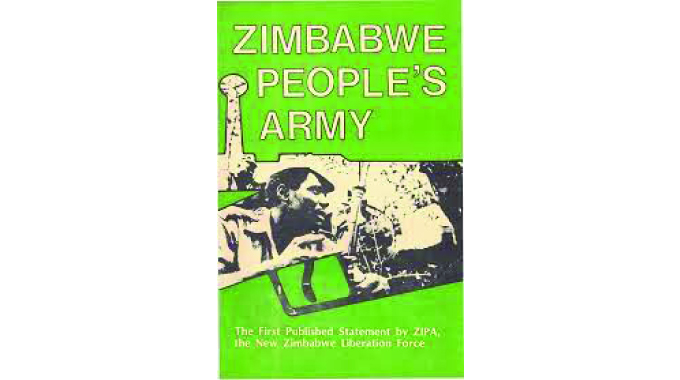
There was this feeling that ZPRA guerillas were arrogant and did not want to take orders while at the same there was this unfounded narrative that we did not want to fight. Noble as it was, ZIPA which was meant to unite our forces was not properly planned and at the end of the day it collapsed. It was then decided that we move out of Mozambique and go back to Zambia. However, that meant that our guerillas had to go through Rhodesia all the way to Zambia via Botswana. When we left Mozambique we were 37, with the seven being for escort. However, we split to avoid easy detection by the enemy forces. In our brief meeting with Cde Mangena he had told us that we should base in Namande and Mazetese areas in Mwenezi that is in Masvingo Province. It was clear that he wanted his home area to have a ZPRA presence. Although we had left Mozambique being a unit of 37 at the end of the day only seven us got the courage to start operations in Mwenezi. Others went straight into Botswana and eventually to Zambia.
MS: Who were the seven who decided to base in Mwenezi?
Cde Mukombwe: It was myself, Farai with the other six being Gadaffi who was the commander, Arnold Thatha Sibanda, Brain Mashila, Mbovane, Misheck and Committee. In terms of armament we were properly armed and were satisfied with the weapons we had. Myself I was armed with a Light Machince Gun (LMG) and we also had an RPK which was under Committee as well as some pistols. The rest of the weapons were AK-47s. We also had grenades. For a guerilla unit we were adequately armed although we did not have a bazooka.

MS: What were the instructions that you were given when you left Mozambique?
Cde Mukombwe: The orders were that we operate in the Gezani area but we were outnumbered by ZANLA, so that is why we moved to Mazetese and Namande where we decided to base on the mountains. That was towards the end of 1975. We held the ground there until the ceasefire period towards the end of 1979. We had also widened our operational area to cover Mberengwa, Zvishavane and areas in the eastern part of Beitbridge. In the later stages of the war, ZPRA was sending more troops in the areas I have mentioned as they fell under the operational area code name, Southern Front Two (SF2). However, soon after our arrival in Namande something strange happened, four bull elephants passed through the area and that was bizarre. The dogs could not even bark at them. As if that was not enough a white giraffe was also spotted in the area. We took it as some form of spiritual communication.
MS: As guerillas how did you announce your presence?
Cde Mukombwe: When we got into Namande we first cached our arms, removed our combat gear and changed into civilian attire. We looked for Zapu structures who embraced us and then the word doing the rounds was that we were surveyors who we were in the area for some project. We were staying in the mountains. However, we were moving around armed with pistols and grenades. We started having meetings with the party structures who to their credit kept their mouths zipped about our really intentions. We avoided contacts at all costs. Myself later on I had to pretend to be a herdboy and I moved into the homestead of a Zapu member who was known as Mangudula where to keep my cover intact I would even go into the veld herding cattle. Others stayed in the mountains. What made my task easy was that people take us Tonga people for granted. They would just look at me and say indeed he is here in our area to work as a domestic worker. So the stereotype against my Tonga tribe yielded some positive results at that time. I will even go to emaphathini, village disco sessions and dance the night away with the villagers. I became part of them. At times I even came across the Rhodesian forces and they would ask me ‘uphi lomagandanga, wena bonile bona’ and I would say I did not see them. When we thought we had studied the area enough we then started working.

MS: When was that?
Cde Mukombwe: It was at the beginning of 1976 when we started training locals. We started with 11 of them and if my memory still serves me right they were Solomon Ndlovu, Bester Magwizi who, however, is not from that area but had come all the way from Mashonaland West Province where he originally comes, that is in the Sanyati area. There was also Phifani Moyo, Ndlela, Kesari Masvamandu, Windi Sinyolo, Pavanoda, Menias, Twomonths Moyo who was to be killed in combat in Beitbridge, Sekai and Mjubheki Moyo. We trained them in the mountains and through that exercise we managed to reinforce our unit of seven which then grew to 34. We were very satisfied with the way we had trained them and we started operations, laying ambushes as now there was a need to get arms and arm our recruits. Serious fighting then started being witnessed. Some of our recruits were sent to Zambia like now Colonel (Retired) Magwizi who when he arrived in Zambia the command there saw no reason to send him to training camps but sent him for further training in the Soviet Union. After his stint in the Soviet Union, Magwizi was redeployed back to our operational area, he came back to join us. We had also trained now National Hero, Major-General (Rtd) Sydney Bhebhe who died in June this year. After training and operating with him he was sent to Botswana en-route to Zambia where he was further sent to Angola. When Maj-Gen (Rtd)Bhebhe went to Zambia he had already seen battle as a local trained cadre.
n To be continued next week


 Online Reporter