admin
admin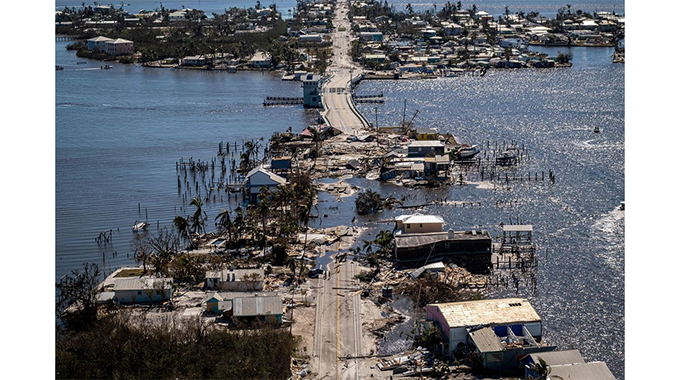
Major ports and rail facilities across the US Southeast have halted operations as one of the strongest hurricanes to ever hit the country heads north, causing disruptions along the way and resulting in another blow for already-strained supply chains.
Jacksonville, the largest container port in Florida and a main trade gateway for auto shipments, shut down Wednesday and will remain closed until the Coast Guard authorises operations to resume, spokesperson Chelsea Kavanagh said in an emailed statement.
The hub is “on standby to assess any damage and reopen port facilities as soon as possible,” she added.
All other Florida ports, including Miami and Tampa, have either closed or have implemented some restrictions, and Coast Guard crews are doing assessments on each hub to decide how and when to open them, said Nicole Groll, a public affairs officer for the agency.
As Ian — now a tropical storm — regains strength, Georgia’s Port of Savannah, the largest container hub in the Southeast, is allowing ships at anchor to leave toward safer locations, but is closed for new arrivals. Meanwhile, South Carolina’s Port of Charleston plans to suspend all marine-terminal operations last Friday.
Tied for the fifth-strongest hurricane to hit the US mainland, Ian came ashore Wednesday in Florida, displacing residents and leaving about 2.6 million people without electricity. The storm is expected to regain hurricane strength over the Atlantic and hit South Carolina with a life-threatening storm surge on Friday, the National Hurricane Centre said.
President Joe Biden said in a briefing Thursday he’s getting “early reports of what may be substantial loss of life.”
Governors in South Carolina, Georgia, North Carolina and Virginia have all declared emergencies in advance of the storm’s arrival. Early estimates from Enki Research show Ian could cost $60 billion to US$70 billion in economic damage, which would make it the sixth-costliest storm in US history.
Significant disruptions should be expected as Ian heads toward the region’s largest container ports, said Jon Davis, chief meteorologist at Everstream Analytics.
“Major cargo carriers are experiencing widespread delays across their networks,” Davis said, adding that “Ian is tracking northward toward key automotive, agriculture, textile and industrial hubs in northern Florida, Georgia and the Carolinas, spelling further supply-chain headaches for major producers.”
At the same time, Jacksonville-based freight carrier CSX has halted operations at several intermodal and auto-handling terminals in Florida, and has warned customers that rail shipments are likely to be delayed in and out of the state. Norfolk Southern also reduced its operating capacity on Thursday.
Trucking volumes have also taken a hit in Florida as the storm approached. The number of truck loads entering Tampa was down by 76 percent last Wednesday compared with a month ago, according to supply-chain data provider project44. Volumes dropped about 70 percent in Miami and almost 37 percent in Jacksonville.– Bloomberg



 Online Reporter