admin
admin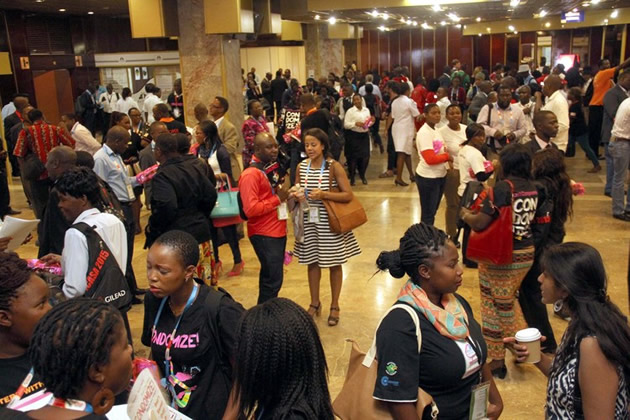
Paidamoyo Chipunza Senior Health Reporter
The 18th International Conference on Aids and STIs in Africa, which ended at the weekend, was a huge success that demonstrated Zimbabwe’s ability to hold meetings of such magnitude.
This resonates with Tourism and Hospitality Minister Walter Mzembi’s call for Zimbabweans to bid for more conferences. With only a few months to prepare, Zimbabwe once again demonstrated to the international community that it has the wherewithal to bring the world to its borders.
Hats off to the Ministry of Health and Child Care for taking the lead in sorely hosting a gathering of such magnitude successfully in a period of just six months.
Content analysis
The conference ran under the theme: “HIV/AIDS in post 2015 era: linking leadership, science and human rights”. According to the Society for AIDS in Africa (SAA) coordinator Mr Luc Bodea, the theme was designed to make sure that no one was left out in the quest for an Aids free generation.
He said most of the presentations during the conference showed that it is no longer a dream, it is actually possible to end Aids by 2030. Mr Bodea, however, said it takes everyone’s contributions from the leaders, the scientists and key populations to turn this dream into reality.
“We cannot achieve 2030 without leadership, key populations and scientists and we believe this platform is the right platform to discuss about each and everyone’s responsibility. Together we will win,” said Mr Bodea.
Presentations included a session by First Ladies, speeches by health ministers, additional commitment to fund HIV programming in key populations by the donor communities and advances in science by the scientists.
“This is the platform where we strategise how to achieve set goals. We have noticed a lot of new funding coming through for example the President’s Emergency Plan for Aids Relief (PEPFAR) which has committed an additional US$80 million for adolescent girls and young women. The World Health Organisation also talked about the new HIV treatment and care guidelines- all these are strategies to end Aids by 2030,” said Mr Bodea.
He said in an effort to fast-track responses to end Aids by 2030, delegates also shared ideas on strategies that worked in their respective countries.
Although some of the key speakers who were expected to grace ICASA such as Cameroonian soccer star Samuel Eto and the famous Berlin patient Mr Timothy Brown failed to make it to the conference, key messages from ICASA 2015 were:
- Fast-tracking HIV response to end Aids by 2030 in Africa
- Promoting an inclusive Aids response including minorities of every type
- Advances in HIV science provides hope to ending Aids
- The need for sustained, efficient and effective resourcing of Aids programmes
- Promoting women empowerment, gender equality and end gender violence
- Engagement of men is paramount in ending Aids
- The need to fight stigma and discrimination
- Prioritisation of adolescents and youths where new HIV infections continue to rise
Attendance
More than 4 500 delegates from 54 African countries, US, UK, Germany, Geneva, India and France were among those who attended ICASA 2015. However, some Zimbabweans decried the registration fees as prohibitive. Individuals were asked to pay between US$300 and $700 as registration fees while exhibitors were required to pay between US$1 500 and $5 000 to set up a stand.
Logistics
Plans by the tourism industry to build convention centres in Harare, Hwange and Victoria Falls are no doubt the solution to logistical bungles that characterized ICASA 2015.
Convention centres provide convenience to delegates and assist in the smooth running of a conference unlike the scenario during ICASA where numerous tents were pitched around the venue thereby shrouding the majestic scenery of the Harare International Conference Centre.
There is no doubt that the HICC struggled to cope with the estimated 5 000 delegates who attended ICASA, evidenced by the need to pitch tents to accommodate parallel sessions, all exhibitors and the community village. This also resulted in erection of mobile toilets around the venue to cater for delegates using the tents- facilities that under normal circumstances could have been under one roof.
Zimbabwe needs bigger convention centres that provide a one stop shop for delegates, have bigger and more rooms for break away sessions, several in-house ablution facilities and can accommodate more than one conference any given time.
President of the Zimbabwe Council for Tourism (ZCT) Mr Francis Ngwenya said the HICC required expansion and modernization to meet modern day conferencing. He said in that regard, the tourism industry was looking forward to an extension of the hotel and turning it into a convention centre.
He said there were also plans to build similar facilities in Hwange and Victoria Falls. “We are working on having convention centres if authorised in Harare, Victoria Falls and Hwange that will be big enough to host such events and accommodate as many people as possible,” said Mr Ngwenya.
Tourism
Although some delegates felt that there was little marketing of tourist attractions in Zimbabwe, let alone in Harare during ICASA, Minister Mzembi feels otherwise. Delegates spent most of their free time sitting on staircases in the HICC- time they could have spent sight-seeing beautiful Zimbabwe.
Minister Mzembi said all hotels were fully booked and a cross section of businesses within Harare such as taxi operators, tour operators, restaurants, saloons, airtime vendors and event organizers benefited from the conference.
“ICASA was a high yield conference with delegates staying for more than 12 days. All hotels, lodges and hostels were fully booked to the extent that some delegates had to be booked in houses that were inspected prior to the conference as we anticipated this overflow,” said Minister Mzembi.
He said the conference had a lot of pre-conference activities supported by various non-governmental organisations, pharmaceutical companies, civil rights bodies which were hosted by hotels, lodges and other smaller conference venues.
“Pre conferences started as early as the 10th day of November 2015 right up to November 28 2015. These various facilities also hosted parties almost on a daily basis,” he said. He said some United Nations agencies failed to host their functions because they could not secure venues. Some delegates also flew to Victoria Falls before and after the conference.
Minister Mzembi said ICASA also provided the basis to fund the brand Zimbabwe project and the country’s marketing initiatives. “The estimated 4 500 delegates who attended ICASA were international tourism brand ambassadors hence the need to fund brand Zimbabwe project as a matter of urgency as well as adequately fund the Zimbabwe Tourism Authority’s marketing initiatives,” he said.
He said the Zimbabwe National Convention Bureau (NCB) needed full Government backing to enable it to bid for more conferences into Zimbabwe. “All Government Ministries should work hand in glove with the NCB in bringing in big conferences. Thumbs up to the Ministry of Health and Child Care for taking the first step in hosting a successful ICASA in conjunction with the NCB within my Ministry’s implementing arm, Zimbabwe Tourism Authority,” he said.
Visas
Minister Mzembi said visa relaxation was key to hosting of international conferences. He applauded the Ministry of Home affairs for introducing the conferencing option on the visa application form and making sure that no delegate was denied entry into the country for ICASA.
“It is pleasing to note that we are all pulling in the same direction as tourism can only thrive through such collaboration,” said Minister Mzembi. Minister Mzembi said the country should continue bidding for more international conferences as this is the quickest way of turning around the economy.
“It brings in investors and it also widens the knowledge base for the various sectors through interaction with different stakeholders with new knowledge and new trends,” he said. Health and Child Care Minister Dr David Parirenyatwa said given the limited time the country had to plan for ICASA, they exceeded expectations.
“We were given six months to prepare. Usually this takes two years and I think the efforts from everybody have been amazing, from ICASA themselves to our own people here, they have all really worked so hard and so coordinated,” said Minister Parirenyatwa.


 Online Reporter